Micheál MacLiammóir as Iago in the 1951 movie version of Othello.
Iago
Who is Iago? Numerous interpretations of this famous Shakespearean character have been put forward over the centuries. Arguments like:
the man’s a neurotic whose very stomach acids churn in secret inner turmoil,
he’s a psychopath who feels no single shred of guilt,
or he’s an outright devil from deepest Hell itself.
In essence, he is a man who very much can, and does, destroy his fellow man. It’s a matter of ability, seemingly detached from motivation. Intellect and evil exist as complementary elements of Iago’s character, which allow him the facility to breezily contrive the downfall of his friend.
As far as anyone can tell, Iago has no true motive to destroy Othello. There is no obligation based on some obvious wrong done to him in the past. However, Iago has certainly been irked by Michael Cassio’s promotion to lieutenant, a post he felt he deserved for himself. Yes, there is also a scurrilous rumour that Iago’s wife, Emilia, has slept with Othello. Just a rumour, mind you, and one that only Iago mentions. Then there’s Othello’s dark skin colour and the possibility of old-fashioned racism at play. Yet, these seem like mere red herrings. Iago’s crime requires a valid cause, but this is something he appears to invent ad hoc as his diabolical plan progresses.
Iago destroys his own best friend because he can: it’s an unsatisfactory synopsis of Shakespeare’s Othello. Nonetheless, it is also a core truth. Iago is the type of man who will betray someone, anyone. Looking for a watertight motive for this act is like looking for a needle in a haystack. Shakespeare’s most fearful character is deadly because he destroys another human being on a mere whim, a turn of mood, an almost imperceptible change in the wind. Iago feels that he has been slighted and quickly designates Othello as enemy #1.
Yes, Othello is also flawed, but he’s the victim here (along with Desdemona!). Everyone has character failings silently waiting to be exploited by the right enemy. It’s okay to be viscerally afraid of Iago and his kind because these are the characters, on stage or in a suburban home, who defy our absolute best predictions. They’ll put a comforting hand on your shoulder as they secretly rip your life into flesh-coloured strips … and then smile inwardly.
Who’s afraid of … domestic Armageddon? Edward Albee’s first big theatrical success was a withering portrayal of a dysfunctional marriage, teeming with lies, gurgling in alcohol, and ready to SNAP! It is all set in the town of New Carthage, a sort of modern-day Gomorrah. One evening, after an ice-breaker event for new staff at the local college, George and Martha invite the younger, newer couple named Nick and Honey back to theirs for some (more) drinks. Let the games begin! Martha is well inured to all-out drinking binges and the inevitable follow-on fights with George – a husband who apparently flops at every manly hurdle. The fresh-faced Nick and his “mousey” wife get dragged into this maelstrom of marital bitterness, including secrets that are either viscerally raw or just shameless fabrications. As spectators, Albee pulls us into an arena so toxic that it needs an old-fashioned exorcism to cleanse it during the final scene. The topics addressed in this work include infidelity, infertility, masculinity, and the truth.
Ways to access the text: reading/listening/watching
The playscript of Virginia Woolf (abbr.) is widely available for free on the internet. The script is quite reader-friendly, but I would still recommend an audio version or the movie.
The Internet Archive lists at least 3 available versions in audio file formats. There is the original production starring Uta Hagan from 1962; the soundtrack from the 1967 movie starring Elizabeth Taylor (an adaptation for the screen); and a 2004 version with Juliet Stevenson.
The 1966 movie version, also entitled Who’s Afraid of Virginia Woolf?, stars Elizabeth Taylor and her then-husband, Richard Burton. Directed by Mike Nichols, the movie has a run time of 2h 11m and has an IMDB score of 8. At the age of 32, Taylor was arguably far too young to play the role of 52-year-old Martha, but she gives a bravura performance. Bette Davis had lobbied hard to get the role but ultimately failed. The combination of Taylor and Burton was a bigger box office attraction in the mid sixties.
Why read/listen to/watch Who’s Afraid of Virginia Woolf?
Albee gives an insight into a complicated, conflict-burdened marriage. George and Martha are the type of couple who put on a damn good show of amiability in public and then swiftly tear each other to bloodied tatters behind closed doors.
“In Conversations with Edward Albee, Patricia De La Fuente quotes Albee’s comment on a playwright’s purpose, “I don’t think you should frighten [audiences], I think you should terrify them.” (Luere 50)
Indeed, Albee manages to terrify us with the truth that a spouse can be the worst enemy in the world – bar none. Luckily, in the case of George and Martha, one sees that there is also a strange glue that holds them together despite the acrimony. The play is an account of trench warfare in a marriage, and it is riveting to watch.
Post-reading discussion/interpretation
Fearless Cuckoldry!
To begin, Who’s Afraid of Virginia Woolf? is an intriguing play title. Edward Albee’s work dates from 1962, some 21 years after the death by suicide of the real Virginia Woolf. She had filled her pockets with stones before wading into the River Ouse to meet her death. In Albee’s play, we quickly become a little bit afraid of the lead character named Martha: the sharp-tongued, no-holds-barred, matriarch of her domain. However, is there any true connection between the two women? Well, Woolf was a gifted intellectual, feminist, and writer who succeeded despite all the obstacles women faced in her time. She argued for women’s rights to financial and artistic freedoms. As WWII progressed, Woolf became more intimidated by the threat of Germany, a force she understood as being excessively masculine. This imminent threat, combined with her lifelong problems with mental illness, led to her suicide. In contrast, Martha seeks to ruthlessly dismantle the primary masculine presence in her life, namely her husband, George. She is his intellectual equal, and also a better boxer and drinker than him. In short, Martha is a formidable woman who is capable of far more than the meagre role society has allocated to her – a professor’s wife and homemaker. So, who is afraid of Virginia Woolf? Well, any man afraid of strong, smart, deeply unhappy women. Yes, the links between Martha and Virginia are tenuous but still not irrelevant.
Luckily, Albee explained his own play title somewhat differently. He told an interviewer from Paris Review about his inspiration. It all began in a Greenwich Village bar.
““I was in there having a beer one night, and I saw “Who’s Afraid of Virginia Woolf?” scrawled in soap, I suppose, on this mirror. When I started to write the play, it cropped up in my mind again. And of course, who’s afraid of Virginia Woolf means who’s afraid of the big bad wolf . . . who’s afraid of living life without false illusions. And it did strike me as being a rather typical, university intellectual joke” (Flanagan)
One can rephrase Albee’s question and ask – who isn’t afraid of living life without false illusions? To put it differently – Yes, the three little pigs from the children’s story were correct to fear the big bad wolf. After all, unsupportable ideas aka illusions are what lull many people into a false sense of security. For George and Martha, their imaginary son is the illusory glue of their relationship, plus the blue-eyed boy is also their illusion of a brighter future to which they have contributed. When this illusion is shattered, just like when the little piggies’ houses of straw and twigs are demolished, then they need to rely on what is real and true. This specific topic of illusion versus reality as presented in the play has already been explored and delineated by many writers.
What interests me is the idea that certain illusory structures need to be mercilessly challenged to assess their strengths or weaknesses, their validity or falseness. In Virginia Woolf, Albee shows how Martha, a modern-day ‘wolfish’ woman, sets about dismantling her husband’s masculinity – the facade of strength behind which he hides. Men may wear masculinity just as easily as the little pigs may sit smugly inside structures made of straw or twigs. Society awards the descriptor of male along with an immediate connotation of masculinity to all biological men. It is only when a challenge materialises that one learns if George is indeed a man or a wimp. Martha serves up this sexist challenge, daily. This may be an outdated, gendered stereotype of bygone years but it is still one of Albee’s core questions. The play really does appear to put masculinity on trial. Forrest E. Hazard summed up the work as follows.
“Virginia Woolf is a modern parable about an age-old problem: the delicate relationship that must bind the symbolically masculine and feminine principles of creation together if life is to progress.” (Hazard 10)
From the outset, George is presented as a cuckold and, therefore, not a real man at all. He is an ineffectual, mildly effete intellectual who not only fails to advance his career but is also a flop in the bedroom. So, his wife ‘rightfully’ resorts to sleeping with younger, more virile men who can satisfy her womanly needs. She might even get pregnant if it was not for her now advanced age of 52. Yes, Albee wants to attack the core topic of illusion not simply by revealing that their son is a fairytale construction, but also by testing how much of a man George really is! The playwright begins with a relationship clearly out of kilter, best summed up by Martha screaming “FUCK YOU!” (13) at her husband as he opens the door to their guests, Nick and Honey. From this point onward, the play charts the course of their battle to reinstall some sort of healthy equilibrium in their marital relationship.
What is masculinity? That is a tricky question. Or more to the point, what is American masculinity? Michael S. Kimmel looked at this question in an essay entitled “The Cult of Masculinity.” In the following excerpt, he quotes Margaret Mead when elaborating on the topics of masculinity and one of its key attributes, namely the use of aggression.
“American aggression is peculiar, wrote anthropologist Margaret Mead, because it is “seen as a response rather than as primary behavior” (1965, p. 151). In And Keep Your Powder Dry (1944, revised in 1965), Mead explained that ours is an “aggressiveness which can never be shown except when the other fellow starts it . . . which is so unsure of itself that it had to be proved” (p. 157).” (Kimmel 93)
In Virginia Woolf, it is Martha who is the primary, unrelenting aggressor. One waits for George’s responses, but they appear only as a succession of muted, swallowed, bottled emotions. For much of the play, he fails to prove himself even though the ‘other fellow’ certainly started it (yes, Martha). This wife makes jibes about her husband at every opportunity. Ironically, one could posit that Martha is the one responding to her husband’s inability to fulfil his masculine role in the marriage! Thus, she would be an example of American masculinity in her willingness to fight back in response to unfairness. Either way, it is George who is lacking.
The play’s opening scene covertly foreshadows all that we need to know about George and Martha’s relationship. Martha quotes a famous line from a Bette Davis movie – “What a dump!” (7) – before berating her husband who cannot promptly recall the name of the movie. The actual movie is called Beyond the Forest, which depicts Bette Davis as a discontented wife who cheats on her husband with a more masculine man from Chicago, a man who then also gets her pregnant. Davis’s character treats her husband like a patsy; she first leaves him and then returns to him when her lover rejects her, only to leave her husband a 2nd time. Typically, the macho guy from Chicago, who just happens to have a manly facial scar too, is unimpressed with her devotion. This only makes her keener. It is as if Albee has secretly revealed the aberrant inequality between George and Martha in the opening lines of the play. All yin but little or no yang.
By inviting Nick, Martha wishes to up the ante. George and Nick appear as binary opposites regarding the traditional ideals of masculinity. Kimmel quotes psychologist Robert Brannon who “identified four components of the dominant traditional male sex role in the rules that define how a man is supposed to behave” (94). They are as follows.
“No sissy stuff” (no behaviour that seems feminine)
“Be a big wheel” (be successful and high-status oriented)
“Be a sturdy oak” (be tough, confident, and self-reliant)
“Give ’em hell” (be ready to show aggression and daring)
(Kimmel 94)
Martha dismissively refers to her husband George as a “simp” (11). A man who cannot even provide properly for her, so they end up living in a dump. In contrast, Martha’s father is the president of the university and “quite a guy” (16). Despite the obvious advantages of being the old man’s “heir apparent,” George even fails to get promoted to head of his department. At 46, George is nothing other than “A great … big … fat … FLOP!” (40). One assumes that the negative sexual connotations of the word flop also apply since they are Martha’s venomous words. George possesses none of the attributes of a dominant male, as outlined above by Robert Brannon. However, when one turns one’s attention to Nick then it is a different story. This young man is both intellectually and physically impressive: a man who boxes, played football at school, and attained his master’s degree at just 19 years old (25-26). He still has an impressive body, which Martha notices (27), and this adds to his masculine allure. This virile young man needs “no fake jap gun” (30) (a reference to George’s fake gun). He even joins in on the joke about genetic engineering by re-christening himself “a personal fucking-machine!” (34). Such men would be able to populate the world with perfect specimens of manhood. The two men highlight the dichotomy between the revered masculine man and the shameful wimp.
Just like Bette Davis’s simp of a husband in Beyond the Forest, George will accept any indiscretions by Martha. Indiscretions refer to both revelations of family secrets and extramarital affairs. Thus, the emasculated man, George, becomes a cuckold. This figure has been variously described throughout the centuries.
“The cuckold is a stock comic figure of medieval ribaldry, shown in fabliaux and their reworkings in Chaucer and Boccaccio. Here, the husband cuts a ridiculous figure, being deceived by his young wife, and a similarly youthful lover.” (Millington 3)
The Cuckold: “The humor of his plight lies in the fact that he is excluded: we know more than he does about something he should know more about than we do, his most intimate domestic affairs. We laugh at him, not with him, seeking to distance ourselves as much as possible from him and the anxieties he represents.” (McEachern 610)
However, Albee chooses to depict cuckoldry in an atypical manner. George is too aware, too painfully conscious of the figurative cuckold’s horns that he wears upon his head. We are not dealing with a senile, elderly man or even the victim of a clever, devious wife. No, George is practically forced to witness his wife’s salacious behaviour; it is part of his torture. Thus, the play depicts the grinding down of marital illusions until they are finally obliterated. This primary illusion is the one of marital bliss founded on fidelity. The situation is chiefly a testing ground for George’s masculinity, or what remains of it. Yet, he does little more than make barbed responses to his wife’s words and actions. He warns her not to get drunk and end up wearing her skirt up over her head, as usual! (13). There is also talk of “musical beds” regarding the now familiar promiscuity of the staff on the university campus. Oblivious to all warnings, Martha boasts of getting to the “meat of things” (31) as she sits cosily with Nick on the sofa. When Martha and Nick dance together, George tells Honey that “It’s a familiar dance … a very old [mating] ritual” (59). George witnessing the way his wife gradually seduces another man adds to the overall humiliation inherent in the scene.
Martha will later confess that she disgusts herself with her “totally pointless infidelities” (78). There is an absurdity to the situation, a certain in-built sterility because neither Martha nor George seem capable of eliciting the response they so desperately need. She needs him to put a stop to her shameless cavorting, but he steadfastly plays the role of cuckold just to spite her. It is a perverse game that escalates to a crescendo.
Mark I. Millington explains that there are two chief ways in which one can depict a cheated-upon husband.
“There are two models or paradigms for the portrayal of the offended husband: either he is mocked for the situation he finds himself in, or he is admired for his attitude and action in the face of his wife’s infidelity.” (Millington 1)
Albee chooses neither. One cannot readily mock George since Martha’s behaviour is so grotesque that it turns one against her. Nor is George admirable since he appears to do nothing in response to the exaggerated assaults on his manhood. The core reason for his stoical accommodation of his wife’s behaviour is that they share a special bond. George and Martha have created/birthed an illusory son. In Act I, Martha raises the ugly spectre that George doubts if he is the father of their son: a claim which he swiftly and confidently rebuts. He also knows that his wife loves him or at least loved him at first (39). Armed with these defences, George endures some intense assaults. For example, when Nick talks about seducing some faculty wives to advance his career, George goes along with the joke, up to the point when Nick says – “Well, now, I’d just better get her [Martha] off in a corner and mount her like a goddamn dog, eh? (53). George answers in the affirmative, but the game is now out of control. Later, George sees Martha and Nick in flagrante on the sofa, but he quickly exists and then makes a warning noise before re-entering the room (71). An exasperated Martha finally threatens that she is going to bring Nick upstairs, but George remains unresponsive. He says he will read a book to keep him occupied. George’s power is not expressed as traditional masculinity but instead as a seething, vengeful indifference. Only his faith in the special bond with his wife, a bond incomprehensible to their guests, allows him to endure her absurd levels of boundary overstepping and insults.
Although George is not conventionally masculine, he does eventually retaliate against his wife and Nick, and even against Honey for good measure. He is astute enough to realise that he cannot match Nick in youthful strength or good looks, nor match Martha in base behaviour, but he can play a mean game. Indeed, it is sheer gamesmanship that will eventually allow George to win the battle with his wife. His slow and agonising ritualistic castration at the hands of Martha must be stopped at last. Instead of a career-launching opportunity, George now views his youthful marriage to the University president’s daughter as his introductory dismemberment – “the sacrifice is usually of a somewhat more private portion of the anatomy” (17). He views his wife as part of his father-in-law’s appendage; instead of a right-hand man, Martha is her father’s “right ball” (24). Faced with the potent, masculine power wielded by a wife who “wears the pants” (69), and a father-in-law who stops George publishing his book – a “bean bag” (46) of a son is George’s only consolation. A bean bag is common slang for the male scrotum and, therefore, symbolic of George’s imagined manhood (still intact). Since his prowess is based on an elaborate intellectual game he plays with his wife, he can only remain a full man within that illusory world. Martha is currently dismantling that world with drunken vengefulness. George participates in a series of games that will eventually help him win back his true sense of manhood, but only via the killing of the imaginary son upon which his false sense of manhood has for far too long been based.
Martha appreciates that her husband, George, “keeps learning the games we play as quickly as I can change the rules” (79). These are games of wit where the stakes are often very personal. Jeane Luere notes the following dynamic between the pair.
“In Who’s Afraid of Virginia Woolf?, the interchange of George and Martha occurs on a plateau of hostility. Their bickering is incessant and shows an undeviating pattern of recrimination and one-upmanship. Yet their interchange appears successful” (Luere 51)
Interchange is the perfect word because the couple are not only challenged, emotionally drained, and often insulted by one another, but they are also nourished, energized, and intoxicated by the games. For example, take Martha’s decision to humiliate George regarding the time she sucker punched him just after he wimped out of boxing her father (27-29). He retaliates by returning to the room with a shotgun, which he aims directly at her head before proceeding to pull the trigger. As C. W. Bigsby points out, “George and Martha uninhibitedly play out a personal ritual of violence and abuse which seems to stimulate them although it embarrasses their guests” (258). Indeed, George’s show of prowess makes Martha quite giddy and suddenly amorous towards him. Martha extracts reactions from her husband confident in the knowledge that she is setting the rules of engagement. However, this dynamic, which is so familiar and comforting to her, flips as the evening progresses.
Three games are played over the course of the evening: “Humiliate the host,” followed by “Hump the Hostess,” and finally “Get the Guests.” George moves positions on the board of play from his first position as a reactive target, then moving on to being an indolent observer, and finally to assuming the crucial role of the active game master. His interactions with Nick reveal that he can expertly outmanoeuvre his opponent.
George: “You realize, of course, that I’ve been drawing you [Nick] out on this stuff, not because I’m interested in your terrible lifehood, but only because you represent a direct and pertinent threat to my lifehood, and I want to get the goods on you.” (Albee 51).
George uses all the sordid details about Honey’s pregnancy and her inherited wealth as a means of attacking Nick and putting the young stud back in his place. When Nick fails to perform sexually with Martha then he is further demoted from stud to gelding and finally to the humiliating role of houseboy. George’s up-until-then controlled masculine aggressiveness is unleashed when Martha mentions the book regarding his own parents’ tragic deaths, and his inability to get it published. He grabs her by the throat and proceeds to throttle her while calling her a “Satanic Bitch!” (61). The physical attack is shown to be futile because Nick quickly overpowers the older man into quiet submission. No, the older man must assert dominance in a different manner and show his assembled audience that it is his house and his rules. This is the denouement of the story, the wrapping up of loose ends that will herald a rebirth within the marriage.
Albee highlights how the art of storytelling can be powerfully cathartic. As the story of Martha and George unfolds, one becomes progressively more unsure of the line between reality and fiction. For instance, George’s fantastic tale about the 16-year-old who accidentally shoots his mother and then kills his father in a car accident a year later (44-45). George quips “Truth and illusion. Who knows the difference, eh,” (83). The only certainty is that George and Martha had a private story about an incredibly special boy, their son, and Martha accidentally broke the golden rule of keeping him a secret. Bigsby writes that the final act of the play deals “with the ritualistic exorcism of all illusion” (260). George ‘kills’ their son as a necessary sacrifice because without the comfort of this illusion – their marriage is merely a sewer of infidelity, insults, and alcoholism. Cleansing their lives of unreality allows the shackles of pretence to dissolve. George no longer wears the cuckold’s horns since he has subjugated his guests and his wife. His masculinity is predominantly intellectual: the one who can outwit, out-talk, and outlast his enemies.
Bigsby writes that according to Albee “far from facilitating human contact, illusions rather alienate individuals from one another and serve to emphasize their separation” (259). The play is, at its core, about making connections. Martha intuits that instead of hating her constant taunts, George needs them – “You can stand it!! You married me for it!! … My arm has gotten tired whipping you” (67). Martha calls forth the more dominant, territorial aspect of George’s personality – the spouse who will confidently lay claim to his wife. George displays masculinity in his own distinctive manner, but it is no less potent or effective. He sheds the horns of the cuckold as the couple finally retires to their bedroom, alone at last. Like the little piggies of the children’s story who found that houses of straw and sticks built only illusions of safety and that a brick house offered protection, George and Martha find solace only in their constant bond.
Works Cited
Albee, Edward. Who’s Afraid of Virginia Woolf? Dramatists Play Service Inc., 2005.
Bigsby, C. W. “‘Who’s Afraid of Virginia Woolf?’ Edward Albee’s Morality Play.” Journal of American Studies, vol. 1, no. 2, 1967, pp. 257–68. JSTOR, http://www.jstor.org/stable/27552789.
Flanagan, William. “The Art of Theater No. Edward Albee.” The Paris Review, Fall issue, 1966
Kimmel, Michael S. “The Cult of Masculinity: American Social Character and the Legacy of the Cowboy.” The History of Men, New York Press, 2005.
Luere, Jeane. “Terror and Violence in Edward Albee: From ‘Who’s Afraid of Virginia Woolf?’ To ‘Marriage Play.’” South Central Review, vol. 7, no. 1, 1990, pp. 50–58. JSTOR, https://doi.org/10.2307/3189213.
Millington, Mark I., and Alison S. Sinclair. “The Honourable Cuckold: Models of Masculine Defence.” Comparative Literature Studies, vol. 29, no. 1, 1992, pp. 1–19. JSTOR, http://www.jstor.org/stable/40246813.
This play is a short comedy about a fictional, knockabout encounter involving Shakespeare, the ‘Dark Lady,’ and Queen Elizabeth I. George Bernard Shaw wrote this piece as part of his endeavour to raise funds for the building of a national theatre in England. The play has four characters in total: a Beefeater (aka a royal guard), the Dark Lady (referred to in Shakespeare’s famous sonnets), Queen Elizabeth I of England (the ‘Virgin Queen’), and Shakespeare himself.
It’s circa 1599. All prepared to meet his love who works at the royal palace, Shakespeare accidentally meets a sleepwalking queen instead. The poet’s real love, the Dark Lady, soon arrives and begins to berate the two figures who are partially shrouded in darkness. There’s a brief scuffle and two of them fall to the ground. Apologies and pleas for mercy quickly follow when the maid recognises the queen. Off with her head!
This little play artfully deflates the hero worship of William S. prevalent in the last few centuries. Shaw provides an extensive introduction to the piece, explaining its original inspiration and shedding some much-needed shade on our staid opinions about Shakespeare (“A very vile jingle of esses,” indeed!). The core theme of the piece is irreverent humour.
Ways to access the text: reading/listening
I sourced this text via Scribd. It’s also widely available on the internet.
An audiobook version is available on the Internet Archive, entitled “George Bernard Shaw: A BBC Radio Collection.” This is free, but I found the type of delivery a little formal at first. It didn’t quite meet my initial expectations of a farce, which seemed to be more in the style of Laurel and Hardy, and brilliantly so, rather than a Royal Shakespeare Company performance.
Why read/listen to Dark Lady of the Sonnets
It’s quite meaningful for students who have ponderously and adoringly poured over lines in Shakespeare’s plays when Shaw suddenly bursts that over-inflated bubble. The feeling of release from the shackles of obsequiousness is divine. Instead of the revered Bard, one gets an over-sexed, egotistical, pompous braggart whose main concerns are making money and a name for himself. This figure also has a faulty memory and jots down any clever sayings he hears. Yes, he’s a born plagiarist! The piece is quite slapstick, which works well when delivered in formal, Elizabethan-era English (surprisingly). Overall, it’s a fun sketch and worth discovering.
Post-reading discussion/interpretation
A Shavian Antidote to Bardolatry
George Bernard Shaw’s motivation for writing Dark Lady of the Sonnets was chiefly, though not exclusively, financial. Money was needed to establish a National Theatre. On the website of the present-day English National Theatre, one reads that “In 1848, London publisher Effingham Wilson was the first to call for a national theatre, in a pamphlet entitled ‘A House for Shakespeare.’” In other words, the project would prove itself to be a laborious and protracted one. Many crucial steps were needed before completion. For instance, in 1949 the government passed a bill releasing one million pounds of funding for the project. In 1951, Queen Elizabeth (the Queen Mother) laid the foundation stone, which turned out to be an amusingly premature move. Things finally began to gain momentum in 1962 when Laurence Olivier, the star of both film and stage, became Director of the National Theatre. He attracted new talent, took risks, and managed the project with obvious passion. Olivier witnessed the completion of the new building on the South Bank in 1973. Remember, Shaw’s little fundraising play is from way back in 1910.
The play itself is brief but quite funny. It has a Punch and Judy feel to it, but there’s more going on. In fact, reading the introduction to the piece, which is much longer than the play itself, alerts one to the issues at hand. Two key themes emerge: the argument behind the need for a national theatre, which is an artistic argument, and Shaw’s obvious beef with Shakespeare. The latter of these is far more entertaining.
It is best to begin with the sordid topic of coin! A national theatre is promoted as the chief means of releasing artists from the necessity of producing purely commercial works. In the play’s introduction, Shaw argues that Shakespeare knew that his best plays were never genuinely appreciated. As a sort of revenge, ”When Shakespear was forced to write popular plays to save his theatre from ruin, he did it mutinously, calling the plays “As You Like It,” and “Much Ado About Nothing” (Shaw 26). Shaw evidently disliked these two comedies. In the fictional meeting with Queen Elizabeth I, Shakespeare pleads for funding because the great British public will only pay for theatre tickets when there’s the promise of “a murder, or a plot, or a pretty youth in petticoats, or some naughty tale of wantonness” (40). Elizabeth’s practical response echoes centuries of civil servants who would follow her lead – “there be a thousand things to be done in this London of mine before your poetry can have its penny from the general purse” (41). The Bard’s chief argument is that the theatre has an educational, improving influence over the public. This argument has a familiar ring to it. And no, it didn’t work then just as it often doesn’t work now. The apparent need to fund ‘high culture’ while the mostly commercial, popular culture sector is left to its own devices is a tricky argument that gets more complex rather than less with each passing year. However, by imagining Shakespeare as an early proponent of the argument to publicly fund the arts, Shaw emphasises the dire predicament of all playwrights, past and present.
Apart from a plea to finance the arts, Shaw’s work doubles as a stupendous dig at Shakespeare himself. Ironic, since the funds are for a national theatre in the Bard’s own name. The Irish playwright’s fascination with Shakespeare was, of course, somewhat complicated. For instance, he fully appreciated that Shakespeare was a man of genius. In the introduction of Three Plays for Puritans, Shaw pays tribute to Shakespeare’s unique talent for depicting human weakness, writing that “his Lear is a masterpiece” (XXIX). On the other hand, such compliments contrast quite sharply with the summation of Shaw’s views as summarized in an article in The Folger Shakespeare Library, as follows.
“Shaw by 1906 was already famous for his own antipathy to the Bard. Take, for example, this diatribe, written in 1896:
‘There are moments when one asks despairingly why our stage should ever have been cursed with this “immortal” pilferer of other men’s stories and ideas, …’” (Ungenial geniuses)
Most readers are already familiar with the fact that Shakespeare found ‘inspiration’ for many of his major works from existing texts. The most obvious is Holinshed’s Chronicles, which was the base material for many of Shakespeare’s history plays. However, in the above quotation, Shaw describes the great poet as something more akin to a shameless plagiarizer. If Shaw could only read the 2018 article from The New York Times entitled “Plagiarism Software Unveils a New Source for 11 of Shakespeare’s Plays.” Technology normally used to catch cheating college students unearthed something much bigger – “two writers have discovered an unpublished manuscript they believe the Bard of Avon consulted to write “King Lear,” “Macbeth,” “Richard III,” “Henry V” and seven other plays.” It’s as if Shaw had a premonition when writing Dark Lady of the Sonnets. Here, Shakespeare is seen to copy down anything of interest on his writing tablet, be it a queen’s clever words or a Beefeater’s everyday observations. The magpie who collects shiny things is not concerned with ownership issues, nor was Shakespeare with copyright – apparently. Of course, the genius of Shakespeare was being able to re-mould such material into something great, and Shaw graciously acknowledged this too (Dark Lady 28). The ‘pilferer’ joke is still quite a zinger. It also puts an ironic spin on one of the famous lines in Hamlet – “Neither a borrower nor a lender be” (1-3-81).
There is a vein of gentle mockery that runs through all the topics already discussed. It’s lodged in the fact that it took over a hundred years to raise sufficient funds to build a single theatre in honour of the much beloved national playwright, whose works, incidentally, are taught in every classroom on the British Isles. There’s also a little cut at the poet when one learns that he had to churn out crowd-pleasing trash [according to Shaw] to keep the theatre doors open in Elizabethan days. Furthermore, Shaw asserts that many of Shakespeare’s great plays relied heavily on a gifted actor’s performance for their success. Richard Burbage was the star actor of Shakespeare’s day. The same rules apply today. For example, Andrew Scott, Jude Law, David Tenant, Maxine Peake, and Benedict Cumberbatch have all played [starred in] Hamlet since 2000. Ticket sales rely on a big name. Yet, the most cunning dig at Shakespeare is to depict him as a bumbling egotist who has a terrible memory and, therefore, jots down all sorts of potential literary trinkets. A sort of genius clown. All this leads one to consider the nature of the work that Shaw submitted to support the great Elizabethan tragedian. Yes, a crowd-pleasing comedy sketch! None of these things could be considered outright insults. Instead, they are like vigorous hammer thumps against the base of Shakespeare’s monumental status.
The play itself, Dark Lady of the Sonnets, is a well-executed piece of comedy writing. The character traits of Shakespeare that Shaw wishes to lampoon are several. Let’s run through them. First, the dark lady arranged to meet Shakespeare so that she could break off her relationship with him. Apparently, he’s an infuriatingly talented linguist who is either seducing her or insulting her – both with spectacular effectiveness – and she’s had enough already. Sonnet 130 is a fitting example; he says the Dark Lady has seriously unruly hair and her breath stinks too – “And yet, by heaven, I think my love as rare / As any she belied with false compare” (lines 13-14). Shaw also depicts Shakespeare as pomposity personified – what with his family coat of arms; his father’s high name; his claim of making things immortal with only words; and his arrogance to attempt seducing the virgin queen. The Shakespeare one meets in the sketch is amusing, but he’s unlikely to be someone whose company you’d ever seek.
However, Shaw’s caricature of the Bard has a specific backstory. Trey Graham explains the situation as follows and he references the self-explanatory term of bardolatry.
“His [Shaw’s] utter impatience with “Bardolatry”—his efficiently dismissive coinage for the breathless Victorian fanboying that elevated Shakespeare to the ranks of the prophets and the philosophers—that impatience would remain with him to the grave.” (Graham)
Shaw could see flaws in Shakespeare’s work, and he simply wished to bring about a more balanced view of this historical, literary figure. Humour works toward regaining this proper balance. Shaw won the Nobel Prize in Literature in 1925 and then in 1939 he added an Oscar, which was for the screenplay of Pygmalion. In other words, few writers were as qualified as Shaw to critique Shakespeare. That said, Shaw asserts that “It does not follow, however, that the right to criticize Shakespear involves the power of writing better plays” (Puritans XXXI). Therefore, more common readers should beware of the label of ‘great writer’ that is attached as a stamp of quality to certain names like Shakespeare’s. All of us should be willing to trust our own judgements – once we are literate and have read at least one other book.
“Do not be misled by the Shakespear fanciers who, ever since his own time, have delighted in his plays just as they might have delighted in a particular breed of pigeons if they had never learnt to read.” (Puritans XXX)
It would also be possible to analyse the play with reference to the famous Shakespeare sonnets on which the story is based. Was the Dark Lady really Mistress Mary Fitton? (google her and see the famous painting). Who was the fair youth, William Herbert? However, C. L. Barber warns that “The who, where, when are beyond knowing, despite the tantalizing closeness of the poems to Shakespeare’s personal life” (648). There are just over 150 sonnets in total and a vast array of literary heavyweights have commented on them, over several centuries. It’s a daunting field of study. One crucial point is that the only person Shakespeare ever immortalized through these poems was himself. Neither his mistress, the Dark Lady, nor the man he loved (platonically or romantically) are ever named. Not even initials in dedications seem to help. It’s also out of step with the light tone of Shaw’s irreverent piece to begin a thoughtful analysis. Having done some research into the sonnets about whether they say anything definitive about Shakespeare’s personal relationships, I found a rabbit hole of preposterous proportions.
Shaw’s Punch and Judy show starring one of history’s most famous threesomes – Elizabeth I, Shakespeare, and the Dark Lady – is meant as unadulterated entertainment. Akin to a carnival festival when one may don a wacky costume and act completely out of character, we see revered figures play-acting for our amusement. For an audience, the pleasure rests in the witty dialogue and in recognizing lines from various Shakespeare plays like Hamlet and Macbeth. Shaw sought to make a point, and he does it well: beware of revered figures and dare to poke fun at them now and again.
Works Cited
Barber, C. L. “Shakespeare in His Sonnets.” The Massachusetts Review, vol. 1, no. 4, 1960, pp. 648–72. JSTOR, http://www.jstor.org/stable/25086565.
It is 1964 in a Catholic primary school in the Bronx, New York. Father Flynn, a recent appointment to the parish, is compassionate with the children and an eloquent preacher on Sundays. He is responsible for physical education and religion classes at St. Nicholas’. Sister Aloysius, the principal, keeps a keen eye on all goings-on in her realm of responsibility. A young teacher named Sister James alerts the older nun to an issue with a Black boy named Donald Muller, and an informal investigation begins soon afterwards.
The chief topic of the play is whether the new priest has molested a boy. Shanley explores this topic with due regard for the historical era; the hierarchical nature of the church; the presumed sexual orientation of the boy; the racial implications; and the immense difficulty of proving guilt in such cases. The theme of doubt emerges from the opening lines, and this doubt is never fully dispelled. Shanley’s play excavates a zone of discomfort, namely when one feels the need to decide on something despite the absence of proof, which makes any decision or accompanying action a leap of faith.
Ways to access the text: reading
Both Scribd and the Internet Archive have free copies of this play. A simple online search will return multiple other options for online reading.
The play was also adapted for the screen in 2008 with Shanley as writer and director. Doubt, the movie, stars Meryl Streep and the late Philip Seymour Hoffman.
Why read Doubt?
Doubt is a play that I have resisted reading for some considerable time. A story set in the 1960s about clerical child abuse is not a particularly appealing topic. Also, the barrage of media stories about various church scandals, primarily sexual in nature, has saturated people’s minds for over 30 years already. However, Shanley labels his play a parable, and this frees the work from the stifling confines of the topic it directly addresses and allows one to interpret the situation as demonstrative of a broader problem of getting to the truth of matters. Additionally, the playwright incorporates interesting contemplations regarding budding sexuality, parental culpability, vulnerable individuals, and the questionable, pig-headed arrogance often required for absolute certainty!
Post-reading discussion/interpretation
A Parable for Modern Times
Doubt by John Patrick Shanley was first performed in November 2004. By the early 2000s, the Catholic Church had already become immersed in various clerical child abuse scandals on a global scale. In Boston, Cardinal Bernard Law “admitted receiving a letter in 1984 outlining allegations of child molestation against [John] Geoghan” (Park). Geoghan was a former priest who had sexually abused approximately 130 individuals, mostly schoolboys, between the years of 1962 and 1995 (Park). Cardinal Law resigned in 2002 and Geoghan was imprisoned in the same year. In Ireland, the first major scandal broke in 1994 when Fr Brendan Smyth was imprisoned for child sexual abuse. Like Geoghan, Fr Smyth was continually moved to new parishes despite a history of sexual abuse allegations. Fr Seán Brady, who later became a Cardinal, knew about these allegations since 1975 (Irish Times). The Irish cardinal refused to resign, even in light of the scandal. Shanley, of Irish descent himself, wrote a play that locked into a discussion about a very topical issue in the early years of the new millennium. Not only were some priests being uncloaked as incorrigible abusers, but high-ranking church officials were being exposed as facilitating cover-ups that lasted decades. By setting his play in 1964, Shanley looks at the beginnings of such widespread abuse, the new societal conditions that somehow facilitated it, and the people who saw and valiantly tried to stop it.
A key inspiration for the writing of Doubt came from Shanley’s adolescence. Talking with fellow playwright Stephen Adly Guirgis, Shanley revealed that his own education brought him into contact with a male teacher whom he later realised was an abuser (YouTube). Shanley had gone to a private school in New Hampshire aged 15 after being expelled from various previous schools. He was taken under the wing of the head of the English department and was “protected” by this individual. Without such guidance and protection, Shanley believes he would undoubtedly have been expelled yet again. Although the teacher never made sexual advances, Shanley later found out that the man was indeed a “predator.” The revelations came from fellow male students during a school reunion many years later. The moral dilemma for the now middle-aged playwright was that even after discovering the damage the man had brought upon others; he remained grateful for his help. Shanley came to realise that this ambivalence could not be reconciled, it simply was. Doubt reflects this state of having incompatible emotional responses that are eternally coupled.
Shanley frames doubt in an unexpected way. Rather than a negative, he presents it as an opportunity for personal growth. Ringing in one’s ears right now could be accusatory lines such as – “You don’t know what you want to do after school? You don’t know if you’re in love? You ‘re quitting your job, but you don’t know what comes next? It is an interesting thought experiment because even the memory of such common situations makes one consider the vital importance of gut feelings. In life, we make many decisions on what instinctively feels right, though it may infuriate everyone around us. Shanley encapsulates his own theory as follows.
“Life happens when the tectonic power of your speechless soul breaks through the dead habits of the mind. Doubt is nothing less than an opportunity to reenter the Present.” (Shanley 6)
Still, it is a difficult theory to promote. Few of us relish being unsure, especially if it lasts for a prolonged period and involves big life decisions. At first glance, it appears to be a plea for personal flexibility and openness. People should be willing to invest themselves intellectually in the ever-changing world they inhabit, just as Doubt outlines the tectonic shifts of people’s lives in the 1960s. On the other hand, Sister Aloysius, the play’s heroine, can be interpreted in completely contrasting fashions. Either she is steadfastly relying on her long-established and frequently tested experience of human nature, so she knows with utter conviction that Fr. Flynn is a paederast, or she simply acts like she knows but beneath her calm exterior are countless, gnawing doubts. Cleverly, Shanley will not resolve this bind because even though the nun confesses to doubts, they could be about God, hubris, or anything – except Fr. Flynn. What one does know is that the playwright dedicates this work to Catholic nuns, so his heroine must at least be on the right track. In an interview with Rob Weinert-Kendt, Shanley outlines the essential approach to doubt.
“If you’re going to be an effective human being in a social situation, you are going to have to proceed as if you do know when you don’t and hope for the best that your instincts are correct.”
Sr. Aloysius is an embodiment of this strategy. She slowly accrues bad impressions of Fr. Flynn that make her increasingly suspicious of his motivations. The priest spends time alone with Donald Muller (25), becomes his special protector (23), possibly gives him wine (25), and promotes him to the altar boys. Then there’s the cleric’s character. Another boy, William London, instinctively recoils from the priest’s touch (47): a priest with long, pristinely kept fingernails, which may be seen as a stereotypical sign of effeminacy or homosexuality. Fr Flynn understands and maybe exploits the vulnerability of a boy like Donald who is regularly beaten by his father, shunned by his classmates, and who clearly needs an ally. Without the protection of hard evidence, Sr. Aloysius needs courage to overcome her doubts and confront Flynn, repeatedly, until she succeeds in removing him from the school. It is about having faith in doing the right thing in the face of possibly making a horrible mistake that will cost one dearly. The nun appears to have had the correct instincts, and she consoles herself by saying – “His resignation was his confession” (51). However, doubt remains.
Doubt is part of everyday life, and one place it is regularly encountered is in the legal system. In the 2005 preface to the play, Shanley explains that society has adopted a “courtroom culture” that has superseded the previous “celebrity culture” (5). He writes, “We are living in a culture of extreme advocacy, of confrontation, of judgment, and of verdict” (5). He argues that the explanation for this change in society is our communal discomfort with not knowing – with doubt. Within the legal system, a person is presumed to be innocent in a criminal trial until the prosecution presents evidence to the contrary that shows proof of guilt “beyond a reasonable doubt.” In other words, some niggling element of doubt is always going to be present, but the final decision is still clear and decisive. This is what appeals to a confused, busy, society that is relentlessly bombarded with conflicting information and, dare one say it, ‘fake news.’ People look for clear, concise, answers to everyday problems because such answers give instant reassurance. If you are depressed, then take a pill. If you have lost your way in life then find God, or yoga, or the miracle of the microbiome, or a guru – whatever works! Our communal discomfort with doubt is comprised of myriad problems that call out for easy answers. Shanley locates society’s sore spot, it is just that he uses a different historical era to expose it.
The play addresses significant doubts apart from the question of child sexual abuse. The first of these is a faltering belief in God during troubled times, as exemplified by Fr. Flynn’s sermon about the shipwrecked sailor. Karl Marx once described religion as “the opium of the people” (The Guardian) because it sanctifies human suffering. Without such a soothing placebo, people would likely rebel against injustices. In other words, unfairness would not be tolerated. The second area of doubt highlighted by the play refers to victims of abuse and whether they may be implicated in the wrongdoing, namely that they allowed or even invited it. This second example is quite an incendiary topic. On closer inspection, the issues of personal faith and culpability point to one’s identity. Shanley uses specific examples of misconduct to show how 1960s society operated. Personal issues serve to expose societal problems.
The message of Fr Flynn’s sermon is that doubt is a very personal burden. Yes, one may understand that others suffer similarly, but that does not alter one’s lonely journey. In the 1960s, Fr. Flynn’s insular worldview was solidly supported by an exclusively male, hierarchical church. These men were celibate and any transgressions they made were confessed to fellow priests, in secret. The Seal of the Confessional meant that any information divulged would never be made public. Thus, a priest educated in Catholic theology, housed in clerical accommodation, preaching in a church, and teaching in a Catholic-run school would operate in an echo chamber – to use a derogatory descriptor. Fr Flynn’s private views are in fact contrary to the ideas of a modernising, open society that he publicly espouses because he does not believe in equality, openness, or accountability. His sermon about the gossiping woman who must shred a pillow on a rooftop is a message Fr Flynn fails to understand himself. Gossip is speculative, often unkind, but not always untrue. He holds a deeply solipsistic view that only he can know the truth. Rumours, which are indicative of unavoidable public discussions, are seen as sinful i.e. punishable. Revelations are seen as threats. Therefore, guilt is internalised and processed in great pain and uncertainty, but also at a great cost to others: the victims. Revelations about the church show this to be a fact rather than a theory.
Sr Aloysius suspects that Fr. Flynn’s sermon on doubt is not simply an eloquent parable to share with his flock. Neither is it likely to be an expression of his ‘dark night of the soul’ – a common dilemma for those in religious orders who begin to doubt God’s existence. No, she sees it as a clue to something else amiss in the priest’s life (19). The nun later suspects that the priest is a paederast, but why does she tell Sr James to “be alert” (20) ever before the incident with Donald Muller is known? The answer is based on a split-second reaction by a rowdy boy named William London who flinches from the touch of Fr Flynn’s hand. Although never said plainly in the text, Sr Aloysius suspects that the new priest is a homosexual. Her initial doubt, though ever so slight, is based on a reading of this man’s character. It is old-fashioned homophobia in an institution where same-sex relations were, and still are, viewed as sinful. Homosexuals had long been seen as a threat to young boys. As recently as 2016, “The Vatican … declared that “persons with homosexual tendencies” cannot be admitted to Catholic seminaries” (O’Loughlin). Ironically, the priesthood was traditionally one of the few life paths that silenced speculation about a man’s sexuality and thus it attracted an unusual proportion of gay men. Sr Aloysius may harbour various doubts, but in her eyes, the priest is fundamentally flawed due to his sexuality and therefore worthy of suspicion from the outset. In this way, accumulating doubts are first founded on a core prejudice.
Donald Muller is also a character who engenders doubt. Rather than a simple depiction of victimhood, Shanley complicates Donald’s story with domestic abuse, racial difference, effeminacy, and a mother who is willing to compromise far too much. As Gary Alan Fine writes, “We may feel that there is just too much plot” (71). Mrs Muller is willing to ignore Sr Aloysius’s grave suspicions of an inappropriate relationship because there is no definitive proof. It is an excuse. Mrs Muller sees the priest’s bond with her son as helpful – “The man gives him [Donald] his time, which is what the boy needs” (41). The mother refers to “the boy’s nature,” indicating that Donald is homosexual. The clean-cut scenario of a paederast priest making sexual advances on pubescent boys is complicated if “maybe some of them boys want to get caught” (44). What if sexual advances are not rejected, but are instead welcomed or invited by a confused teen who has become enamoured? The narrative commonly used by paederasts, namely that the sexual relations were consensual, is now being presented by the mother of a suspected victim. Shanley’s plot is indeed too convoluted here, but his point is clear – some situations allow for no easy answers. Sr Aloysius will likely expel the boy if she cannot remove the priest from the parish, which would put the boy in far greater physical danger from his own father (45). Labelling the priest as deviant or queer is helpful to succeed in removing him from ministry, but labelling the boy simply muddies the temporarily crystal-clear conscience of the nun. Wilful ignorance and doubt align strangely when an argument becomes too intricate.
By calling his play a parable, Shanley opens the work up to diverse approaches. According to Marjorie Garber, “The playwright added the phrase “a parable” at the last minute to indicate that the topic was not so much the specific question of accusations of sexual abuse among the Catholic clergy as it was the general question of certainty versus salutary doubt” (626). M. H. Abrams defines a parable as follows.
“A parable is a very short narrative about human beings presented so as to stress the tacit analogy, or parallel, with a general thesis or lesson that the narrator is trying to bring home to his audience. The parable was one of Jesus’ favorite devices as a teacher; examples are His parables of the good Samaritan and of the prodigal son.” (Abrams 7)
Is the parable of Doubt relevant in our current era? It is not a giant step for a reader to contemplate whose identity is in question in today’s society. Shanley’s classification of his play invites such ponderings. One minority that immediately springs to mind is transgender people. It is an identity that literally dismantles the binary of male and female as traditionally understood. These people believe that their gender and [assigned] biological sex are misaligned. A boy may believe that he is a girl, and a girl may believe that she is really a boy. Additionally, for genderfluid persons, the idea of gender being eternally welded to biological sex is also a falsehood and they express gender not as a solid given state, but as something malleable: alternating based on internal feelings. This is the supreme expression of doubt, but also an example of how it may be embraced, just as Shanley promotes. Australian writer Yves Rees explains that the path to recognising one’s trans identity is often confusingly complex.
“… doubt, ambiguity and belatedness are not antithetical to “authentic” trans experience; rather, they are common and often necessary elements of coming into yourself in a world that hates trans people” (The Guardian)
Just like Fr. Flynn’s idea of faith necessarily being blind, where one needs to hold to a set course regardless, feelings about gender are also a belief. One could even call it a faith. Superficial expressions of gender like clothing, makeup, or posture merely comply with the person’s inner feelings. What one sees on the outside is merely a secondary expression, so to speak. Like Sr Aloysius, society is inordinately discomfited by a new, unclassifiable identity and seeks to unmask it as something familiar in more traditional language. In this light, one may view the nun as not simply plain talking, but also bigoted and discriminatory. This interpretation goes against the authorial intent, but doubt can infect all areas of a discussion.
The transgender issue also involves children. Like Donald Muller who is a vulnerable youth, the younger generation of today are seen as vulnerable to advocates of ‘gender ideology.’ The narrative around confused young people is that they can so easily be led astray. The chief claim is that it constitutes abuse to encourage or affirm children’s non-traditional identities regarding gender expression. Of course, the true fear is that once a young person adopts a gender expression that contrasts with their biological sex then there is no undoing that new identity. The lived-in identity becomes the stable, lifelong norm. Like homosexuality in a bygone era, gender issues are being branded a ‘lifestyle choice’ instead of something inherent. Apparently, the onus on more right-thinking, conservative adults is to save these children from themselves. The argument is that adult ‘propagandists’ do not yet realise the damage they are doing by supporting medications and surgeries that facilitate transitioning teens. It is not clear if children are the true priority, or simply a bulwark used by conservatives to block societal changes.
Taking Shanley’s play as a parable on today’s transgender issue is apt. It is an area where, due to a lack of conclusive long-term studies and the ferocious debate, it is impossible to know who is right or wrong. The recent and headline-catching Cass Review in the United Kingdom found “that gender medicine is “built on shaky foundations” (Gregory and Davis). While many young people successfully transition both socially and then later through medical interventions, many others regret their transitions and fail to find the personal resolution and happiness they sought. At the core of this issue is the problem of affirming someone’s identity, especially when doing so suggests that a non-conforming identity is acceptable. Isn’t this what Sr Aloysius is doing when she disapproves of Fr Flynn taking an interest in a queer (non-conforming) boy? Does she fear that the boy will be inducted into a lifestyle choice that he will be unable to undo later? Does not the whole argument return us to the idea of the knowability of someone’s inner, core identity? If Fr Flynn was merely sympathetic and supportive of a queer youth, then Sr Aloysius is a homophobe instead of a child protector. If he made sexual advances on the boy then he is a predator, even if the boy was not averse to such attention (it makes no difference). However, the core problem is that Donald will turn out to discover that he is gay in any case. The problem with trans issues is that we do not yet fully accept the concrete nature of gender identity when it contrasts with one’s biological sex. It is an issue that epitomises the doubts of modern society.
Although the subject matter of Doubt largely belongs to a bygone era, the playwright’s use of the parable label transforms the work into something timeless. Shanley deals with issues like identity politics, sexuality, faith, parental responsibility, and the art of adjudication. Not knowing if one is right, or who to turn to, or how to go forward – these are themes that imbue all our lives.
On a perfectly clear-skied Mississippi morning, a young girl plays on a railway track. Her name is Willie. Orphaned, thin as a stick, and soon-to-be homeless – life seems to offer her little more than empty promises. Yet she laughs and dresses up and dreams ahead. Tom, a local boy, watches her and asks a few innocent questions that serve to reveal the full extent of her tragic tale. Willie wants to follow in the footsteps of her party-loving sister Alva, who used to be ‘the main attraction’ at their boarding house. She talks of movies, beaux and ‘choc’lates’ while she balances precariously on the railway line that leads to all sorts of exciting places.
This Property is Condemned is a one-act play by Tennessee Williams. It’s part of his anthology of short works named 27 Wagons Full of Cotton. Southern Gothic best describes the style of the piece, and the sentiment of the work will cloy pleasantly to its reader. Williams uses brief but potent descriptions of the landscape, the girl’s clothing and her memories. The chief themes of the play are hope, parental neglect, precocious sexuality, and death.
Ways to access the text: reading
It is not particularly easy to find any of Williams’ short plays when one searches for them by their individual titles. It’s better to search for the anthology name, in this case, it’s 27 Wagons Full of Cotton. This text is available for free via the Internet Archive and it’s also on Scribd (free trial).
The 1966 movie entitled This Property is Condemned is based on Williams’ play but it’s an adaptation. The screenplay writers used Williams’ work as the inspiration for a full-length movie – that bears only a passing relation to the original text.
Why read This Property is Condemned?
Williams’ one-act plays are a solid introduction to his style. Willie’s story in This Property is Condemned is quite affecting. Less like a full play and more like a finely sketched characterisation, the playwright introduces us to a 13-year-old girl whose life is all kinds of wrong. Her obvious innocence blends awkwardly with a sexual knowingness that promises to doom her very soon. The harsh sounds of the jet-black crows in the background as Willie dreams of starting anew – a clean sheet – these impressions feel almost indelible after first reading the piece.
Post-reading discussion/interpretation A Condemned Childhood
Tennessee Williams’ short play about a girl named Willie is unexpectedly haunting. The playwright draws upon the well-known phenomenon that young children are usually unfiltered and innocent about what they say. Even when a child is being cautious or reticent, it’s flagged by their facial expressions, pauses and unsophisticated attempts at subterfuge. This is also the case with Willie. When she meets Tom, he is quite curious about this scruffy little girl with a boy’s name. It is through Tom that Williams gradually opens up the story. This inquisitive, slightly cynical, opportunistic boy asks all the right questions for us to see Willie’s predicament. However, she sees only normality. The dilapidated house where Willie lives has already been condemned by the authorities, but she believes “there’s nothing wrong with it” (Williams 257). Willie possesses the unconscious resilience of children who’ve adapted to their circumstances – no matter how bad. She’s blind to the hopelessness of her situation and that’s the secret dynamo inside this dark tale.
For readers, incredulity is one early obstacle to an appreciation of Willie’s story. Williams was a Mississippian himself, so he understood the reality of the crushing poverty that the state had experienced, especially in the rural areas. One learns that Willie has become invisible to the authorities since she dropped out of school, and she has also been abandoned by her parents. Such cases of neglect were not unusual, even though by today’s standards it’s practically obscene. Apart from the poverty and abandonment, another anomaly is that a 13-year-old girl claims to have had romantic relations with grown men. She even boasts of going on dates to venues like the “Moon Lake Casino” (Williams 258). One may flippantly disregard Willie’s idea of romance as a mere childish fantasy. However, the story needs to be assessed based on the historical context. For instance, the world-famous entertainer Jerry Lee Lewis, who came from the neighbouring state of Louisiana, married his 13-year-old cousin when he was 22 (Gelt). That was in 1957. Within the first year, his new wife became a mother. Marriage laws in the southern states did not have the same age restrictions that apply today. If it wasn’t illegal to marry someone so young, then dating young girls was also acceptable. Willie’s story is not so unusual, which makes the play text more complex.
The opening scene is outlined by Williams in quite a minimalist way, yet it’s impactful. It’s a flat, bare landscape under a vast, milky-white sky. Willie plays on the railway tracks and in the background is the broken-windowed, yellow house where she still lives. There’s little else except the telephone poles and a billboard advertising a brand of gin. These are signals of life elsewhere, but not here. Willie appears in the midst of this nothingness – a grotesque figure with rouged cheeks and painted lips who’s wearing a party dress and holding a blond dolly. Tom’s questions allow Willie to come to life – like a marionette in a half-broken music box – “You’re the only star / In my blue hea-ven / And you’re shining just / For me!” (Williams 255). Williams contrasts the sad animation of the little girl against the cold, bleak backdrop. The two competing forces jar against one another and only outsiders see the inequity of the battle.
Willie’s personality remains in its embryonic state, utterly delayed by the lack of proper parental care and guidance. Her biggest and most enduring influence has been Alva, now dead. Williams describes a poisoned inheritance and its vast ramifications. First, Willie’s mother and then her father abandoned the house, but they also abandoned a family including a young child. They silently branded their situation as worthless, and this feeling is absorbed by the little girl. Willie’s quip to Tom about the “Bureau of Missing Persons” (253) indicates the unmendable nature of the loss: the one-sidedness of the cruelty. Older sister Alva experienced further cruelty when her various lovers abandoned her – “like rats from a sinking ship!” (253). Yet Alva stayed living at home and that means everything to Willie. Even though the little girl must sense that her sister’s sexualised example is wholly wrong, that clarity of thought is complicated by her sister’s loyalty and their mutual love. What path can one follow except the path which has always been shown to you?
Willie: “This is her clothes I got on. Inherited from her. Everything Alva’s is mine.” (Williams 255)
The playwright pays particular attention to Willie’s use of language. She expertly parrots phrases that she has heard from adults. Take for example when Tom refers to Alva’s death as “pretty tough” and Willie responds, “You don’t know the half of it, buddy” (Williams 252). Or when she describes the Cannonball Express as “The fastest thing on wheels between St. Louis, New Awleuns an’ Memphis” (253). There’s an amusing incongruity when a child speaks like a grown man, but it’s a sign of her need to self-protect too. The phrases of adults are used to convey a maturity that she doesn’t have, or at least shouldn’t. The line between mimicry and reality suddenly blurs when Tom confronts Willie with the story told by Frank Waters, namely that she took off her clothes and did a special dance for him (256). Here, Willie unexpectedly takes refuge in a more innocent, childish identity and says “Oh. Crazy Doll’s hair needs washing” (256). Nonetheless, the move also indicates a certain guile because she knows how to divert the conversation. The interaction that follows shows that Willie can indeed negotiate tricky situations quite well by mixing defensive tactics with plain honesty – “I was lonely then …” (256). She proceeds to use the fiction that she’s seeing older men (“in responsible jobs” 256) to finally derail young Tom’s prurient interest and desire for a performance.
The language taught to Willie by Alva was mainly the language of etiquette. However, before addressing that issue, one needs to scrutinize a conspicuous element of Willie’s story. This goes to the heart of Willie’s level of credibility as a storyteller. When Williams wrote This Property is Condemned, he would certainly not have shared our concerns regarding the believability of Willie’s situation, namely her extreme poverty, abandoned status, and level of sexual activity. Thus, any possible twist in the story would lie elsewhere in the author’s plans. Williams could be adding a twist when he introduces the topic of an accident. Something simple, a mere passing remark, quickly takes on extra connotations. It could be a clue to solve Willie’s unusual personality. Willie tells Tom about the accident her dolly had.
“She had that compound fracture of the skull. I think that most of her brains spilled out. She’s been acting silly ever since. Saying an’ doing the most outrageous things.” (Williams 256)
First, the use of a specialised medical term by a child indicates solid familiarity. It might refer to the time her father was hit on the head with a bottle, à la Charlie Chaplin (Williams 256). On the other hand, the reference to saying ‘outrageous things’ seems much better suited to a description of Willie herself. For instance, when Willie justifies looking for an undoubtedly fake diamond in the cinders around the railway track, she tells Tom – “I might be peculiar or something” (249). She also seems to lose her train of thought at times, like when she begins retelling the story about her teacher – “Oh, but I told you that, huh?” (258). More suspicious are the stories that Willie tells of dating railroad men since these stories lack credibility. Her sullied, hand-me-down clothing and ill-applied makeup suggest that something else is happening, something more exploitative, if indeed anything at all is happening. Tom doesn’t believe her stories – “I think you’re drawing a lot on your imagination” (260). It’s not possible to fully discount the idea that the doll is a proxy for Willie since a girl who has spent years doing a balancing act on railway lines is likely to have had a serious fall at some point. A head injury may explain why this girl has become so detached from others and why she has partially receded into a fantasy world.
Even though a certain unshakeable doubt hangs over the truthfulness of Willie’s assertions, Alva’s influence is not in question. For young Willie, school was never as important as the skills her sister taught her.
“What a girl needs to get along is social training. I learned all of that from my sister Alva. She had a wonderful popularity with the railroad me.” (Williams 251)
Alva had the dubious title of “The Main Attraction” (257). Willie must already understand the negative undertones of this title because the school principal said that there was “something wrong” (257) in the home’s atmosphere since the railroad men slept with Alva. Nevertheless, Willie doesn’t know any other way to win people over. She can do the “bumps” and even imitate a blues singer with a “simulated rapture” (255). The dance moves are described with the same type of language as sexual relations, for instance, the “spasmodic jerks” (255). Willie’s dance moves even prompt Tom to ask about the incident with Frank Waters. When Willie talks about her dates with Alva’s old boyfriends, she says “I’ve got to be popular now” (255; emphasis added). But shouldn’t she say ‘I’ve gotten to be popular’ – except that it seems more of a personal command than an observation. This is the story of a girl who believes the only way to succeed is to please men. It’s the only effective technique that she’s witnessed.
It does not take a Freudian analysis to decipher the sexual overtones of Williams’ text. The “milky white winter mornings” denote a fervent sexual desire in a place where almost nothing else exists. A young, virginal teen is the only attraction since the death of her older sister. In this light, the harsh caws of the black crows, which sound like the tearing up of material (Williams 247), are symbolic of the loss of innocence, the literal ripping of cumbersome garments that impede sexual urgency. Willie’s replacement of her sister in the role of sex object signals her total loss of self. After all, Willie has a boy’s name and is a tomboy in many respects: self-reliant, skipping school, and playing in the dirt. This could be a subconscious attempt to please parents who had wanted a boy. She’s clearly unsuited to be the new Alva. Without self-confidence and a better example, Willie is sure to become the next victim of predatory males. These same railroad men will disappear once again when things go wrong. It’s the story of a girl’s inheritance enveloping her until she disappears.
The alternate reading of the colour white is provided by Willie herself. For her, white is linked to the idea of a clean, white sky that’s been swept with a broom (Williams 249), or “white as a clean piece of paper” (250) like the ones Miss Preston used to give her to draw upon (256). Willie imagines new starts, a clean slate upon which she can outline her future. Problematically, this future is intertwined with Alva’s past. Yet Williams doesn’t let the story’s hero lose hope. Although all the world would view Willie as a lost cause, she has an energy and defiance that makes her magnetic. Her perpetual game of balancing precariously on the railway line is the story of her future. The rigid, fixed line is either her road to doom or it could equally be the route to escape.
J. B. Priestley’s An Inspector Calls is a moralistic play about the suicide of a young woman. It is set in the English North Midlands in a fictitious city called Brumley. This is home to an industrialist family of the name Birling. One evening, quite unexpectedly, a police inspector calls to the Birling household. This visitor spoils the engagement party of Sheila Birling and Gerald Croft. The household patriarch, Arthur Birling, had gathered his soon-to-be enlarged family for a celebration. Now everything has turned topsy turvy. Inspector Goole proceeds to brusquely question the family members one by one whereby he convincingly implicates each of them in the young woman’s death. Feelings of guilt, shame and resentment are stirred up, and family secrets are suddenly exposed. Only after the inspector has left does the tragic tale he told, along with his identity as a police officer, come into serious question. One is immediately forced to re-interpret the entire story.
Priestley’s play is a firm favourite, mainly due to the eerie twist at the end. Neither a true detective story nor a proper tragedy, it is best described as a political morality play. The work is set in 1912, and it foreshadows the end of the laissez-faire economic policy of the UK government. The welfare state was finally established in Great Britain in 1948. Eva Smith, Priestley’s key character, suffered a dire end due to the absence of any social safety nets. Rich people like the Birlings were not only the main employers in many towns but the arbiters of charity too. Yet, they are unsuited to, and undeserving of, the power and influence they wield. Like in traditional morality plays, the Birlings represent vices such as avarice, sloth and vanity.
Ways to access the text: listening/reading/watching
It is quite easy to find this play online. For instance, there is a free PDF file available on Scribd. Alternatively, there are several adaptations like the 2015 TV movie version as well as the 1954 film starring Alastair Sim. There are many viewing options listed on IMDB with the title of An Inspector Calls, so just check that J. B. Priestley is listed as a writer.
I chose to listen to a radio dramatization produced by BBC Radio 4. This is available for free on the Internet Archive under the title “JB Priestley: BBC Radio Drama Collection.” The drama has a running time of 1hr 27min. The play is very well suited to a radio drama adaptation.
Why listen to/read An Inspector Calls?
An Inspector Calls is primarily a political work. Priestley depicts a world of privilege and sordid secrets, which is sustained chiefly through the exploitation of working-class people. Like Inspector Goole, the tone of the work is quite moralistic, authoritative and didactic. Written in 1945, it depicts 1912 Britain on the cusp of WWI – an era when the English class system was firmly and unapologetically adhered to. After the experience of two world wars that involved Britain, this system would slowly disintegrate. The joy of reading Priestley’s text comes from the knowledge that English society would later find a more equitable balance. The relevance of the story for a present-day readership is slightly unglamorous – it’s really about wealth redistribution chiefly for the creation of social safety nets. More interestingly, it ponders the issue of social responsibility intertwining with legal safeguards.
Post-reading discussion/interpretation
An À La Carte Menu of Responsibilities
An Inspector Calls is a well-structured, attention-holding, twist-at-the-end type of play. Priestley wrote this work in 1945 but places his characters in the England of 1912. Yet he doesn’t quite leave the onerous task of saying ‘told you so’ to history because Britain in 1945 was not so progressive and far removed from the politics of the earlier era. Inspector Goole is the play’s chief protagonist. He is a representative of democratic socialism, a political ideology that had a fairer society as one of its key aims. Britain operated a free-market economy that had traditionally favoured a laissez-faire policy. Inequalities flourished under this economic system. Inequalities were further underpinned by the class system, a system that prioritised one’s surname, wealth and connections rather than one’s ability. Goole lectures his audience of upper-middle-class industrialists, the Birlings and Mr Croft, about the need for communal responsibility. It is the introduction of an alien concept to them, and they offhandedly reject it. The play represents a contemplation of why two world wars didn’t bring about the total reformation of an unfair society. Eva Smith is depicted as the victim of this iniquity. She’s young, beautiful, hardworking, bright, and ambitious – yet her life ends in suicide. Priestley’s work most obviously shows the need for the support of a fully functioning welfare state, such as the provision of housing, unemployment benefits, and healthcare. The political stance advanced by the play is clear, but the issue of responsibility remains murky. Priestley introduces an agent of the law who proposes to impose moral responsibility, as opposed to legal responsibility, on a privileged class. This imposition is the core talking point of the play and it also enlightens one’s interpretation of the work’s strange denouement.
Who is Inspector Goole? One first learns that he’s in his mid-fifties like Arthur Birling, and quite importantly, he is just as authoritative. His title as a police inspector affords him a large degree of deference, even when the Birlings bristle at the bluntness of his interrogation techniques. Goole is a representative of the law and, therefore, cannot be dismissed or easily cowed down. At the play’s end, one learns that Inspector Goole is a fiction, an imposter who has duped the Birlings. It’s possible to interpret Goole as a socialist avenger who evokes deep shame and guilt along with fear and trepidation in his drawing room audience. Symbolically, he is their conscience(s). The Birlings and Gerald receive a premonition of their collective contribution to the downfall of a young, working-class woman. It’s a forewarning. It also reveals just who is receptive to Goole’s message versus those who reject any responsibility.
The telephone call that closes the play alerts Arthur Birling and the others to the reality of the situation – a young woman has died, and an inspector is coming. The whole scene is about to be replayed. The replay will be led by a local police officer who will be cognisant of the Birlings’ and Croft’s social standing and their influential connections, and it will be carried out with sensitivity and with regard to what is a crime and what is not. In short, the status quo will be restored. Moral responsibility is something that needs to be accepted since it cannot credibly be imposed. Even Inspector Goole could not achieve that feat. Priestley does not foreshadow the downfall of the Birlings and Gerald Croft. Instead, he highlights the weakness of the system.
Eva Smith’s downfall and eventual suicide are brought about by a “chain of events” (Priestley 16). This is Inspector Goole’s argument. Each negative experience that Eva has with various members of the Birling family, and Gerald, has a cumulative and even a determinative effect. The argument is untenable since it posits Eva as a completely helpless figure, but it still evokes a strong emotional reaction. What is true is that Eva is not seen as a complete person by any member of these influential families. Arthur Birling sees only cheap labour, Sheila sees an upstart shopgirl, Gerald sees a grateful mistress, Sybil sees an impertinent liar, and Eric, well, he sees a woman who has no rights at all. The clear implication in the play is that Eric’s first sexual encounter with Eva/Daisy was drunken and forced i.e. rape. Eva also has no protections in labour law or a right to housing or healthcare, so she indeed becomes a victim. She’s punished for starting a strike action to raise wages at the factory; punished for being too pretty; punished for her vulnerability and neediness; punished for her unplanned pregnancy; and punished for having standards (her rejection of Eric). Eva becomes a composite of many different girls in similar situations – they all meld together in her story. This point is cleverly underlined by the fact that none of the family can confirm if they were shown the same photo by the inspector. This woman’s story is a series of chronological, interlinking pieces that describe a class of women – young, poor, and desperate.
In a play that is preoccupied with responsibility, much goes unnoticed. Priestley signals that a blind eye is adopted to problems that are both personal and societal. For instance, there’s Eric’s heavy drinking and Gerald’s affair. Most interestingly, Sybil is unaware of the problem of female prostitution in the local town, even though she is a prominent member of the “Brumley Women’s Charity Organization” (Priestley 41). In contrast, Arthur seems aware of the women and the bars they frequent but he brushes off such matters as simply part of life. With people like the Birlings in charge of local employment opportunities at one side and then charity at the other end of the spectrum, the story does not inspire hope.
Inspector Goole questions all the Birlings and Gerald so one naturally presumes a crime has been committed. After Eva Smith’s suicide, a letter and diary are found in her rooms (Priestley 14). These personal items lead the police directly to the Birling household. Thus, the thrust of the play is that a crime will ultimately be revealed. However, what emerges as the play progresses is a clash of ideologies between Goole and a privileged class of people – whom he invests with special, public responsibilities. Sybil Birling rebuffs the charge of responsibility, saying “I’ve done nothing wrong – and you know it” (43). Similarly, Arthur Birling rejects the inspector’s “chain of events” theory regarding Eva’s death and states, “I can’t accept any responsibility” (16). The playwright is, however, referencing a broader type of responsibility, namely a social responsibility to those less fortunate. Much like the socialist-leaning writers George Bernard Shaw and H. G. Wells (10), the inspector hopes for an egalitarian society. This contrasts with the views of industrialist families like the Birlings and Crofts who selfishly envision “’working together – for lower costs [labour] and higher prices [profit]” (8).
Arthur Birling: “But the way some of these cranks talk and write now, you’d think everybody has to look after everybody else, as if we were all mixed up together like bees in a hive – a man has to mind his own business and look after himself and his own.” (Priestley 12)
This individualist stance is rejected by Goole who holds that along with the privileges awarded to public men come a lot of responsibilities too (40).
Inspector Goole: “We don’t live alone. We are members of one body. We are responsible for each other. And I tell you that the time will soon come when if men will not learn that lesson, then they will be taught it in fire and blood and anguish.” (Priestley 54).
The dilemma of the play is that one cannot enforce a moral responsibility. Goole’s methods appear to work well in activating the consciences of a younger, more pliable generation. Sheila and Eric are shown to express deep regret over how they treated Eva/Daisy. On the other hand, the translation of this newfound moral conscience into better working conditions and pay for local female factory staff is wholly uncertain and probably unlikely. Priestley’s convoluted scenario exposes the need for a state-enforced law, such as taxation, to bring about what one may call ‘enforced responsibility’. In practical terms, the improvement would be a taxation system that allowed for the setting up and funding of the welfare state. The 19th-century model of charities funded by wealthy patrons would be scrapped in favour of state-led policies funded through general taxation. This new system eventually came to pass some three years after the play’s publication, namely in 1948.
Responsibility remains a keyword in the play. It is a word that appears straightforward in its meaning, yet it isn’t. Sybil Birling assumes responsibility for those less fortunate than herself via the Brumley Women’s Charity Organization. The Birlings probably contribute to this organization’s funding too. Gerald Croft generously provides free accommodation for Daisy Renton through his social connections, and he also helps her financially. Eric Birling gives Daisy fifty pounds, which is the equivalent of almost five thousand pounds today. Arthur Birling employed Eva Smith and planned to promote her until she led the industrial action. Each of these people took on voluntary responsibilities, which were not enforceable via the law. However, the structure of society in 1912 allowed someone like Eva to fall through the cracks and end up destitute and contemplating prostitution. Her death by suicide is proof that nobody took ultimate responsibility for preventing her downward spiral. Responsibility cannot work when it’s optional for the participants.
In Priestley’s play, a type of crime is committed by a communal force. It’s death via a series of knocks, misfortunes and rejections for Eva. If one inverts this force, then it becomes the masses lifting someone up instead of breaking them down. This way of understanding Priestley’s text explains why he possibly chose such an unusual storyline. Just as Gerald or the Birlings cannot be directly blamed for Eva’s death in strictly legal terms, similarly, a broad-based tax system would not burden just one individual in society with the upkeep of another. Upkeep means a basic right to housing, healthcare and unemployment benefits when necessary. The play highlights the power of the many to do good, just as easily as harm may be done. The only difference is that the good is obligatory when supported by laws, not some à la carte menu of social responsibility.
Inspector Goole excels in unsettling his interviewees and extracting emotional responses. Of note is the fact that he interrogates each of the Birlings and Gerald in the presence of their family, or family-to-be. In short, it reminds one less of an informal police enquiry than a piece of staged, political rhetoric. Tactics are employed to produce shame and humiliation but there is no other obvious consequence for the malignant actions already taken by the family. The humiliation becomes the justice.
Inspector Goole: “This girl killed herself – and died a horrible death. But each of you helped to kill her. Remember that. Never forget it.” (Priestley 53)
This imperative to pinpoint a culprit is explained by Lloyd L. Weinreb who writes that “The larger a harm or loss, the more likely we are to look for a human agent and, having found him, the more likely we are to regard him as morally responsible” (56). In Priestley’s play, the chastisement needs to be carried out by an agent of the law so that the subjects will take the message seriously – so that they will fear punitive consequences. The younger generation does accept moral responsibility for their poor behaviour. However, the whole exercise carried out by Goole is smoke and mirrors. Two quite similar things have been taken to be synonymous – but they are not.
‘“RESPONSIBILITY” is frequently used as a synonym for “liability.” Yet in the criminal law it clearly appears that responsibility and liability are not the same.” (Snyder 204).
For clarity, “Liability is imposed by law. There is no liability unless a law is enacted imposing it.” (Snyder 204). Goole departs from the Birling household with no threat of further action because there is no question of anyone being held legally responsible for Eva’s death. To meet the criteria of criminal responsibility, someone must knowingly do harm through their actions. Furthermore, there must be a clear causal relationship between the action and the harm done and there must be intent or at least knowledge of wrongdoing (Snyder 205). Not Arthur, Sheila, Gerald, Sybil, or even Eric meets these criteria. Priestley is really addressing a responsibility that needs to be adopted by an entire society. The point is truly a political one and the playwright hopes to sway public opinion toward a fairer future.
“Responsibility, it is said, is a moral question. The best view (not universally enunciated, but never excluded) is that an act is wrong when so adjudged by the moral standards of the community.” (Snyder 208).
The play closes with a sharp change in genre from a seeming detective story to something almost supernatural – a premonition delivered by a fake police inspector. It’s as if the previous hour or so has been an elaborate dress rehearsal for what’s to come for the Birlings. In literal terms, this means a new, real police inspector coming to the Birling household and asking questions about a dead woman. Symbolically, it is foreshadowing the shift that two world wars will bring about in British society. The old status quo will eventually be shattered, and new rules will indeed apply. Sheila and Eric show themselves to be open to a modernising society, whereas Arthur, Sybil and Gerald hold fast to their ideas of privilege and superiority. The ending exposes in quite definitive terms who will take up the mantle of responsibility for a fairer society and who will continue to exploit those who are less fortunate in life. Some things, it seems, cannot be left to the whims of individual conscience.
Works Cited
Priestley, J. B. An Inspector Calls. Dramatists Play Service Inc. 1972.
Snyder, Orvill C. “Criminal Responsibility.” Duke Law Journal, vol. 1962, no. 2, 1962, pp. 204–18. JSTOR, https://doi.org/10.2307/1371224.
Weinreb, Lloyd L. “Desert, Punishment, and Criminal Responsibility.” Law and Contemporary Problems, vol. 49, no. 3, 1986, pp. 47–80. JSTOR, https://doi.org/10.2307/1191625.
Play Title: Gross Indecency: The Three Trials of Oscar Wilde
Author: Moisés Kaufman
First performed: 1997
Page count: 83
Summary
In early April of 1895, Oscar Wilde took a libel case against Lord Sholto Douglas. At the time, Wilde had been in a longstanding ‘friendship’ with Douglas’s son, Bosie. An offensive note had been left at Wilde’s club by the disgruntled father, which led to the libel action. By late May, Wilde was unexpectedly beginning a two-year prison sentence for acts of gross indecency. Two years of hard labour served at various jails, namely Newgate, Pentonville, Wandsworth and Reading Gaol. Moisés Kaufman’s play provides an overview of this strange course of events that led a celebrated playwright to such infamy and ruin. The work is a mélange of court records, newspaper reports, Wilde’s writings, personal letters, and autobiographical excerpts. Breaking with the unity of time familiar in drama, Kaufman uses material that predates and postdates the numerous legal trials. As a result, the play may be seen as a retrospective view of the true cause of Wilde’s downfall. The core themes of the work include artistry, love, law, and revenge.
Ways to access the text: listening/reading/watching
It is easy to find an online source for this play. For example, it’s available via the Internet Archive and on Scribd (pdf). There is a 1960 movie entitled The Trials of Oscar Wilde, which covers the same court proceedings, but it’s not the same as Kaufman’s version. For those interested in a discussion about Wilde’s sex scandal and subsequent trials, please check out The Rest is History podcast (episodes 341 and 342). I would recommend listening to an audiobook version of the play because this works far better for courtroom dialogues. Everand carries an audiobook version.
Why listen to/read Gross Indecency?
Kaufman’s play touches on several conundrums in Wilde’s life. First and foremost, why does a flamboyant man, who takes young, male lovers, ever risk taking a libel case where he needs to prove that he is not participating in homosexual acts? This leads one to consider Wilde’s love for Lord Alfred Douglas (Bosie) and how it seemingly blinded a highly intelligent man to the harsh realities of the English justice system. Bosie had encouraged the case as a means of avenging his father. Beyond these core topics, the play also considers the idea of a gay identity in 1890s England. Remember, the law punished the act of sodomy, rather than a fixed, recognisable identity. Furthermore, the play looks at the problem of famous people on trial and how political intrigue influences justice.
Post-reading discussion/interpretation
A History of Libel: Wilde, Liberace, and Vidal
Kaufman opens his play with an arresting quote from Wilde’s De Profundis – “The past, present and future are but one moment in the sight of God” (13). The play reflects this stance by providing details of Wilde’s trial, plus prior and much later events for a panoramic, historical context. Taking Wilde’s lead – one should not cower in fear of one’s past. Guilt and shame should not be the preoccupations of anyone, especially not an artist. However, the various reference materials chosen by Kaufman to create the play, from love letters to newspaper headlines, still form the impression of an inevitable, tragic outcome for Mr Wilde. The silver-tongued, Irish playwright had tremendous successes but will always be associated with a humiliating downfall. Yet there are obvious problems with this synopsis. In her review of Kaufman’s play, Sandra F. Siegel wrote the following.
“The tragic life that … Kaufman dramatises, of a man driven by impulses within himself and beyond his control, impulses that drive him to self-destruction, has been the presupposition of Wilde criticism since the turn of the century.” (Siegel 35)
Wilde is seen as an eternally tragic figure and any rearrangement of the details of his life does not free him of this apparently fixed label. Maybe his failure nourishes a perverse interest. William Cohen asserts that “In spite of the frequency with which it has been told, the story of Oscar Wilde’s downfall one hundred years ago has lost none of its capacity to shock, amaze, and distress audiences” (529). Indeed, there was a spate of new plays about Oscar Wilde around the 100th anniversary of his death: Saint Oscar (’89) by Terry Eagleton, The Judas Kiss (’98) by David Hare, The Invention of Love (’98) by Tom Stoppard, and In Extremis (’00) by Neil Bartlett. As Peter Dickinson writes, “Oscar Wilde has, of course, repeatedly been subjected to posthumous conscription by scholars, critics, writers, and artists as the exemplary literary, sexual, and national outlaw” (416). In effect, Wilde’s story serves to answer anachronistic questions. In defence of Kaufman’s particular approach, he aims to show “how theatre can reconstruct history, not as a seamless and unified record of events, but as an amalgam of diverse and conflicting accounts” (Dickinson 422). Nonetheless, the murmured dissent that emanates from the various documents does not considerably change one’s view of Wilde’s downfall.
This essay will look specifically at Wilde’s decision to take the fateful libel case against Lord Queensberry. Instead of a man blinded by love or pride, Wilde emerges as a very public artist who desperately needed to retain his audience’s loyalty. Wilde took a risky decision; he lost, but he could just as well have won. One sees Wilde’s example repeated in some extraordinary libel cases of the 20th century. This is not to say that Wilde set a precedent. In fact, had other gay men paid attention to Wilde’s fate, they would never have dared to press libel charges. However, they felt they had to, and that is the crux of the argument outlined in this essay.
The title of Kaufman’s play refers to three successive court cases involving Oscar Wilde. The first was the playwright’s libel case against Lord Sholto Douglas, which began on the 3rd of April 1895. Due to upcoming, embarrassing testimony involving several male prostitutes, Wilde was quickly convinced to drop the case. In the two following trials, Wilde was the defendant. His displays of bravado and flippancy in the first trial were now being sorely repaid. Too much information had inadvertently been made public. He faced criminal charges of homosexual conduct with men. The jury in the first of these follow-up cases was unable to reach a verdict, but the retrial jury found Wilde guilty of gross indecency. His fate was sealed.
The play contains an intriguing discussion around Wilde’s court testimony. However, it proves to be an elaborate distraction. Kaufman quotes the opinions of Professor Marvin Taylor and George Bernard Shaw, who was Wilde’s contemporary and friend. In Taylor’s opinion, the main charge against Wilde was not sodomy but rather “his subversive beliefs about art, about morality … about Victorian society” (Kaufman 49). Regarding Wilde’s refusal to identify as a homosexual, Taylor asserts that such an identity did not truly exist in Victorian times: homosexuality was seen chiefly as an act. The modern concept of a homosexual identity was not yet socially established. According to Talyor, Wilde was intent on using the court as a forum to expound his intellectual ideas about beauty and art. And, yes, Taylor eventually admits that Wilde told lies to the court by denying any sexual relations with men. Shaw’s defence of Wilde’s actions is far more robust; if Wilde believed that homosexual acts were not morally wrong then he was entitled to plead not guilty. Here one sees a schism emerge between Wilde’s personal sense of morality and the court’s, which is quite unorthodox. Beyond Taylor’s misdirection and mild evasion and Shaw’s semantic gymnastics, there is still one crucial, underlying reason for Wilde’s lies. To be branded a sodomite was a slur from which nobody could recover in 1890’s England. This concurs with Shaw’s plain-spoken view that ‘not guilty’ (54) was really the only viable plea.
Sir Edward Clarke, Wilde’s lawyer, refers to sodomy as “the gravest of all offences” (Kaufman 15). For historical context, convictions for sodomy carried a penalty of death in England up until 1861, which was then changed to life imprisonment from 1861 onwards (Adut 215). In 1885, the Labouchere Amendment “made all homosexual acts of ‘gross indecency’ illegal” (UK Parliament). Thus, sodomy was no longer the only punishable crime; any intimate interaction between two men was now open to prosecution. Prosecutors suddenly had a much easier task in establishing the burden of proof. The new law was soon nicknamed the Blackmailer’s Charter since it exposed gay men to extortion. In conjunction with harsh laws, public opinion was also quite unsympathetic, as Ari Adut explains.
“The Victorians held homosexuality in horror, and Britain stood out at the turn of the 20th century as the only country in Western Europe that criminalized all male homosexual acts with draconian penalties.” (Adut 214)
The stigma attached to homosexual acts is something that Kaufman’s play does not sufficiently address. Quotations from Professor Taylor and George Bernard Shaw obstruct one’s view of a substantial issue: public shaming. At Wilde’s final trial, the judge gave him the maximum sentence, saying, “People who do these things are dead to all sense of shame, and one cannot hope to produce any effect upon them” (Kaufman 79). Wilde had committed acts that were unspeakable and actually unprintable in national newspapers at the time. Therefore, he would be ostracised from respectable society forever. Contrary to the judge’s assertion, Wilde understood public shame all too well. His father Sir William Wilde, a renowned Dublin surgeon, was accused of rape by Mary Travers years earlier. Oscar was just a child at the time. Travers claimed William Wilde had raped her while she was anesthetised with chloroform. Oscar’s mother, Jane, subsequently wrote a libellous letter to Travers’ father and the whole affair ended up in a Dublin courtroom in 1864 (Walshe). The Wildes, a prominent Dublin family, somehow maintained public favour, but the case had threatened to ruin them. It is possible that Oscar was emboldened by this early experience. William Wilde was likely guilty of rape, but faced with a courtroom battle, the Wildes tackled it head-on. Unlike his father, Oscar’s ‘victims’ were consenting males whom he wined, dined, bedded, and subsequently showered with gifts. Guilty of no moral crime, at least in his own view, Oscar was willing to fight anyone who threatened to ruin his reputation and career. The situation is certainly paradoxical because Wilde was uninhibited about his sexual relations with men, yet he was unwilling to accept the inevitable social opprobrium and legal censures that went hand in hand with such behaviour in Victorian England. Like Shaw, he had evidently constructed a highly refined argument in his own mind. Kaufman’s contextualization of this argument leads one to lose sight of the core issue of shame and its potential to destroy a man and a reputation.
In Gross Indecency, one witnesses Mr Wilde lost in lofty arguments about Shakespeare. At other moments, he is a love fool obsessing about what will please Bosie. In order to unseat these fixed perspectives on Wilde, while keeping a focus on the trial, one needs to compare him with other gay men who faced the same or similar legal predicaments. This pseudo-challenge throws up the most unlikely yet also most apt name – Liberace. Initially trained as a classical pianist, Liberace went on to be one of America’s most popular entertainers. With a successful TV show in the 1950s, bestselling records, concert tours abroad, and a decades-long residency in Las Vegas, Liberace was one of the highest-paid performers of his era. He was also a closet homosexual. Devoted to his audience, he worked hard to maintain a pristine public persona that would ensure the ongoing loyalty of that same audience. Liberace went to court twice in the late 1950s in connection with libel actions. In 1957, Liberace along with actress Maureen O’Hara testified against Confidential magazine regarding libelous stories. The magazine had printed an innuendo-laden story about the pianist entitled “Why Liberace’s theme song should be “Mad About The Boy!” A British newspaper called the Daily Mirror had also printed an article in 1956 referencing Liberace’s homosexuality. After some scheduling delays, he took a libel case against the newspaper in 1959, in London. Like Oscar Wilde, Liberace denied his homosexuality in all legal proceedings.
Slander is defined as an untruth that results in reputational damage. In circumstances where slander occurs, the victims may take a libel case to correct the public record and claim compensation. Władziu Valentino Liberace (his full name) and Oscar Wilde chose to do just that. The specific slander directed toward both men is that they are accused of acting like homosexuals. It is noteworthy that little had changed between 1895 and 1959 regarding the ostracised status of gay men in Britain. However, many people are still bemused by the apparent hypocrisy of these men since both were indeed gay. Thus, the egregious lie essential for a proper definition of slander is missing, which leaves just the reputational damage as the main consideration. The respective legal actions set out to fix a single issue. In short, the men had suffered insults that risked ending their public careers. The court cases were self-evidently never about the truth, they were solely about artistic survival.
There is an uncanny resemblance between the slanders directed at Wilde and Liberace. In neither case were the men openly accused of participating in sodomy. Instead, they were essentially called gay posers. In Wilde’s case, the Marquess of Queensberry left a card at his club which named him as a “posing somdomite” (Kaufman 14). Sir Edward Clarke, Wilde’s lawyer, sets out the fine detail of the accusation, as follows.
“The words of the libel are not directly an accusation of the gravest of all offenses [sodomy] – the suggestion is that there was no guilt of the actual offense, but that in some way or other the person of whom those cards were written did appear, nay, desired to appear – and pose to be a person guilty of or inclined to the commission of the gravest of all offenses.” (Kaufman 15)
A carefully defined point is diligently outlined by Clarke in this impressive piece of 19th-century legalese. Although it ostensibly outlines Lord Douglas’s charge against Wilde, the description also helps to ‘construct’ a type of man who typically commits such acts – the birth of the modern homosexual. Now move the calendar forward to September 1956 when the Daily Mirror, London, printed an innuendo-laden description of Liberace. The modern text is a more flamboyant, wordier piece than Lord Douglas’s misspelt taunt. Written by newspaper columnist William Connor, the offending description of Liberace is as follows.
“The summit of sex – the pinnacle of masculine, feminine, and neuter. Everything that he, she, and it can ever want… a deadly, winking, sniggering, snuggling, chromium-plated, scent-impregnated, luminous, quivering, giggling, fruit-flavoured, mincing, ice-covered heap of mother love.” (Connor)
The trigger word is ‘fruit’ since this was widely acknowledged American slang for a homosexual. In each case, Liberace’s and Wilde’s, the offence was caused by the suggestion that they were posing as homosexuals. Naturally, the underlying insinuation is that if someone looks it then they probably are it, namely gay. Homosexual acts were still illegal in Britain and the USA in the 1950s, just as they had been in the 1890s. Therefore, few insults could be as damaging as the ones used by Lord Queensberry and the columnist Mr Connor. Gay men were still viewed as social untouchables.
Liberace and Wilde lied in their respective court cases by making outright denials of their sexual preferences. Holding steadfastly to a lie was a high-risk strategy, but one that could potentially pay off. Wilde knew that Queensberry meant to ruin him. Queensberry had inferred that Wilde was a homosexual in a cautionary letter to his son in April 1894. He threatened to make a public scandal if the men’s romantic affair did not end. Queensberry then called to Wilde’s family home in June 1894 regarding the same issue, and he subsequently tried to disrupt the opening night of The Importance of Being Earnest in February 1895. In short, Queensberry posed a substantial, ongoing threat to Wilde’s public reputation and financial livelihood. True to Wilde’s greatest fears, when he was eventually unmasked as a homosexual due to the court case, he was reduced to penury within mere days. His two successful West End plays immediately closed resulting in an income freeze. At the same time, he owed huge legal fees and had every old creditor descend upon him at once. In stark contrast, Liberace won his libel case in London in 1959 – “He was awarded a then-record £8,000 in damages (about £500,000 in today’s money)” (Greenslade). In the previous American debacle with Confidential magazine, forty thousand dollars in damages had been awarded to Liberace in an out-of-court settlement (Gabler). Liberace had repeatedly won, but more importantly, he had issued a stark warning to any potential, future slanderer. Not until Liberace’s former lover sued the maestro for palimony in 1982 did he have to face the same accusation of homosexuality (which he denied, again). William Povletich explains that “during an era when the American public would have responded to his homosexuality with hostility, rejection, and ill will, he [Liberace] was forced to live behind the illusion of sexual ambiguity” (15). Mr Connor of the Daily Mirror had taken direct aim at Liberace’s public persona in order to obliterate it. For stars like Liberace, the solution was to create a strict division between the public façade and the private truth – a division necessitated by a conservative era.
Many contradictions, even absurdities, surround the respective cases. For instance, Oscar Wilde married Constance Lloyd in 1884 and they had two sons. The Wildes were still married at the time of the various legal trials. In a more cynical vein, Liberace had gotten engaged to actress Joanne Rio in 1954, although the two never actually got married. Thus, the men had given the public impression of being heterosexual, which made accusations of homosexual conduct much more difficult to prove in legal cases. On the other hand, Ari Adut writes that by the end of the 1880s, “Wilde was already going around in public with a green carnation boutonniere—the badge of French homosexuals” (227). Of a more compromising nature was the fact that “Wilde’s homosexuality was well known long before his trials. His effeminate public persona fit fully the Victorian stereotype of the homosexual” (227). Liberace was also seen as quite effeminate and an exponent of high camp, which led to endless rumours about his sexuality. For instance, the offending Confidential magazine article described his arrival at Akron, Ohio, as follows – “Liberace, resplendent in a frilly white lace shirt with red polka dots, minced down the ramp from the plane” (Streete 18). When these men went to court to quell sexual innuendos and slanders, their respective levels of fame ensured massive publicity. The contrasting outcomes of their cases are difficult to explain. One crucial difference is that Wilde’s case threatened to tarnish the reputations of prominent English public figures. For example, Archibald Primrose, the British Prime Minister, was reputed to be a homosexual and he had had a close friendship with Lord Sholto Douglas’s other son, Francis, who later died in a shooting accident. The prime minister’s name came up during evidence in the case. Adut argues that “The vortex of the scandal, tarnishing more and more prominent names, forced the hands of the authorities to convict Wilde” (237). Liberace’s sexual dalliances posed no such threat. The situation appeared to have changed, however, when Liberace died in 1987. Raymond Carrillo, the Riverside County Coroner, rejected the death certificate signed by Liberace’s personal physician and ordered the body to be returned from Los Angeles for an autopsy (Sahagun and Nelson). Apparently, it was a public health issue. The autopsy result showed that the entertainer had died of an AIDS-related complication. The pristine, asexual reputation that Liberace had painstakingly maintained for a lifetime in the public eye had been deconstructed by a single press release. Like Wilde, Liberace was now being shamed publicly.
There is one other public, literary figure who bears a resemblance to Wilde, and that is Gore Vidal. In 1948, Vidal published his first novel called The City and the Pillar. A controversial book about a young gay man coming to terms with his sexuality, it is comparable to Wilde’s The Picture of Dorian Gray in both its themes and scandalous reception. Vidal’s own first love was a young man called James Trimble who later died at the Battle of Iwo Jima in 1945. Incidentally, The City and the Pillar is dedicated to Trimble. Vidal had many male partners in his life, but he never came out as gay since he believed that everyone is bisexual to some degree. Like Wilde and Liberace, Vidal’s sexuality was somewhat of an open secret. However, in the late 1960s, his private life became public very suddenly.
“On 28th August 1968 at a heated moment in a live TV debate the right-wing pundit William F. Buckley, Jr. called the celebrity writer and occasional political candidate Gore Vidal a “queer.” (Davidson 147)
Guy Davidson explains why the debate had become so heated – “Enraged at being labeled a pro- or crypto-Nazi, Buckley had reached for the epithet “queer” in order to publicly shame Vidal” (153). Fearing a libel case from Vidal, the TV station quickly sought legal advice and was assured that it would be a difficult case for Vidal to win (152). Vidal took no action, so all fears were soon allayed. Alas, the issue did not end there. Buckley approached Esquire magazine to write an article about the whole incident, to which they agreed. Vidal was also given a right of reply. Buckley, who had hoped to humiliate Vidal by using a homophobic slur, went on to defend his derogatory comment in an argument not dissimilar to the argument used against Wilde in court so many years previously. On that occasion, Wilde’s lawyer outlined the charge.
“That Mr Wilde published or caused to have published a certain immoral and indecent book with the title The Picture of Dorian Gray. The Marquess alleges that this book describes the relations, intimacies, and passions of certain persons guilty of unnatural practices.” (Kaufman 26).
Wilde’s art was seen as a means of attacking his personal character and suggesting that he was of the same ilk as the apparently homosexual personages in the novel. Buckley’s argument is almost identical since he sought “to show that through publicizing homosexuality in his writing, Vidal has forfeited his right to privacy” (Davidson 155). There follows a quote from Buckley’s article.
“The man [Gore Vidal] who in his essays proclaims the normalcy of his affliction, and in his art the desirability of it, is not to be confused with the man who bears his sorrows quietly. The addict is to be pitied and even respected, not the pusher” (Davidson 155)
By comparing the cases, one makes interesting insights. For one, Vidal was not willing to pursue a libel case as this would have required that he deny his sexual preferences. He dared not tread the same route as Wilde and Liberace. The Stonewall riots would take place in 1969, so, for historical context, this televised feud and the subsequent competing Esquire articles occurred well before gay liberation. In fact, Vidal took the gay slur directed at him and unexpectedly weaponized it against Buckley. In Vidal’s response article to Buckley’s, he refers to first meeting Buckley in the early 1960s and dismissing him as a “Right Wing Liberace” (Davidson 156). As Davidson points out, “Vidal relies on stereotypical, damning associations of homosexuality with effeminacy and flamboyance” (156). One could call this internalized homophobia on Vidal’s side, but he simply understood the toxic nature of the word ‘queer’ in late 1960s America. Also of note is Buckley’s comparison of Vidal with a drug pusher, except he was promoting a gay lifestyle. This is the same charge that Wilde faced – an older, influential, rich man who had a sexually corrupting influence over younger, less educated, impressionable men. 73 years separate these two stories, yet it’s as though nothing changed societally.
Wilde, Liberace, and Vidal were all men who perfectly understood their audiences. Orators, artists, wordsmiths, entertainers – they all understand the importance of keeping the public on their side. None of these men ever came out as gay in public despite the fact that each of them had long-term male lovers. As such, they are extremely disappointing role models for gay liberation. Of course, one needs to stop manipulating the stories of historical figures to fit a modern agenda since it always fails. Kaufman offers up conflicting perspectives on Wilde and the play benefits from this mild dissonance. Better still is the possibility for us to understand that none of these men would have had any social or artistic clout if they had been successfully branded as ‘queers’ in their own time. There are two stereotypes of artists – the hungry poet in the cold garret and the acclaimed figure who rides a high tide of success. One cannot be successful if one is ostracised from mainstream society. Wilde’s name should be accepted for the bankable commodity it really was. A romanticized view of Wilde solely as a queer trailblazer is to deny that he also needed to sell playhouse tickets to pay for luxurious dinners, chilled champagne, and good-looking young men. His name was also on the cover of a famous novel along with a book of children’s stories and countless essays. A tarnished, shameful name sells no books. Kaufman’s play exposes a survivor, moreover, a pragmatist. Lord Sholto Douglas was intent on ruining Wilde and the first libel case was Wilde’s valiant attempt to neutralize that threat. If all time appears as one moment to God, then maybe we should look at Wilde’s defining moment as his fight to survive, like his mother’s earlier fight in 1864 to protect the Wilde family name. This perspective is more refreshing and probably more truthful than the sad tale of his downfall caused by a selfish lover named Bosie.
Works Cited
Adut, Ari. “A Theory of Scandal: Victorians, Homosexuality, and the Fall of Oscar Wilde.” American Journal of Sociology, vol. 111, no. 1, 2005, pp. 213–48. JSTOR, https://doi.org/10.1086/428816.
DAVIDSON, GUY. “Embarrassment in 1968: Gore Vidal’s Sexuality in the Public Sphere.” Mosaic: An Interdisciplinary Critical Journal, vol. 48, no. 1, 2015, pp. 147–64. JSTOR, http://www.jstor.org/stable/44030740.
DICKINSON, PETER. “OSCAR WILDE: READING THE LIFE AFTER THE LIFE.” Biography, vol. 28, no. 3, 2005, pp. 414–32. JSTOR, http://www.jstor.org/stable/23540543.
Povletich, William. “Liberace: The Milwaukee Maestro.” The Wisconsin Magazine of History, vol. 92, no. 2, 2008, pp. 14–27. JSTOR, http://www.jstor.org/stable/25482105.
Siegel, Sandra F. “‘GROSS INDECENCY – THE THREE TRIALS OF OSCAR WILDE’: A Review of Moisés Kaufman’s Play.” The Wildean, no. 12, 1998, pp. 34–38. JSTOR, http://www.jstor.org/stable/45270300.
Streete, Horton. “Why Liberace’s theme song should be ..“Mad About The Boy.”’ Confidential, 8 May 1957.
Play Title: Downstate Author: Bruce Norris First performed: 2018 Page count: 164
Summary
In Downstate, four convicted sex offenders, who had nowhere else to go, end up in a house provided by the Lutheran Social Service of Illinois. It is a last resort. The men have little in common, besides a predilection for young flesh. The formal terms are pederasty, ephebophilia and paedophilia. Fred, a former music teacher, is in his seventies and wheelchair bound. Dee is a Black ex-actor who is pushing 60 years old. The only parent among the men is Felix, a Latino man in his forties. Rounding off the group is Gio, a muscular, Black man in his 30s and a hopeful future businessperson. Their lives are eagerly monitored by their probation officer, a no-nonsense character named Ivy. The play depicts many of the day-to-day realities for sex offenders such as electronic ankle monitors, restrictive perimeter zones, and bans on everything from the internet to alcohol. One day, a former victim comes to the house to confront his abuser.
Bruce Norris is an American playwright and actor. He is most famous for Clybourne Park, which won him the 2011 Pulitzer Prize for Drama. In Downstate, Norris provides a sympathetic view of sex offenders. By going against the tide of public opinion, the playwright impels an audience to consider unsavoury topics: can sex offenders ever really change; what punishment is ever enough punishment; are the victims of childhood sexual abuse permanently damaged? Such questions prompt unending, contentious debate. Norris’s play demands empathy and critical thinking from his audience.
Ways to access the text: reading
Due to its recent publication date, it is not easy to source the play for free. However, Everand does carry this title and offers a free trial period. Alternatively, you may support the author by purchasing this play, which is reasonably priced.
The work is not particularly reader-friendly because of the many short exchanges between multiple characters. The first act establishes the direction of the story while the main action is in the second act. That said, I found the work highly engaging and provocative overall.
Why read Downstate?
Can sex offenders ever draw a line under their former transgressions, and should they be allowed to? As the saying goes – ‘do the crime, do the time.’ However, what if a person’s punishment is forever linked to the subjective feelings of the victim, even after their release from prison? Furthermore, what if someone’s core identity makes it far more likely that they will reoffend? Worse still, what does one do with an offender who is not even mildly repentant? These are the kind of hand grenade topics that Norris tosses into the audience’s lap.
It is worth reading Downstate because the play forces one to move beyond easy, soundbite reactions and ponder instead the messiness of sex crimes, the appropriate punishments for such crimes, and life for all parties involved afterwards.
Post-reading discussion/interpretation
Downstate’s Down-Low Message
Downstate is a tragicomedy. At a superficial glance, the premise of 4 acquaintances living together in a bungalow may remind one of the classic TV show The Golden Girls. However, since all four residents are male and convicted sex offenders too, the situation may more appropriately remind one of the tragic case of Megan Kanka. This seven-year-old was raped and then strangled to death by a man who lived just across the street from her family. The killer, Jesse Timmendequas, was sharing the house with other sex offenders at the time. He also had previous convictions for sexually assaulting children. As a result of this high-profile case, Megan’s Law was introduced in 1994 so that the public would be fully informed of the location of registered sex offenders.
Norris’s play delves into very contentious territory because it quickly flips our expectations: placing the offender in a victim role. Cue Fred, a doddery, soft-spoken, old man in a wheelchair whose tragic life, on account of his conviction, seems utterly unfair. Suddenly, an offender claims the status of a bona fide victim. Yet Norris strategically presents a counterargument. For instance, Ivy the probation officer says to Felix, “Every one of you’s a victim. Everybody’s misunderstood, been done wrong, system’s broke, system ain’t fair blah blah” (Norris 69). She is overworked, cynical and unsympathetic. Her rhetoric is vaguely familiar since it is the stuff of tabloid newspaper articles, but now these words are being held up to unexpected scrutiny. Fred has had his back broken, so he is a victim. An audience is being prompted to reconsider their natural prejudices against sex offenders. Norris has green-lit that awkward, re-evaluation mode that many audience members will resent. Next, one is faced with Andy, an innocent victim, but he unexpectedly becomes a source of humour in the play. His determined attachment to his victim status and the associated vocabulary, learned chiefly from support groups, meet derision and disbelief from the house residents. Thus, the play evolves into a provocative discussion piece. Norris provides an unusual perspective on an already incendiary social problem. The topic itself is gigantic since it addresses the interlinking and usually clashing narratives of perpetrators and victims. Although Norris is calling on his audience’s sense of compassion, his characters simultaneously undercut his message. The play exhibits that the plight of sex offenders should certainly be reconsidered, but no one receives vindication as may be expected.
Why write a play about child molesters? Norris may be an old-fashioned contrarian or simply a man taking up the banner for a marginalized group to exercise his polemical skills. When speaking with Patrick Zakem, Norris explained that any group of people who are classed as disposable deserve someone who will speak up on their behalf.
“I instinctively dislike consensus. Consensus makes me uncomfortable because it feels like a civilized form of bullying, since it’s never perfect and always manages to marginalize some dissenting voice.” (Zakem)
Norris identifies several convincing reasons to question our visceral hatred of sex offenders. First, he muses about “how having a common enemy—a universally despised class of criminal (namely the pedophile)—helps the rest of us feel more virtuous about ourselves” (Zakem). This reflexive stance of moral superiority is the foundation stone for the popularity of tabloid articles about paedophiles. Online discussion boards and vigilante groups are also fuelled by the same unimpeachable self-righteousness. The ordinary man will always shine when compared to some despicable, sexual predator and such a feeling of superiority is quite intoxicating, even if it is hollow. The most salient point made by Norris is that “Sex crimes are the only ones that are subject to the need for perpetual punishment” (Observer). Other types of criminals receive a second chance upon release from prison, but not sex offenders. Like a denizen of Dante’s Inferno, the grotesque figure of the child molester must be made to experience eternal penitence. Having outlined the core reasons to reassess our collective attitude toward paedophiles, Norris states the didactic aim of his play.
“how do we tamp down our retaliatory, visceral responses to these people we so easily despise? After all, pedophiles have to go on with their lives somehow, somewhere, right? And, I thought, to simply observe them going about their lives, living with the consequences of what they’ve done…that would require a pretty radical amount of compassion on the part of an audience.” (Zakem)
The major obstacle blocking post-incarceration, sexual offenders from returning to a normal life is hate. It comes from unexpected people too, like when Ivy tells Dee – “y’all are fucked for life, and you’re never gonna change and that’s a cross y’all gotta bear” (80). The men’s taboo sexual urges are seen as ingrained and incurable even by those invested in their rehabilitation. The local community also abhors the men’s presence. A petition signed by locals further restricts the men’s perimeter zone of movement. The house is subject to assorted vigilante attacks ranging from gunshots through a window to graffiti and abusive phone calls (88-89). Fred is emblematic of how a hated criminal’s life may be shockingly curtailed. In prison, a fellow detainee learned of Fred’s paedophilic offences from newspaper reports and enacted retribution, as he saw fit. The old man is now in a wheelchair and incontinent too. Serving a prison sentence has made none of these men free. Gio denounces the sex offender registry as a way of “keep[ing] ya on a public database in legal purgatory rest of yer fuckin’ life” (43). Tony Delamothe describes the scenario as follows – “In ‘the community’ we’re in the grip of the modern equivalent of a medieval witch hunt, with suspected transgressors being smoked out and hunted down” (879). As a result, the men’s protestations of unfair treatment go unheard or unheeded. Andy’s wife, upon hearing of Felix’s suicide, expresses her hope that there is an afterlife so that sex offenders can finally receive an appropriate punishment. As underlined by Norris, the hatred reaches levels that fall outside the logic of normal punishments. Hate is a force that ensures an irrational reaction.
In a strange twist, Andy’s story is structured by the playwright in a manner that highlights inconsistencies. Despite the recent Me Too movement, one is presented with an old-fashioned attack on victim credibility. The covert suggestion made in the play is that Fred cannot have ruined Andy’s life when the latter has a successful career, a wife and a child. Doubt creeps in further when one sees Andy reading from a pre-prepared script as he is being nudged and prompted by his more assertive wife. Their ultimate goal is that Fred will sign a “reconciliation contract” (Norris 134), which sets out sexual crimes he did not confess to in court. This plan is abandoned when Andy cannot answer an emotive question posed by Dee. The alleged victim of child sexual abuse cannot describe a distinguishing feature of his rapist. Andy ends up appearing flaky and disingenuous because he just cannot answer. The ultimate achievement of the play is that we attach equal doubt to the victim as the perpetrator. Andy’s line that “victims don’t lie, okay? Victims tell the truth” (Norris 150) crumbles into meaningless rhetoric.
However, Norris simultaneously reveals gross inconsistencies in the narratives of the four convicted sex offenders. While Andy displays all the ineptitude of someone doing something for the first time, the narratives of the four men are calm and practised. These men do not require a prompt sheet because their words have a rehearsed fluidity. Felix’s crime was that of sexually abusing his daughter. Consequently, he was jailed and then put on a medication called MPA (for chemical castration). He has been off his medication for some six months and has told his therapist that there are no problems. However, Ivy soon reveals that he has indeed had a problem since he has attempted to contact his daughter again. Ivy slowly entraps Felix, but he still spins a web of lies rather than admit his lapse. It is slightly different with Fred; his apathetic responses to Andy’s awkward but sincere confrontation render the scene a comedy. There is a dubious tiredness, even indifference, to Fred’s monosyllabic responses and trite observations. Fred eventually says the right things, for example, that he has a sickness and that he is ashamed of himself, but it rings false, somehow. Andy initially accuses Fred of being “a fundamentally evil person” (Norris 11). In fact, Andy continues to cast serious doubt over Fred’s declarations of remorse and sympathy (128). The truth is elusive.
When the truth surfaces, it is unsettling. The purveyors of this truth are men like Gio and Dee. For instance, Gio, who is soon to be removed from the offender registry, shows no remorse for his crime of statutory rape. Contrary to what one would expect from a man in his situation, Gio asserts that a heterosexual man’s attraction to an adolescent girl is natural (48). Dee had a long-term sexual relationship with a teenage boy, and he also shows no regret or remorse. He is the most assertive member of the group and defends his actions. Dee’s stance is disarmingly honest but also disturbing, especially when he lectures Ivy on the initiation ceremony that teenage boys are subjected to in a New Guinea tribe. Norris purposefully undercuts the headline narrative about standing up for paedophiles when he exposes the underbelly of such characters too. It is a delicate balance essential to the play’s overall credibility.
Friendship ties and the lack thereof also shed light on the subtext of the play. Neither Gio nor Felix are friends with Dee. In fact, Gio thinks that Dee’s kind should be castrated (12), while Felix utterly rejects everything about Dee (74). Only Fred is friends with Dee and what does this say? Fred’s friendship with Dee is the signal of a split dialogue: an internal dialogue with himself and then a more appropriate, victim-facing style of dialogue. It is noteworthy that Dee consistently challenges each part of Andy’s story and denigrates the notion that trauma is lasting. Fred’s sincerity, which Andy already doubts, is put under greater scrutiny due to his alliance with Dee – an unapologetic child molester.
All four of the characters in the play have broken the taboo of sex with minors. The easiest angle to approach this topic is from the legalistic one.
“At its most straightforward, age of consent laws are to protect children from harm and exploitation. The harm of under-age sex is based on the negative psychological and physiological outcomes that can occur as a result of sexual conduct prior to sexual readiness, which generally aligns with the capacities of social and emotional maturity required for meaningful consent, as opposed to simple ‘‘willingess.’’ (Carpenter 42)
Dee and Gio use the argument that their partners, while legally recognized as children, were willing participants in the sexual acts. As outlined by Carpenter, one cannot view the sexual act between an adult and minor as simply a question of willingness, but rather a question of an ability to give informed consent. Offenders and precocious adolescents alike would argue that maturity develops at different ages for different people, but the law is still there as a paternalistic protection. Igor Primoratz outlines that the main argument against paedophilia on moral grounds is that no consent is present – “children are incapable of valid consent to sex with adults, and such sex is therefore impermissible” (105). Of course, the issue is not only a legal one but one regarding harm too. Norris skirts around the issue of permanent damage to victims and it is, therefore, a topic that necessitates explanation.
Harm to children as a result of sexual abuse can be seen in terms of immediate, medical issues and then also from the perspective of longer-term problems. For instance, a child may be given an STD and girls who have started menstruation may become pregnant. A child’s distress may materialize in myriad ways in the aftermath of abuse. Lasting psychological harm may be seen in a child’s reduced self-esteem, PTSD, a predisposition to self-harm, and the beginning of substance abuse (Carpenter 42). The triggers for distress are just as varied; maybe force was used; the relationship itself may be upsetting in hindsight; appearing in court is often retraumatizing; and even a parent’s reactions to sexual abuse revelations can be damaging (Primoratz 103-104). Crucially, relations between a child and a sexually abusive adult are lopsided because there is an “asymmetry of knowledge and comprehension, compounded by the difference of meaning the interaction has for the adult and the child” (Primoratz 107). Pertinent to Andy’s story is the fact that children sometimes engage in, or acquiesce to, sexual acts, but they are typically looking for sympathy and affection, rather than sexual gratification (Primoratz 107). Andy has an incredible sense of betrayal because Fred told him that he was special and this turned out to be a lie, told only to attain sexual liberties. Andy’s awkward attempt to find a resolution with Fred seems to falter on this specific point because any admission by Fred will not heal the wound. Children are often left with a sense of responsibility for what happened, which is later expressed as anger.
Paedophilia can be seen as a predilection, a fully-fledged sexual orientation from birth, or a consequence of being sexually abused. Tony Delamothe explains the last case as follows.
“Part of the horror of sexual abuse of children is that its effects don’t automatically die with the perpetrator but, like some Old Testament punishment, reverberate down the generations. If sexually abused, a boy is about 10 times more likely to become a perpetrator himself. Up to half of child sex offenders have themselves been abused.” (Delamothe 879)
This makes child sexual abuse a quite distinctive crime. For comparison, people who are mugged are not likely to become muggers as a consequence. Another irony of these types of sexual crimes is that recidivism rates are relatively low. Gerard K McGuicken quotes Grubin’s research as follows – “13 per cent of child molesters and 17 per cent rapists re-offend, compared with a rate of 60 per cent for criminals other than sex offenders” (McGuicken 51). Even though many sex offenders never re-offend, the damage is already done because those offended against often turn into future offenders. Andy informs Dee that “seventy-six percent of predators were victimized themselves in childhood” (102). Dee cruelly turns this back on Andy, telling him that his child should lock his door at night (102). Andy confesses that he has had difficulties communicating with his child and this may be seen as a repercussion of his own abuse. Having experienced a betrayal of trust, Andy may be overly cautious around his child.
Two stories run parallel in the play. There is the confrontation between Fred and Andy, but there’s Felix’s tale as well. This downcast, middle-aged Latino man does not even have a proper bedroom in the house, but rather an alcove with an accordion door. When Ivy interrogates Felix about his recent movements, it is all too easy to characterize her as being unnecessarily heavy-handed and unsympathetic. It is textbook entrapment in action; she tests his story, even pushing him to take a polygraph test, but she knew the truth of his recent transgressions before the interview ever commenced. Ivy’s approach is indicative of the public at large that sees paedophiles as untrustworthy and dangerous. Of course, Ivy is used to tracking sex offenders so her cynicism may be borne of bitter experience. Felix has a history of telling lies (66), and his elaborate story about needing to visit his sister in Texas on account of her colon cancer, well, that appears to be a lie too. Norris depicts a man in the most gut-wrenching scene only to show that it is a high-stakes game of bluffing. What should one think when a man convicted of sexually abusing his daughter begins to say the Our Father in Spanish due to his victimization by a callous parole officer! Felix’s anguish about going back to prison is, however, genuine. He emphatically tells Ivy “I’m not going back” (71). The playwright weaves this intricate discussion, brimming with truth and lies, between two combating characters. Felix’s death by suicide overshadows the revelation that he remained an imminent threat to his child.
Norris is intent on portraying a complex scene involving various characters vying for moral superiority. Perpetrators appear as victims and victims appear opportunistic and insincere. The stench lingering in the house full of sex offenders is not just to foreshadow a tragedy, it is also symbolic of a nasty, lingering question. How does one deal with sex offenders? They are demonized and castigated and their lives will forever be under scrutiny. Norris makes a valid case, but he also shows that sex offenders are indeed often hopelessly unreliable, unrepentant, and unsympathetic. The answer appears to be the hardest one to contemplate; successful treatment of sex offenders requires empathy and ongoing cooperation. For instance, only Felix knows if his old desires have returned since he stopped taking MPA, yet he will not share this when the system remains so adversarial and eternally punitive. Presumed guilt, forever, is a burden that makes previous offenders unlikely to share information. In Downstate, one sees the results in various forms of barriers: Fred’s apathy, Gio’s excuses, Dee’s antagonism, and Felix’s lies. Keeping things on the down low becomes a way of life for these men and such underground, underhand tactics are impossible to police. Lose-lose situations entice no one to cooperate. Norris wrongfoots his audience with the result that a greater insight into a horrible social problem is achieved. One thinks the author is wholly sympathetic to paedophiles but it is just a ruse to engage his audience sufficiently to reconsider a horrible topic.
Works Cited
Carpenter, Belinda, et al. “Harm, Responsibility, Age, and Consent.” New Criminal Law Review: An International and Interdisciplinary Journal, vol. 17, no. 1, 2014, pp. 23–54. JSTOR, https://doi.org/10.1525/nclr.2014.17.1.23. Accessed 3 June 2024.
Delamothe, Tony. “ON THE CONTRARY: What Should We Do with Child Sex Offenders?” BMJ: British Medical Journal, vol. 343, no. 7829, 2011, pp. 879–879. JSTOR, http://www.jstor.org/stable/23052213. Accessed 3 June 2024.
Haun, Harry. “Bruce Norris on the Moral Complexities of ‘Downstate.’” Observer, 22 Nov. 2022, observer.com/2022/11/bruce-norris-on-the-moral-complexities-of-downstate. Accessed 12 June 2024.
McGuickin, Gerard K., and Jennifer Brown. “Managing Risk from Sex Offenders Living in Communities: Comparing Police, Press and Public Perceptions.” Risk Management, vol. 3, no. 1, 2001, pp. 47–60. JSTOR, http://www.jstor.org/stable/3867744. Accessed 3 June 2024.
Norris, Bruce. Downstate, Nick Hern Books, 2019.
Primoratz, Igor. “Pedophilia.” Public Affairs Quarterly, vol. 13, no. 1, 1999, pp. 99–110. JSTOR, http://www.jstor.org/stable/40441217. Accessed 3 June 2024.
Play Title: Sive Author: John B. Keane First published: 1959 Page count: 142
Summary
Set in 1950s, rural Ireland, Sive tells the story of a beautiful young woman being forced to wed a withered, old man. Sive, the chief character, attends a convent school and is already romantically involved with a handsome young man, but this is not enough to protect her. A meddlesome matchmaker allied with Sive’s greedy aunt arrange for the girl to be auctioned off. Although she is somewhat protected at first by her uncle Mike and her grandmother, the plan still progresses until a wedding date is arranged. The young woman, who is an orphan and illegitimate, is made to feel worthless by her aunt. Additionally, Sive believes her true love has abandoned her. Faced with marriage to a man whom she detests, Sive resorts to a desperate solution.
Playwright and novelist John B. Keane (1928-2002) wrote chiefly about the people of his own region. In Sive, he depicts an Ireland that would soon die out – thanks to rural electrification, free secondary school education, women’s rights, and economic growth. However, in the 1950s, some 40,000 people were emigrating from Ireland to Britain each year. Those who remained in the economically stagnant country were often reliant on farming or associated industries. The Catholic Church set a strict agenda regarding morals, and Ireland was staunchly patriarchal. Keane acts as both a playwright and benign anthropologist when he reveals the grotesque greed and inhumanity of some rural characters of that historical era. The play addresses themes such as arranged marriage, family conflict, young love, betrayal, and greed. However, the core theme of the work is that of control.
Ways to access the text: reading
The play may be read on the Internet Archive for free. Alternatively, you may source the play via Everand, which offers a free trial period.
There is no audiobook or film version of this work, to my knowledge.
Why read Sive?
Sive is a work of realism but one really cannot approach it as such. The societal conditions that made this story possible in the first place have all faded into a weird, historical mist. The chasm between then and now, them and us, is simply too great. Instead, Sive is best read as a fairy tale. As such, one has the wicked stepmother figure; a handsome prince; an evil, ‘handsy’ ogre; and a beautiful princess. Yes, they speak in a parlance peculiar to Southwest Ireland and no actual magic occurs, but the themes of the work shine more brightly when one treats the play as allegorical rather than strictly literal. The playwright exposes the moral rot that occurs in people who have been blighted and mistreated in life. The result is that they hand on this pain to a new generation. Sive’s fate may be seen as the collateral damage of Mena’s and Thomasheen’s old hurts. Reading this work gives a rare glimpse of the rural ‘monsters’ of the Munster region.
Post-reading discussion/interpretation
“Money is the best friend a man ever had.” (Keane 32)
Sive is an allegorical tale. The chief lesson: money is the root of all evil. This is a foolproof interpretation of Keane’s play, which also leaves a reader understandably dissatisfied. One does not need to read an obscure, regional play written in North Kerry in the 1950s to learn a commonplace, biblical platitude. The work’s true value lies in how the playwright depicts a bevy of societal forces, both inherited and contemporary, which serve to mould young Sive’s fate. The question of money is, nonetheless, primary. Money is the motivation that propels an unnecessary plan to solve a non-existent problem. Sive is betrayed by those she trusts the most and the play is replete with biblical allusions that underline this fact. For instance, there is the tale of how Judas Iscariot betrayed Christ for 30 pieces of silver. At the opening of the play, Mike has just sold bonhams at the fair and he “begins to count the silver with inexperienced hands” (32). Later, Nanna Glavin chastises Mike over the arranged marriage, saying that her “own grandchild is for sale like an animal” (104). Since Mike was Sive’s protector, his change of mind about the marriage, motivated by money, is a blatant betrayal. If one looks at Exodus 21:32, one learns that the significance of 30 pieces of silver is that it equalled the value of a slave. One initially views Sive as the ward of her protective guardians, but she is indeed soon treated like a chattel. A more subtle biblical reference relates to the matchmaker Thomasheen. During the late night of negotiations between Thomasheen and Mena, he suspects he may hear the cockerel’s crow on his way home. For comparison, Peter had denied Jesus three times before the cock crowed. The two chief negotiators in Sive, namely Thomasheen and Mena, are not only selling the girl but denying her a future too. When the bond of responsibility between guardian and child is denied then new questions arise. Sive is most certainly a tale about greed but underlying that greed are the intertwining, thorny issues of control and betrayal.
A solution that requires a problem. Sive is a bright, beautiful young woman who is attending secondary school. She’s in love with Liam Scuab, a handsome local carpenter of her own age. They have been in a relationship for some time. Enter Thomasheen Seán Rua. He is a single, middle-aged, illiterate, impoverished man who acts as the self-appointed, local matchmaker. After an enlightening chat with the elderly, rich farmer named Seán Dóta, Thomasheen believes he has found the perfect husband for Sive. Upon hearing this news, Mike describes Seán as “that oul’ corpse of a man” (Keane 37). The situation is confusing and rightly so, but back in 1840, William Carleton wrote an excellent description of the less-than-straightforward role that an Irish matchmaker performs.
“The Irish Matchmaker, then, is a person selected to conduct reciprocity treaties of the heart between lovers themselves in the first instance, or, where the principal parties are indifferent, between their respective families, when the latter happen to be of opinion that it is a safer and more prudent thing to consult the interest of the young folk rather than their inclination.” (Carleton 116)
The crucial point made by Carleton is the discrepancy between what is in a young person’s interest (highly debatable) and what their inclination (heart) tells them to do. Prompted by having seen Thomasheen, Sive and Liam inadvertently have a meta-discussion about matchmaking. While they concede that it may be necessary in some isolated, country areas, they belittle the practice since the unlucky participants have no prior knowledge of one another (Keane 40). Unbeknownst to these young lovers, Thomasheen is arranging their respective futures. Although he grandly professes to carry out “matchmaking and making love between people” (20), Thomasheen openly denigrates the modern concept of love. This is most evident when he mocks Mike for speaking about love in lofty tones, at least by the standards of a country farmer (55). Thomasheen is an Irish Cupid, but one without any heart. Keane has written elsewhere of the benefit of traditional matchmakers so Thomasheen may be seen as a deviant figure who is abusing his role.
Thomasheen and Mena, and eventually Mike, are all motivated by the financial renumeration of a successful match between Sive and Seán Dóta. However, there is an uneasiness amongst them too, so a conscience-cleansing excuse is needed. This excuse is Sive’s illegitimate, orphan status. According to traditional, Catholic teaching, Sive’s mother was a fallen woman. Sive’s deceased father is related to Liam’s family, so they have never been welcomed in Mike Glavin’s home. The Glavins ostensibly fear a repeat of history, but this fear leads to a warped sense of right and wrong. For context, at this point in Irish history, the Catholic clergy were obsessed with all things sexual and the control thereof. Thousands of Irish women who had conceived outside of marriage were admitted to religiously run Mother and Baby Homes. In the 1950s, the average stay of new mothers in these institutions was 11 months (McGarry). Illegitimate children were a source of great shame for the families concerned and were normally put up for adoption. Hiding behind the excuse of moral rectitude, the Glavin’s foist an obscenely unsuitable match upon Sive, thus avoiding such a prospect. To use biblical language, they are visiting the sins of the father (and mother) on the child. In truth, no Christian act is being performed. The playwright simply exposes the often-duplicitous way that religious teachings were observed. Religion was used as a stick to beat another into submission with perfect impunity.
Although the term ‘generational trauma’ was not known when Keane wrote this work, he is describing just that. Mena and Thomasheen are punishing an innocent girl to somehow rectify their own flawed paths. Young Sive becomes a means to an end. The childless Mena wishes to have full authority in her own home, which means she wants to be rid of a dead woman’s adult child and a cantankerous, old woman. For Thomasheen, his fee for the match will help secure his future marriage to a local widow. Sive’s ill-fated match is ironically the balsam by which two other marriages will be set right. Generational trauma encapsulates the economic, cultural, and familial wounds of the past. Mena and Thomasheen grew up in severe poverty and they both viewed marriage as an escape. The suicide of Thomasheen’s father, a great trauma by itself, led to the failure of his own marriage prospects at that time. For Mena, she had to scrimp and save to amass a marriage dowry, otherwise, she would never have been eligible to marry ‘well.’ She now deems Mike to be a poor class of husband and their married life has been one of mostly continued impoverishment. In contrast to these two figures, Sive is young and beautiful; she is receiving an education; and she has a handsome young lover who also has good prospects. Keane shows how these flowers of youth, symbolic of a changing, progressive Ireland, are ultimately blighted by an older generation. In his other plays, like Big Maggie and The Field, Keane ponders some of the same issues, namely an obsession with maintaining familial authority; the hardships of farming life; and the perverse, reflexive desire to punish a younger, more free generation.
Keane has worked betrayal into the textual seams of Sive. It is a work that oozes with the contempt of a begrudging generation whose own life chances have faded long ago. The marriage match comes about in secret, told of in hushed tones and underpinned with elaborate lies. The young woman is first isolated from allies like her grandmother and her lover. To achieve this, Mena halts Sive’s convent education and makes the girl change bedrooms. Soon, Sive is told of the shame of her background so that she may begin to doubt her value as a person. Liam’s declaration of love for Sive is received by the gatekeeper Mena, who goes on to tell Sive of Liam’s best wishes for her marriage and that he is going abroad (all lies). Mike burns the secret letter from Liam that contains an escape plan for Sive and a promise of marriage. Even though the match between Sive and Seán is being mocked in the local bars and sung about by tinkers on the highways and byways, Sive is ignorant of this information. One is shown the diabolical effectiveness of the hermetic seal of lies surrounding the young woman. Total control is being exercised by Mena, Mike, and Thomasheen so that their culpability for a heinous plan remains invisible. A masterful illusion envelops Sive until she panics with horrible consequences.
The dénouement of Sive marks the dissolution of the elaborate web of lies. When Sive’s dead body is laid on the kitchen table, Thomasheen first recedes into the background before exiting the cottage, soon to be followed by an equally silent and cowardly Mr. Dota. The symbolism of men walking silently away from tragic circumstances would not have been lost on the play’s original audiences. Mena faces the full force of Liam’s retribution. He tells Mina – “You killed her! … You horrible filthy bitch!” (Keane 144). The scene is full of pathos because the truth of the long-planned betrayal and its horrible consequences are nakedly revealed. Mena, much like the biblical Judas, is left to contemplate the repercussions of her horrible deed. The sly lies and clever manoeuvres have earned Mena the lifelong burden of knowing she destroyed a young, innocent life. Keane’s depiction of Mena is an amalgamation of all that was wrong in society – penury, jealousy, envy, greed, hardship, and hate. The playwright shows how poisoned souls will damage all they touch. Grievous poverty and the moral strait-jacket of 1950s Ireland simply made such characters more potent.
The moral message of Sive is nuanced by the specific cultural and historical setting. The story certainly has a fairy tale quality, which makes it more accessible to readers. Although heavy with biblical allusions and steeped in an Ireland that is only remembered by a much older generation, Keane’s play still holds relevance since he speaks of personality archetypes. Sister Marie Hubert Kealy has written much about Keane, and she remarks that “his social commentary is cloaked in domestic relationships, easily recognized by his audiences and clearly defining his views of the larger areas of concern” (121-22). Sive’s story is indeed much influenced by the fervent religiosity of Ireland at that time and the State’s collaboration in keeping a whole people docile. Keane was, however, a critic very much on the inside, rather than the outside. Such critics move very deftly but are often the most effective too.
Works Cited
Carleton, William. “The Irish Matchmaker.” The Irish Penny Journal, vol. 1, no. 15, 1840, pp. 116–20. JSTOR, https://doi.org/10.2307/30001127.
Keane, John B. Sive. Mercier Press, 2011.
McGarry, Patsy. “‘Ireland’s proportion of unmarried mothers in homes ‘was probably highest in world.’’ The Irish Times, 12 Jan. 2021.
Sister Marie Hubert Kealy. “DOMESTIC AUTHORITY: ANOTHER LOOK AT THE PLAYS OF JOHN B. KEANE.” Hungarian Journal of English and American Studies (HJEAS), vol. 11, no. 2, 2005, pp. 121–32. JSTOR, http://www.jstor.org/stable/41274323.
End of Transmission is a radio drama by Anita Sullivan. The play was first broadcast on BBC Radio 4 in July 2022. Sullivan was honoured with the Tinniswood Award for this work. Jude, the main character, is about to celebrate her fiftieth birthday. She’s had an unusual relationship for 25 years: unusual because her partner is HIV. At the moment, she is on a drug holiday and an old question re-emerges – who transmitted the virus to her? The play is presented as an extended dialogue between Jude and the newly awakened virus in her body. The virus, who is played by a male actor, tells the story of his own circuitous journey from Cameroon during WWI to Edinburgh in the 1980s and eventually to Jude. Like Scheherazade of Arabian Nights, the virus prolongs his tale because he knows that once he discloses the ‘culprit’s name,’ Jude will return to her drug regime. The play addresses the themes of acceptance and resolution. Jude has dealt with the repercussions of a failed marriage and the impossibility of having children, but she still hasn’t let go of this one niggling question.
Ways to access the text: listening
The audio version of the play is available on the BBC Sounds website and also on YouTube. The running time is 56 minutes. Unfortunately, it is not possible to provide a source for the playscript. However, the piece was written specifically for radio so that is the best format.
Why listen to End of Transmission?
Sullivan’s radio play is witty, thoughtful, and comedic, However, there is a subtle, underlying message about HIV – it hasn’t gone away, you know. This is easy to forget in an age of antiretroviral medicines that suppress HIV. Other drugs like PrEP help to reduce the risk of catching the virus in the first place. With increasing levels of infection in Europe in recent years, the play alerts one to the legacy of a disease that still needs to be fought on a day-by-day basis. Sullivan considers how one may win a battle against an adversary who never truly goes away, a lifelong, pathological companion.
The radio drama is excellently written and has high-quality production values. The factual history of HIV, as recounted, contains some personal stories and necessary fictions to enhance the tale too. The overall result is gripping and quite distinctive.
Post-reading discussion/interpretation What’s in a Name?
In the first minutes of the drama, Jude receives voicemails and text messages wishing her a happy birthday. She is fifty now, a milestone in anyone’s life. Writer Anita Sullivan allows us to enter the mindset of this middle-aged, heterosexual, Scottish woman at a crossroads moment. The question mark should be about her future and maybe it is, but Jude looks obsessively toward the past. She has an ex-husband named Mark. The marriage failed due to the impossibility of them having any children. The impediment was not a fertility problem but the fact that Jude has HIV. Giving birth and passing on the virus were once inseparable. Now, the window of possibility for having children has closed because of Jude’s age. She faces the menopause, and she looks back at lost opportunities, barriers, and regrets. The old mantra of life begins at 40 (or 50) is not foremost in her mind. She seeks a name, a single name that will make sense of all those troubled years. An obsession with names is hardly a new phenomenon. When Juliet Capulet famously said, “What’s in a name” (Shakespeare 2.2.46), she meant that Romeo’s surname was meaningless because she was madly in love. She would not humour the idea that maybe he was the wrong man for her or the wrong type of man in general. The passion of youth made barriers seem silly. In contrast, Sullivan presents a woman burdened by shame and resentment who seeks to allocate blame. It is a depiction of a woman who has already paid a price, and yes, maybe that was also due in part to youthful foolishness. This essay considers the value of naming in such circumstances, along with the unforeseen repercussions.
The opening moments of End of Transmission are oddly reminiscent of the classic movie The Exorcist. A strange voice in a foreign tongue begins to speak from inside of Jude. It is like she is possessed by a demon, not a virus! The two stories have interesting overlaps. In the rite of exorcism, at least as practised by the Catholic Church, a priest needs to find out the demon’s name before it may be expelled successfully. Jude seeks to know who infected her: a name. The first step is to take a drug holiday. These so-called drug holidays were a frequent practice in the past when antiretroviral drugs were not as effective: a brief stoppage could help regain drug sensitivity. Jude takes a holiday from her medication so that an old enemy may be resurrected out of his sleepy submission. This act is done in desperation. Jude seeks resolution, but in the full knowledge that she can never fully expel her enemy.
Sullivan the playwright and Jude the character have two separate reasons to identify the enemy. For Sullivan, it is simply a way of making an invisible virus more relatable for an audience – “The artist and the dramatist must personify if they want to represent something immaterial instead of restricting themselves to showing its effects on visible things” (Webster 12). Thus, the virus takes on the character of a mysterious man. For Jude, the reason is slightly different. Jude’s mission is all about regaining a sense of control.
“Personification is a means of taking hold of things which suddenly appear startlingly uncontrollable and independent – the rolling stone, the blaze of the sunrise, the incurable disease, the irresistible desire, or the rule by which men conduct their political affairs.” (Webster 10 emphasis added)
In the play, ‘the virus’ morphs into an entity, a personality, and a verbose character. However, he has no actual name – just like the still-anonymous man who infected Jude. Various names flit endlessly through her mind as the possible culprit. Upon researching the Aids virus, one discovers that the virus’s name has had a similarly protean nature. Up until 1986, the CDC (Centres for Disease Control and Prevention) was linking the virus to just a few culprits: the infamous ‘”4-H list” of high-risk categories: HOMOSEXUALS, HEMOPHILIACS, HEROIN ADDICTS, and HAITIANS, and the sexual partners of people within these groups’ (Treichler 44). An individual name was almost superfluous when the disease had already become synonymous with a few specific population groups. In fact, at the very start of the Aids crisis, new medical cases arriving at New York hospitals were informally being termed “WOGS: the Wrath of God Syndrome” (52). Such a defamatory moniker is indicative of the stigmatization of the disease from the outset. In 1981, an article appeared in the New England Journal of Medicine where “The syndrome was provisionally called GRID: gay-related immunodeficiency” (53). Following a more enlightened 1982 conference in Washington, the name AIDS was selected for the disease because it had been accepted that not only homosexuals were getting sick, but heterosexuals too (53). However, not until 1986 was the virus itself given the official name of HIV, rather than the AIDS virus (57). In the radio drama, the virus speaks as a single entity, but his complex and far-stretching backstory makes his name a conundrum. One name is misleading since his names are legion.
From a psychological perspective, Jude wishes to reduce the overwhelming idea of a global killer to the more manageable name of one ex-lover. This phenomenon is seen in personal stories but also in scientific literature. Paula Treichler explains the importance of a name as follows.
“In the construction of scientific facts, the existence of a name plays a crucial role in providing a coherent and unified signifier – a shorthand way of signifying what may be a complex, inchoate, or little-understood concept.” (Treichler 55)
Valtorta et al explain that “Experts and laypeople alike routinely describe pathogens (e.g., viruses) and diseases with human-related terms” (1). Cancer is probably the best-known example. As a society, we have become familiar with the idea of cancer as an enemy that invades a person’s body and must be fought off (1). When spoken of in this manner, a patient can better come to terms with their own response to a disease. But the HIV virus is less conducive to submission by simply naming it; in fact, it complicates matters.
The virus still carries a wealth of stigma, regardless of the name one finally attributes to it. For instance, when research first suggested that the virus originated in Africa, “some “geographic buck-passing” took place among the African countries themselves (Rwanda and Zambia say AIDS originated in Zaire, Uganda says it came from Tanzania, and so on)” (Treichler 56). This is a disease that has been steeped in prejudice since its first detection. As Treichler writes, “AIDS exists at a point where many entrenched narratives intersect” and “it is extremely difficult to resist the lure, familiarity, and ubiquitousness of these discourses” (63). This is evident in Sullivan’s play because Jude actively singles out former sexual partners who are bisexual, gay, or drug users. She sees these men as the most likely offenders. In contrast, Jude herself does not fit the stereotypical profile of an HIV-positive person. Therefore, she tries to rid herself of the stigma by naming and shaming the one who likely gave her this unkillable bug. Michael Kleine writes about how we have historically dissociated ourselves from the socially constructed imagery of disease: we “associate it with an “other,” a patient who is not us and who becomes a kind of symbolic substitute for the disease itself” (Kleine 124). There is an obvious paradox for Jude. She is actively re-stigmatizing men who are the same men with whom she had consensual sexual relations. Like the African countries that emphasised their boundaries as the apparent markers between healthy and diseased territories, Jude attempts to disassociate herself from her HIV-positive former partner. This is borne out of the shame of association.
Jude sees herself as a victim, thus, an endpoint for the virus, rather than a link in a long chain of ongoing infections. The issue of responsibility is contentious. Treichler poses the crucial question about whether one would prefer an illness linked to a person’s identity and therefore containable through that person’s self-control, or an external disease that may be treated strictly as a medical problem (47). Jude actively seeks to blame someone for her status, so she links the disease to identity: just not her identity. Regarding the topic of sexually transmitted diseases in general, Treichler quotes Bryan Turner who wrote – “the diseased are seen not as “victims” but as “agents” of biological disaster” (64). Interestingly, Jude also chooses to anthropomorphize the virus, so it presents as something capable of conscious, rational thought like a person. This is the man’s voice that we hear addressing Jude. The results of numerous studies suggest “that anthropomorphism creates an external agent to which to attribute health outcomes, diluting the person’s role and the perceived efficacy of one’s own behavior” (Valtorta 2). In recent studies about the coronavirus, Valtorta et al found “that attributing a mind to a virus is not linked to its perceived severity but to conditions supporting a diffusion of responsibility” (8). Jude views the as-yet-unknown man who infected her as a destructive agent who marred her life. Additionally, the virus itself becomes a substitute for that man and therefore needs to be given an identity too. Jude’s thought processes, as outlined, serve to build protective barriers around her identity.
The great irony of the entire scenario is that people’s natural inclination to anthropomorphise non-human entities like viruses “is often used to gain better and simpler understanding of complex scientific knowledge” (Valtorta et al 1). Thus, the default mechanism we use to make things more understandable also serves to unburden us of blame, even though this was never the conscious intention. Michael Kleine highlights two other very counterintuitive trends that concern discussions around disease. First, there is the manner in which healthy people treat those who are infected.
“The analysis of lay discourse has tended to uncover linguistic strategies that distance the disease from the healthy speaker/writer in terms of both place and time, and which categorize and dehumanize the AIDS “patient.” (Kleine 123)
Jude participates in just such a linguistic strategy when she attempts to trace the history of her own infection. She guesses the origin to be a chain of infection that came from three promiscuous gay/bisexual men: Jim (movie guy) to Vince (‘uncle’ Vinny) to Kenny (weekend liaison). But this turns out to be false. The time and place where Jude got infected was ‘safe’ in her own view. In contrast to lay discussions, Kleine explains that virologists tend “not to distance and objectify AIDS, but to bring it close and, ironically, to humanize the microscopic virus that is the object of study” (124). This often helps scientists to understand the virus better and make key research breakthroughs. It is a push and pull scenario; the actual Aids patient is treated as a social pariah whereas the virus is allotted a personality by both the infected person and the virologists researching the virus. The universally shared aim of simply understanding a deadly virus results in a complex psychological minefield.
In the radio drama, Jude assumes the role of an amateur detective with the virus in the role of the prime suspect. The discussion that they engage in resembles an interrogation. She hopes the virus will snitch and provide a vital name. Valtorta et al explain that “Anthropomorphism fosters teleological thinking at the expense of cause-effect explanations” (2). Consequently, Jude seeks to track down a man who has, at worst, been criminally negligent, instead of a man who is a fellow victim. There have been many high-profile court cases over the years against HIV-positive people who failed to disclose their status and subsequently infected their partner(s). Framing Jude’s quest as a thriller is not so conspicuous. For instance, Kleine refers to a groundbreaking article in Scientific American entitled ‘”AIDS in 1988″ [which] can be read as a fascinating detective story in which Gallo and Montagnier portray themselves as super sleuths on the track of a mysterious and elusive “cytopath” (cell killer)’ (128). Dr. Robert Gallo and Luc Montagnier, a virologist, were the two scientists who discovered the HIV virus, which in turn made it possible to create a blood test for the virus. In contrast, when Jude acts as a detective in search of her own past, it turns up nothing but prejudices and falsehoods.
The play reveals that Toby, one of Jude’s first steady boyfriends, was the man who infected her. She never even considered this a possibility since they had used condoms, plus the fact that she associated no risk with a heterosexual man. Tactics which work for virological research are shown to be counterproductive for laypeople.
At the opening of the drama, Jude describes her body as a black box that holds the record of the cause of a disaster. Her quite understandable search for a name results in a line-up of prime suspects whose lifestyles are judged to have had an impact on her ‘normal’ life. She is attempting to relegate blame as a catharsis. Her life has been marred and she seeks a way in which to discharge this emotional baggage, chiefly anger. When Toby’s name is revealed, Jude must face the realisation that all victims are blameless. After all, he is a mirror image of her – middle class, ‘safe,’ and heterosexual. A virus passed on via sexual contact is indiscriminate, and that is the key lesson. The virus itself is a repository for millions of names. The revelation of a single name is not a moment of cleansing exorcism, which Jude had expected. The true victory for Jude is contained in her knowledge that she need not fear the virus anymore since it can be controlled with medication. In the end, a crazed search for a single name is replaced by the comfort held in one vital word: untransmittable.
Works Cited
Kleine, Michael. “Metaphor and the Discourse of Virology: HIV as Human Being.” The Journal of Medical Humanities, vol. 15, no. 2, 1994, pp.123-139.
Shakespeare, William. Romeo and Juliet. The Folger Shakespeare, Romeo and Juliet – Entire Play | Folger Shakespeare Library
Treichler, Paula A. “AIDS, Homophobia, and Biomedical Discourse: An Epidemic of Signification.” October, vol. 43, 1987, pp. 31–70. JSTOR, https://doi.org/10.2307/3397564.
Webster, T. B. L. “Personification as a Mode of Greek Thought.” Journal of the Warburg and Courtauld Institutes, vol. 17, no. 1/2, 1954, pp. 10–21. JSTOR, https://doi.org/10.2307/750130.


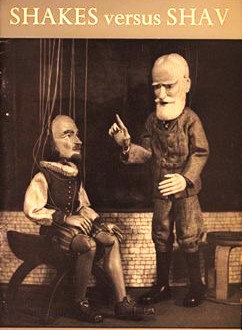





 Why Read Plays