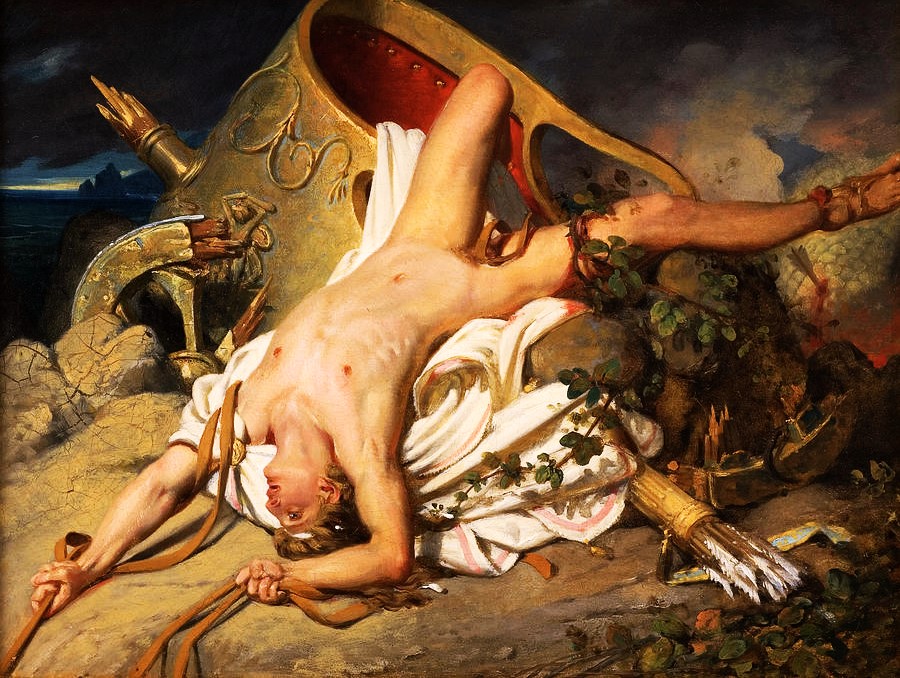
Phaedra: Pity the Monster

Court, Joseph-Désiré. Death of Hippolytus. 1825, Musée Fabre, Montpellier.

  • Play Title: Phaedra: Pity the Monster (monologue)
  • Authors: Timberlake Wertenbaker 
  • Written: 2020 
  • Page count: 8 

Summary

Timberlake Wertenbaker’s Phaedra: Pity the Monster is an adaptation of Ovid’s Heroides 4: Phaedra to Hippolytus. It is one of 15 monologues by a selection of female writers who contributed to a book entitled 15 Heroines: 15 Monologues Adapted from Ovid.

Phaedra is a middle-aged woman with two fully grown sons. She is also stepmother to a stern, young man named Hippolytus. Theseus, Phaedra’s husband, does not favour the oldest of his three sons. In contrast, Phaedra becomes infatuated with the young man. Unable to control her desires any longer and possibly under the influence of a curse, Phaedra pens a salacious letter that is delivered to Hippolytus by a servant. We are not privy to Hippolytus’ reaction, but Ovid writes elsewhere of the young man’s utter disgust upon reading the note’s proposal. Wertenbaker adds nuance to an old story but retains features such as Phaedra’s formidable powers of seduction. Not even accusations of indecorous behaviour or incest will perturb Theseus’s wife. The sordid letter ultimately leads to an accusation of rape, a brutal slaying, and a suicide. Ovid’s tale is reworked to suit a modern audience. However, it captivates as surely as it did when first told to a Roman audience sometime around 26 BC. When reading the monologue, one needs to keep in mind that Phaedra is a half-sister to the much-feared Minotaur of Greek myth.

Ways to access the text: reading

I accessed the text via Everand, which is an online eBook provider. They offer a free trial, so that is an option for non-members. You may also purchase the text via the Nick Hern Books website.

If you are interested in the story itself rather than the particular modern version noted here, then you may search online for Ovid’s Heroides (Heroines). Although the book is easy to find, translations from the original Latin vary in quality so search around.

Why read Phaedra: Pity the Monster? 

The original themes and connotations of Ovid’s text have been reworked by a modern writer and the result is several distinct layers of meaning. The interpretative options are quite broad since Phaedra can be seen as an empowered, older woman; a Weinstein-esque sexual predator; or a delusional, sad figure. At its core, the story is still about an amorous, older woman who wants to sleep with her stepson. With the modern adaption comes additional layering. Now, the love letter doubles as a commentary on racism, migration, white privilege, womanhood, and ageing. In other words, the monster becomes all the things that modern society wishes to disown or build barriers against. At this symbolic level, the story comments on contemporary European politics. Greek mythology is momentarily forgotten and one begins to think of Brexit and the recent Rwanda Bill (2024) that sends unwanted, mostly dark-skinned foreigners away. Wertenbaker’s adaptation is subtle but also generous in its interpretative possibilities.

Post-reading discussion/interpretation 

Do You See a Monster too? 

Though far from the first to do so, Timberlake Wertenbaker has tackled the Greek myth of Phaedra. Indeed, not even Ovid’s version was the first. Sophocles and Euripides, both of whom were Greek tragedians from the 5th century BC, wrote about Phaedra and her scandalous desires. Then there was Ovid’s version, which borrowed liberally from his predecessors. In the first century AD, the Roman dramatist Seneca wrote about Phaedra yet again, but afterwards, there was a prolonged literary silence around this mysterious, incestuous figure. The next work deemed noteworthy in literary circles was Racine’s 1677 play, simply entitled Phèdre. In the 20th century, writers as diverse as Eugene O’Neill and Sarah Kane have taken inspiration from Phaedra’s tale to produce new works. Many of the early adapters retained the story’s key points and focused more on diverse ways to craft the characterisation of Phaedra; for instance, the central figure can be an honourable woman brought low by an unquenchable passion or an incorrigible, shameless wench intent on satisfying her loins. Later adaptations have shown how flexible the story can be in the right hands. Phaedra’s tale has never been set in stone and diverse writers continue to bring surprising nuances to how one may view her.

Ovid’s original text Heroides (Heroines) consists of 21 letters in total. The first 15 are mostly letters from mythological women to the men they love. Think of figures from Greek mythology such as Medea and Penelope. The impetus for each letter is a geographical or figurative distance between the female lover and the male love object. In contrast, letters 16 to 21 consist of epistolary exchanges initiated by men and the subsequent replies from the mythological women to whom they wrote. The modern text, 15 Heroines, is concerned with only the women’s perspectives, thus the first 15 letters. Though traditionally described as letters, not even Ovid’s monologues actually conform to this description. To call them letters is merely to allocate a familiar frame by which they can be recognised.

One stubborn obstacle to these spellbinding monologues is the necessity of knowing something about Greek mythology. While Wertenbaker’s text has fewer erudite references than Ovid’s original, the monologue still relies on a reader’s knowledge of a few key facts, otherwise, the story falls quite flat.

Phaedra’s family tree is a storehouse of Greek myths. Her father was Minos, King of Crete, whose conception was slyly achieved when Jupiter disguised himself as a bull to trick the young princess Europa. She first hesitatingly petted the impressive animal and then foolishly sat on his back, only to be whisked away. She was later defiled by the god and subsequently became pregnant. While Minos was the progeny of a god who simply disguised himself as a bull, Phaedra’s mother, Pasiphae, did the unthinkable. King Minos was away for an extended time waging war against King Nisus, and Pasiphae was all alone. Unbeknownst to the queen, a curse was put upon her by Poseidon on account of her husband’s disobedience relating to a sacrificial bull. The curse meant that she fell in love with this white bull. To satisfy her newfound, taboo carnal desires, Pasiphae asked Daedalus, the gifted craftsman, to make her a wooden cow. By crawling inside this life-like contraption, she could successfully mate with the beast. As a result, Pasiphae gave birth to an abomination that was half man and half bull: the Minotaur.

When King Minos returned home and saw the child his wife had borne, he was determined to hide this shameful thing. Once again, Daedalus’ ingenious craftsmanship was needed so that a mind-boggling labyrinth could be constructed to imprison the beast eternally. Every 9 years, young Athenians (the enemies of Minos) were sacrificed to the Minotaur. When the third feeding was due, a young Athenian warrior named Theseus volunteered to join the other youths who had been allotted this terrible fate. When Ariadne (Phaedra’s sister) saw the handsome warrior named Theseus, she fell in love instantly. In the hope of winning him over, she gave him the famed ball of thread that would allow him to find his way out of the maze. Theseus duly slayed the Minotaur and eloped with Ariadne to the island of Dia, but he soon heartlessly abandoned the girl. Theseus went on to conquer an Amazon woman named Hippolyta, who bore a child named Hippolytus. Phaedra was Theseus’ second wife, with whom he had two more sons. This is a brief overview of the complex links between Phaedra, her sister Ariadne, their half-brother called the Minotaur, Theseus, and Hippolytus (Phaedra’s stepson).

Wertenbaker’s approach to Phaedra focuses primarily on monsters and their monstrous acts. The monologue is a contemplation of anthropomorphism, which attempts to put the non-human in a far more sympathetic light, juxtaposed with the idea of the bestial human, namely the cold-hearted, moralistic Hippolytus. Phaedra proceeds to highlight her family’s genealogy; she is daughter and granddaughter to women famed for being seduced by horned beasts. These women became infamous for their diabolical trysts. Phaedra’s speech clearly references Greek mythology, but there is a more modern topic too concerning an intermingling of peoples, races, classes, and ages. Phaedra understands that she is a monster in Hippolytus’s eyes; it is not just about her family heritage and beastly half-brother, plus the fact that Crete is within view of the dark continent of Africa, but also due to her revelation of sexual longings – her “monstrous thoughts” (Wertenbaker 155). She is a seductress at her core, and her rhetoric is not being expended merely to attain a love poem or song. She desires to know her husband’s son carnally. Employing a decidedly ironic tone, she attempts to repackage her appeal by transforming the idea of the toxic monster. Hippolytus may be convinced that a taste of “the forbidden” (156) will unveil new worlds for him. Phaedra has sufficient hubris to believe that she can convince Hippolytus to act against his own nature. As a huntsman, he sees the animal kingdom as a realm for blood sport, nothing more. Yet Phaedra appeals to him to discover pity and make love to her: someone he sees as a lesser thing, almost an animal.

Phaedra’s plea to Hippolytus, as crafted by Wertenbaker, holds much of the same irony, contradiction, and guile of Ovid’s original. However, one must acknowledge that only half the story is being told. Who is this young man to whom Phaedra makes her plea, and what is his likely response? In Greek mythology, Phaedra and Hippolytus have equally tragic destinies, so one needs to understand that the ageing seductress is always doomed to utter failure. Otherwise, one could far too easily credit her with amazing chutzpah! Alternatively, one could propose that Phaedra be seen through the lens of a sexually liberated, 21st-century audience and, therefore, Hippolytus is not the point. The point is the thrill of the hunt that Phaedra engages in. This little twist of the hunted magically morphing into the hunter is like looking at a Gestalt image and seeing one figure, then the other. The editors of 15 Heroines may have neglected to provide an explanatory introduction for this exact reason, namely, to liberate the tale from Ovid’s old clutches. Alternatively, the book may anticipate an ideal reader and a common reader with the former knowing Greek mythology and the latter being ignorant of it. This becomes problematic since it hints at elitism, yet interesting too because varying interpretations will be the logical outcome. In any case, it is difficult to assert that Phaedra’s love plea has no teleological intent.

Since this essay addresses Phaedra’s entire story, Hippolytus’ part thereof is deemed essential. To excise him from the story would rob us of a better understanding of Phaedra. Paul Murgatroyd et al explain that “In Euripides’ Hippolytus the young prince is intolerant and rather fanatical, a virginal misogynist who will have nothing to do with love or sex” (48). It is quite a description. Indeed, the young man depicted in Euripides’s text is venomous towards women, especially after learning of his stepmother’s feelings. Hippolytus sees women as vain, treacherous, and often promiscuous (49). Of some interest to readers of the modern version is Hippolytus’s view that “women should be housed with wild animals that bite but lack speech, so they can’t talk to other people or get a reply back from them” (49). Women are not just the weaker sex but the hated sex, no better than animals and deserving the company of animals. Therefore, when Wertenbaker’s Phaedra asks Hippolytus to “Pity the monsters” (157), one can fully appreciate how delusional and pathetic this plea sounds. The sheer impossibility of the amorous mission is an intrinsic part of the tale – “There is nothing that Phaedra could have said that would seduce such a character [Hippolytus]” (Murgatroyd, et al 49).

In a performance setting, the Phaedra of 15 Heroines also speaks directly to us, the audience. This character becomes a conduit for an artist like Wertenbaker to express something that sparks recognition. One example is the way Hippolytus is accused of being the default of perfect normality: a youthful, toned, (white) male (body). Older women are deemed invisible and thereby become de-sexualized, dehumanized, spaces of utter absence, whereas Hippolytus has automatic membership in an exclusive, powerful club. Agedness, femininity, and being foreign are all signs of imperfection. The monologue lends itself to being read as a political allegory. Shutting out the other is judged to be a faulty mindset.

“Hear the monster, pity the monster and then even love the monster.
We roam that other world. You have borders against us, barriers, definitions. You lock us out, you think you’re safe.
But who is locked in?” (Wertenbaker 155)

The playwright is a UK resident, so it is quite easy to read the above text as a Brexit reference. Immigration and border concerns were a key factor in deciding the 2016 referendum. Foreigners arriving on boats from Africa were/are not being welcomed in any European land. When Phaedra confronts Hippolytus, positioning herself as the other, she says “stop demanding praise from us. Stop assuming we deserve our humiliation” (156). The apparent analogy between monster and migrant facilitates a different version of the predator and prey scenario that Phaedra speaks about so extensively. Foreigners become fodder in the voracious economies of countries like England because they feed the capitalist system with cheap labour. Migrants are often employed in jobs deemed too menial or too low-paid for UK-born nationals. The contradiction soon arises that the workers so desperately needed become utterly despised since they are automatically placed at the bottom of the social hierarchy. Just like Phaedra, should migrants be grateful and accept their lot, even if it is humiliating? Phaedra’s monologue is a lover’s plea that echoes to us from ancient times, yet also a potent political comment on the current migration situation, which has become so contentious in recent years.

Depending on one’s impression of Phaedra’s confessional letter to Hippolytus, various endings can be imagined. In Greek myth, however, the story has been committed to paper long ago, and the conclusion is tragic. Admittedly, various versions arrange the details differently, but the key events are always the same. First, Phaedra’s secret love for her stepson is put in a letter; revealed to the young man by a wayward servant; or Phaedra herself tells Hippolytus. His reaction is always the same: sheer disgust. In utter humiliation, Phaedra takes her own life (either before or after Hippolytus has died). The unexpected twist in the story is that Phaedra’s shame prompts her to accuse Hippolytus of rape. This is an attempt to save her good name posthumously and thereby protect her sons’ reputations too. Theseus believes the false charge and banishes his eldest son, but the king additionally calls on Neptune, god of the sea, to punish the rapist. The cause of Hippolytus’ death is strangely poetic, at least from a literary point of view, since the theme of the monster looms large. Ovid recounts the story in The Metamorphoses as follows:

“the sea rose up, and a huge mass of waters seemed to curl itself into a mountainous shape from which, as its size increased, came bellowing roars. Then the summit seemed to split, and there erupted a horned bull, which burst through the waters, rearing itself into the yielding air, till its chest was clear of the waves, vomiting quantities of sea water from its nostrils and gaping mouth.”
(Ovid 348)

The horses of Hippolytus’ chariot take fright and they all crash. Hippolytus becomes entangled in the reins while the rest of him is pulled violently in the opposite direction. Despite the many beautiful images of this scene in classical art, Hippolytus’ injured body is described as “one gaping wound” (Ovid 348). It is fitting that Neptune assumed the shape of a monstrous bull, reminding one yet again of Phaedra’s half-brother.

The modern version of Phaedra’s monologue ultimately achieves a lot. It is a text with strong political undertones that cleverly underpin the story of an older woman’s seductive plea for openness to new experiences. Phaedra’s call for pity, not empathy, is intriguing and is an addition to the story made by Wertenbaker. Since Phaedra wants to bed the young man, this call for pity is simply a clever ploy that will appeal to his sense of superiority. Less flatteringly, Phaedra is simultaneously revealed as a woman who would welcome being made love to, even if it makes the young man feel debased. This particular situation has earned quite a crude modern label. The monologue’s labyrinthine complexities become clearer when one compares it to Ovid’s original where Phaedra makes some outrageous claims to get Hippolytus into bed. For instance, there is a suggestion that he will take her virginity – “You’ll reap the first-fruits of my unsullied reputation” (Murgatroyd, et al 44). She says this despite the fact that she is a mother to two sons and the wife of a notoriously oversexed king. On the other hand, one cannot help but be mesmerized by her sustained plea.

“Here is the forbidden: the wife of your father. Not young, indeed to you old, not perfectly formed, spilling out, in shape and feelings, a woman, the unknown, uncontrolled.” (Wertenbaker 156)

The purpose of the monologue is to test our resistance to Phaedra’s powerful language. She is a magically duplicitous character whose deep heritage clings to modern retellings of her tale. Wertenbaker is also acutely aware of her character’s literary history since she translated Racine’s Phèdre from French into English (2009). In the end, does one see the monster that Hippolytus sees, or a vibrant, dangerous, older woman? In truth, it is impossible to vilify Phaedra or sympathise with her entirely. Wertenbaker has successfully updated an ancient text and retained the essential complexities as well. There is an enchanting charisma to a lie that, nonetheless, contains much truth. The manner in which Wertenbaker has linked these truths to modern politics is a bravo moment.

Works Cited

Murgatroyd, Paul, et al. Ovid’s Heroides: A New Translation and Critical Essays. Routledge, 2017.

Ovid. Metamorphoses. Translated by Mary M. Innes, Penguin Books, 1973

Wertenbaker, Timberlake. “Phaedra: Pity the Monster.” 15 Heroines: 15 Monologues Adapted from Ovid. Nick Hern Books, 2020.

The Rocky Horror Show

  • Play Title: The Rocky Horror Show
  • Author: Richard O’Brien
  • Written: 1973
  • Page count: 55

Summary

Picture it – a dark, stormy night; newly engaged couple Brad and Janet get a tyre blow-out on a lonely stretch of road. They just need a phone to call for help but soon find themselves at the door of what looks like “some sort of hunting lodge for rich weirdos” (O’Brien 14). Actually, it’s “The Frankenstein place,” which is home to the likes of Riff Raff, Magenta, Rocky, Eddie and Frank, among others. Frank is “just a sweet transvestite from transsexual Transylvania” (18) who wishes to introduce his unexpected guests to pelvic thrusts, lust and forbidden fruits. This conspicuously underdressed host is an evil scientist in the process of creating his perfect, muscle-bound mate named Rocky (hence the ‘horror’ of the title). The rather naive young couple quickly succumb to the alluring motto of “Don’t dream it – be it” (47). Meanwhile, there is an oddly familiar backing track that includes songs like “The Time Warp” and “Sweet Transvestite.” Mr Frank ‘n’ Furter eventually comes to a sticky end, but it’s all in the name of fun.


Richard O’Brien’s musical is a homage to classic horror movies as well as science fiction favourites. It’s a screwball comedy, so an illogical and very funny plot is de riguer. The musical and subsequent 1975 movie version became cult classics. Does the work have a theme? Well, certainly not a preachy one, but it does promote the idea that breaking free of the shackles of conformity is healthy.

Ways to access the text: watching/listening

The most accessible and possibly best way to experience this musical is by watching the 1975 film version named The Rocky Horror Picture Show. Directed by Jim Sharman, this work was co-written by O’Brien and Sharman. The movie has a running time of 1 hour and 40 mins.

It’s also possible to listen to a recording of the movie soundtrack on YouTube. This is entitled “The Rocky Horror Picture Show: Audience Participation.” There are two files with respective playing times of 48 and 47 minutes. Please note that audience participation means you hear people shouting out perfectly timed extra dialogue, including various colourful obscenities. I listened to the full recording and the interjections got a bit tiresome.

Why watch/listen to/ The Rocky Horror [Picture] Show?

Well, it’s a serious slice of pop culture from the 1970s that also happens to hold bona fide cult status. Few people, with the possible exception of the under 30s, will fail to recognise Tim Curry in stockings and heels. The musical numbers are catchy, the actors are well-known, and the story is wonderfully absurd. It’s Dr Frankenstein with a penchant for half-brained, full-muscled hunks – combined with some B movie classic storylines about aliens who wield death-ray guns. In short, it’s shameless, exuberant fun.

Post-reading discussion/interpretation

The Delights of Chance Encounters

It’s just over fifty years since The Rocky Horror Show was first performed at the Royal Court Theatre, London. This musical was, and remains, a landmark work in both the worlds of theatre and film. True, the special appeal of the story has somewhat faded and the original, hardcore audience have aged and maybe lost some of their enthusiasm. However, the ground-breaking nature of the play’s script is undeniable. O’Brien managed to do what many have painstakingly attempted yet woefully failed to achieve; he delivered an essentially subversive, hedonistic message to the masses with the aid of spot-on humour and fantastic songs and costumes. The majority of movies featuring cross-dressing or transsexual characters are niche projects with a subliminal desire to educate an audience, to elevate them above their conservative views. In contrast, Mr Frank ‘n’ Furter exudes an intoxicating aura of joie de vivre, and he wishes to teach us nothing except wild abandonment. The message wiggles effortlessly into people’s brains because there are no preachy undertones. And just for conformity, the play still ends with the conventional ‘bury your gays’ trope when Frank is killed by Riff Raff’s ray gun (grrrr). This acts like a satisfying palate cleanser for the more traditional audience members who have found the whole ordeal too bacchanalian. The musical is an alchemist’s dream because everything just comes together in the right proportions to create an immoral marvel.

Reviews and commentaries regarding The Rocky Horror Show often focus on the movie rather than the theatrical version. However, the interpretations usually highlight similar key issues. For example, many interpretations could be classed with Mark Siegel’s, who writes that the musical “is an Aristophanic attack against sexually repressive traditional mores and social institutions” (306). For context, Aristophanes was an ancient Greek playwright who specialized in comedy, and he was notably good at ridiculing his subjects mercilessly. O’Brien certainly employs ridicule to great effect when he targets the heteronormative culture of the 1970s. For instance, Brad proposes to Janet by singing the decidedly anti-romantic ditty “Damn It Janet.” Having just seen their boring friends marry (the Hapshatts), Brad feels that he and Janet should be next. This isn’t a Mills and Boon romance but rather a story of good-in-the-kitchen women and men in line for promotions. O’Brien goes on to shatter illusions about virginal brides, monogamy, and unwavering sexual orientation when Frank ‘n’ Furter seduces Brad and Janet on the same night. Nothing is sacrosanct. After Rocky is revealed to stunned onlookers, Frank completes the insult to the established idea of manhood by singing “I can make you a man,” before donning a bridal veil and getting mock hitched to the muscle-bound hunk. Through this sustained mockery of the normal, the abnormal manifests as a viable alternative in the story.

The play has been critiqued over many decades, which encourages some commentators to seek novel approaches. For instance, a consideration of the play’s various musical numbers has been completed by Nicole Biamonte and she has proposed the following, intriguing interpretation.

“In The Rocky Horror Show, flat keys and softer pop-music styles are loosely correlated with the conservative, heteronormative human characters, and sharp keys and hard-rock styles with the sexually open, queer alien characters.” (Biamonte 169)

This binary, be it expressed in musical keys or sexual preferences, is central to the story. A schism of sorts is being presented for our consideration. Christy Tyson considers the appeal of the play to an alienated, young audience, and comes to the conclusion that “The messages in Rocky are clear, simple and often repeated: It’s OK to be different; It’s OK to feel good!” (60). To be different and feel good means to unshackle oneself and transgress a little, or a lot. O’Brien’s quirky story facilitated a clean split between the older and younger generations: the stale squares versus the cool kids. As previously noted, the play’s lead character dies in the end and “Numerous commentators have construed Frank’s death as punishment for his hedonistic lifestyle and/or his queerness” (Biamonte 183). Thus, the binary still has an apparent safe side, which contrasts with the wrong side!

Jerry B. Brown and Judith Hoch have summarized their core reading of the movie as follows. This reading also looks at what is amiss.

“Rocky Horror is both entertaining and illuminating as a musical. However, the film’s main plot parodies the decline of the family and changes in male and female behavior that have shocked England and America in the post-War period. In the “betwixt and between” time that follows the end of empire, sex roles turn topsy-türvy.” (Brown and Hoch 63)

Brown and Hoch see the movie as a work that comprises four key scenes, namely, “American Gothic, The Creation, The Last Supper and The Ascent of the Space Age Puritans” (61). Indeed, many writers have concentrated on the strategic re-recreation of Grant Wood’s classic portrait named American Gothic in the opening scene of the movie. This occurs when Riff Raff, pitchfork in hand, and Magenta stand outside the chapel in puritanical costume. This portrait conjures up the essence of the pleasureless, stoical, protestant ethic of work … and no play; a world that O’Brien proceeds to undermine. ‘The Creation’ refers to Frank ‘n’ Furter’s diabolical creation named Rocky (à la Frankenstein). ‘The Last Supper’ is mocked by the revelation of Meatloaf’s (pun intended) dead body in a glass lid coffin, hidden beneath the dining table. The diners quickly realize that they are devouring Frank’s defunct ex-boyfriend. The Last Supper also foreshadows the death of the alternative, diabolical saviour, namely Frank. Finally, Riff Raff and Magenta, who have been revealed as aliens, return to their home planet of transsexual, in the galaxy of Transylvania (O’Brien 50). This is the final stage, namely ‘The Ascent.’ Various famous artworks shown in the movie from Michelangelo’s The Creation of Adam to Leonardo Da Vinci’s The Last Supper underpin the interpretation outlined by Brown and Hoch.

In an interview with BBC Newsnight, O’Brien described his musical as the “root fairytale” with Brad and Janet representing Adam and Eve and Frank ‘n’ Furter as the serpent (YouTube). Instead of treating the musical as a deliberate attack on all things conventional, it’s more intuitive to consider the haphazard nature of circumstance. In his reference to the famous Genesis passage, the playwright reminds us that things often play out in unpredictable ways, while a desire for both knowledge and sensation underlies many of our major life choices. When Columbia sings her particular verse of “The Time Warp,” then an image of the dark, seductive figure takes shape.

Columbia: “Well I was walking down the street
Just having a think
When a snake of a guy gave me an evil wink
Well it shook me up, it took me by surprise
He had a pick-up truck and the devil’s eyes
Oh – he stared at me and I felt a change
Time meant nothing – never would again.” (O’Brien 17)

Brad and Janet fall into the clutches of Mr. Frank ‘n’ Furter and his clan of debauched followers. While Mary Shelley’s Frankenstein is the inspiration for Rocky’s story, other Gothic novels are referenced too. Remember that these aliens come from the galaxy of Transylvania. There are strong echoes of Bram Stoker’s Dracula in this tale because, like Brad and Janet, the young, innocent Jonathan Harker finds himself at Count Dracula’s castle. Similar to Frank’s seduction of his innocent prey, Dracula’s three maidens advance on Jonathan, apparently to kiss him, thus bringing him to “an agony of delightful anticipation” (Stoker 42). The forbidden knowledge is sexual but with that comes a release from the traditional bonds of responsibility too. Poor Jonathan is lucky to escape Dracula’s lair alive since the Count has rampant desires too, but in the more modern tale of Brad and Janet, their sexual desires are simply awoken.

The literal turning point for Brad and Janet is when they take “the wrong fork” (11) on the road. Much like in Robert Frost’s famous poem, “The Road Not Taken,” life’s travellers often anoint past decisions as being informed, deliberate choices. Moreover, the same people assert, with the benefit of hindsight, that they chose correctly. What Frost’s poem truly expresses is the arbitrary nature of our choices, the often unalterable courses they set us upon, and our overwhelming, eventual need to make sense of what we’ve done. As O’Brien writes, we are ultimately just insects crawling on the planet’s face “lost in time, and lost in space … and meaning” (51). The Rocky Horror Show is a musical that illustrates, nonetheless, that people should always go with their gut feelings and all will eventually turn out okay – probably. In a fashion refreshingly dissimilar to Frost’s, O’Brien shows that choices made, even haphazardly, often reflect an unacknowledged internal desire.

Works Cited

BIAMONTE, NICOLE. “Style, Tonality, and Sexuality in The Rocky Horror Show.” Here for the Hearing: Analyzing the Music in Musical Theater, edited by Michael Buchler and Gregory J. Decker, University of Michigan Press, 2023, pp. 169–89. JSTOR, http://www.jstor.org/stable/10.3998/mpub.11969716.14.

BROWN, JERRY B., and JUDITH HOCH. “The Rocky Horror Picture Show: A Galactic Gothic Epic.” Studies in Popular Culture, vol. 4, 1981, pp. 59–66. JSTOR, http://www.jstor.org/stable/45018077.

Frost, Robert. “The Road Not Taken.” Poetry Foundation, http://www.poetryfoundation.org/poems/44272/the-road-not-taken 

“Richard O’Brien and the Rocky Horror fairy tale – Newsnight.” YouTube, uploaded by BBC Newsnight, 8 September 2015, http://www.youtube.com/watch?v=pLAi8HQMkYo 

Siegel, Mark. “‘The Rocky Horror Picture Show’: More than a Lip Service (Le ‘Rocky Horror Picture Show,’ Du Bout Des Lèvres).” Science Fiction Studies, vol. 7, no. 3, 1980, pp. 305–12. JSTOR, http://www.jstor.org/stable/4239358.

Stoker, Bram. Dracula, edited by Nina Auerbach and David J. Skal, W. W. Norton and Company, Inc., 1997.

Tyson, Christy, et al. “Our Readers Write: What Is the Significance of the Rocky Horror Picture Show? Why Do Kids Keep Going to It?” The English Journal, vol. 69, no. 7, 1980, pp. 60–62. JSTOR, https://doi.org/10.2307/817417.

As You Like It

Davis, Frederick William. As You Like It, Act II, Scene 7. 1902, Warwick Shire Hall, Warwick.

  • Play Title: As You Like It (All the world’s a stage)
  • Author: William Shakespeare
  • Written: circa 1598
  • Page count: 58

Summary

As You Like It is one of William Shakespeare’s most celebrated comedies. The play is set in France where Duke Frederick has recently usurped his brother (Duke Senior). Rosalind, the outcast Duke’s daughter, remains at court since she is best friends with Celia, who is Frederick’s daughter. One day, Rosalind watches a public contest between the court wrestler and a young man named Orlando. She instantly falls in love with the brave Orlando. This young man has been disinherited by his older brother Oliver, and he subsequently flees to the Forest of Arden due to his brother’s ongoing vendetta. When Rosalind is unexplainably banished from court, she too flees to the forest accompanied by the ever-loyal Celia. For safety, Rosalind disguises herself as a man and calls herself Ganymede while Celia takes on the new name of Aliena. Orlando then meets Ganymede (Rosalind) and they become friends. Ganymede promises to ‘cure’ Orlando of his love for Rosalind. Comedic encounters ensue. The play concludes with multiple marriages and renewed peace at court.

Rather than look at the entire play, the short essay in this post will address only Jaques’ famous monologue that begins with the line – “All the world’s a stage” (AYL 2.7.146).

Ways to access the text: reading/listening  

The play is easy to find online. For example, one may read the full text on The Folger Shakespeare website.

Many free audiobook versions have been posted online. One example is a recording from 1962 starring Maggie Smith as Rosalind. It can be found on the Internet Archive website under the title “Living Shakespeare: As You Like It.”

There are a few movie versions of the play. To start, there is Kenneth Branagh’s As You Like It (2006). Alternatively, one may search for “‘As You Like It’ at Shakespeare’s Globe Theatre,” which is a recording of a live stage performance. This receives a rating of 7.7/10 on the IMDB website

Why read/listen to/ watch As You Like It?

It’s probably acceptable to say that As You Like It (AYL) is a frothy, early-modern period comedy that has aged reasonably well. Few plays have lines like Rosalind’s, aka Ganymede – “Love is merely a madness; and, I tell you, deserves as well a dark house and a whip as madmen do” (AYL 3.2.407-409). No, the play does not veer into Fifty Shades of Grey territory, but it’s full of Shakespeare’s familiar witticisms and wordplay. Of particular interest are the gender-bending antics where a boyish Rosalind gets an unsuspecting Orlando to woo her while she’s still in male attire. This is part of the ‘cure’ that Ganymede administers to Orlando to solve the problem of his unshakeable love for Rosalind (confused yet?). It’s a tale of love, disguises, feuds, reconciliations, and of course – lots of marriages. This play isn’t just for Shakespeare buffs, or students, because it delivers on several levels for modern readers.

Post-reading discussion/interpretation

Jaques in the Era of TikTok and Crack


Does As You Like It need a new interpretation? That is the question. ‘Probably not’ is the answer that immediately springs to mind. It’s not that I didn’t enjoy tackling some of Shakespeare’s weightier plays in the past, but comedies are far trickier. They dissolve into nothingness quicker than wet tissue paper when one tries to analyse them. It’s probably because humour doesn’t normally need to be dissected; it hits the spot, or it doesn’t. AYL is a play you possibly studied at school, or maybe at college, or maybe you saw the Kenneth Branagh film version. The wordplay is fun, and the jokes are witty, but few people need a detailed interpretation of the pastoral world evoked in the Forest of Arden. By comparison, some of Shakespeare’s other comedies like A Midsummer Night’s Dream and Twelfth Night are meatier and can endure a pernickety analysis quite well. Alas, it is the fate of AYL to be mercilessly dissected by either semi-illiterate 14-year-olds or those with doctoral degrees. For me, it is sufficient to look at a single, famous monologue from the play and try to imagine what it means for a modern-day reader. The speaker’s name is Jaques who is a Lord attending on the exiled duke. This Jaques probably had a life quite different from, let’s say, a present-day, twentysomething Data Analyst from Dagenham, or Dijon (keeping it French). Yes, people go through the same stages of life as described in the monologue, but it must be different, surely. This essay will look at a few of those differences.


To begin, this is the monologue from the play.

Jaques: All the world’s a stage,
And all the men and women merely players.
They have their exits and their entrances,
And one man in his time plays many parts,
His acts being seven ages. At first the infant,
Mewling and puking in the nurse’s arms.
Then the whining schoolboy with his satchel
And shining morning face, creeping like snail
Unwillingly to school. And then the lover,
Sighing like furnace, with a woeful ballad
Made to his mistress’ eyebrow. Then a soldier,
Full of strange oaths and bearded like the pard,
Jealous in honor, sudden and quick in quarrel,
Seeking the bubble reputation
Even in the cannon’s mouth. And then the justice,
In fair round belly with good capon lined,
With eyes severe and beard of formal cut,
Full of wise saws and modern instances;
And so he plays his part. The sixth age shifts
Into the lean and slippered pantaloon
With spectacles on nose and pouch on side,
His youthful hose, well saved, a world too wide
For his shrunk shank, and his big manly voice,
Turning again toward childish treble, pipes
And whistles in his sound. Last scene of all,
That ends this strange eventful history,
Is second childishness and mere oblivion,
Sans teeth, sans eyes, sans taste, sans everything.

(AYL 2.7.146-173)

(L) Photo of the reconstructed Globe Theatre of Shakespeare. (R) Escher, Maurits Cornelis. Eye.1946.

Shakespeare’s conceit that life is like a play seems far less of a novel comparison today than it may have been in the late 16th century. It’s unsurprising that Shakespeare, an actor and public persona, considers one’s time in the glare of the public eye as real living. In those days, the only ‘famous’ people were rulers, philosophers, adventurers, artists, inventors, and villains. Actors played these parts on stage and thereby got a taste of the adulation by proxy. Fame was hard-earned, inherited, or gained for all the wrong reasons. Ordinary people were mostly invisible by comparison, merely an audience in waiting. There was no fast track to celebrity or infamy. Fast forward to the 21st century, and everyone can reach a dubious level of fame. The reason is simple – the eyes of the small audience within the Globe Theatre in Shakespeare’s example have been transformed into the all-seeing eye of modern life. Just consider for a moment that there are CCTV cameras on practically every street corner and inside most public buildings today. Even if you go off the grid, you can still be photographed from space regardless of the obscure location. Anyone with a smartphone and fingers (yes, the bar is high) can film events as they happen and save them for sharing later. Do the wrong thing in public and fame/infamy can be foisted upon you.

Private individuals can also participate in ‘broadcasting’ their lives. Think of platforms like X, TikTok, Facebook, and YouTube. In 1968, Andy Warhol predicted that “In the future, everyone will be world-famous for 15 minutes” (NPR). For a decidedly darker take on the future, George Orwell’s 1949 dystopian novel Nineteen Eighty-Four warned that “Big Brother is watching you” (1). Little did the author know that modern society would actively embrace such unremitting surveillance with greedy, clasping arms. Marilyn Monroe wasn’t alone in knowing how to make love to the camera. In short, Shakespeare’s idea of the world as a stage was incredibly prescient. All our lives have started to play out in a public arena, regardless of our wishes. Videos on everything from sex to suicide are posted online and an ever-ready global audience of eager watchers will ceaselessly click on them. But to get some perspective – I’d still prefer to post an unintentionally embarrassing TikTok video and figuratively die of shame rather than die (anonymously) of the bubonic plague back in William’s day.

Shakespeare’s seven ages of man begin, uncontroversially, with infancy. “Mewling and puking” doesn’t strike one as ideal, but it’s actually not as bad as it sounds. Mewling is like the sound of a kitten in a box – a soft yet high sound. The puking part is quite normal too, so let’s not call a social worker yet. Instead, let’s delve a bit further. The kid is in a nurse’s arms, not its mother’s. This doesn’t mean a hospital setting but refers to a wet nurse: a woman whose occupation was to care for and breastfeed the child. Wet nurse was a bone fide job title in Tudor England. Being a wet nurse in Shakespeare’s day is probably like being a techie today, i.e. guaranteed employment. In fact, not until the Industrial Revolution did society see the widespread introduction of baby bottles and the all-important infant formula to put in those bottles (Martins). Therefore, breast milk was the only option for these Shakespearean-era babies. Indeed, such infants were often breastfed for two whole years with the slow introduction of soft foods at the latter end of this period. In Catholic England, these wet nurses did fairly okay, but with the Protestant Reformation came some decidedly bad press – “Protestant writers often described wet nurses as ‘drunkards’, ‘sluts’, or ‘gossips’” (Martins). The character of the wet nurse was crucial because, at that time, breast milk was believed to actually shape the character of the child. The Scientific Revolution was in its own infancy at this point in history, so let’s cut it some slack and simply compress the science into the slogan of ‘bad boob equals bad baby.’ The Tudor English did, however, know that breastfeeding is a natural contraceptive: women normally don’t return to fertility until they’ve stopped. Therefore, maybe some wet nurses had the opportunity to be bad, so to speak, and the rest just got a bad name. On the other hand, who wouldn’t turn to hard liquor after two years of breastfeeding? How does this relate to modern-day scenarios? Well, Erasmus famously said that “a mother who doesn’t breastfeed only deserves to be called “half-mother” by her offspring” (Folger). Well, there you have it from the esteemed philosopher’s mouth. Mothers are always wrong is the clear motto. This particular gospel has been in vogue since at least Medieval times. In the last century, we have somehow managed to add pop psychology to the mix, so the rights and monumental wrongs of motherhood have become even more debated.

There’s a definite theme within Shakespeare’s phases of childhood since the schoolboy is next and he’s eternally “whining.” This is the familiar ‘woe is me’ stage of childhood that many parents dread. However, Elizabethan England had no compulsory national system of education, so only privileged kids got to go to school. Well, maybe privilege is the wrong word since schoolmasters of that era had a penchant for using birch rods to punish dunces, daydreamers, ne’er do wells, and … everyone really. It was, quite frankly, the preferred implement of torture. Also, the children who made it to grammar school would be in class at 6 am and not finish until 4 or 5 pm, phew.

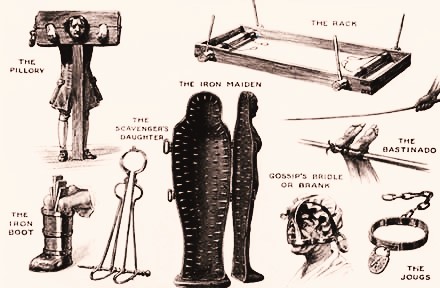
England was generally a more severe society in those days with public punishments being nothing unusual – “Vagrants were often whipped or even branded, while drunks went into the stocks or pillory” (WJEC). The Elizabethans had what one might call a zero-tolerance attitude to non-conformity. Now, let’s imagine a winsome youth looking out his classroom window at a public flogging as he begins to seriously reconsider flunking those exams. It would be interesting to film Jaques’ reaction to a 2012 Daily Mail (UK) newspaper article which reported that “Growing numbers of teachers are falling victim to serious assaults by young pupils who punch, stab, kick, bite and push.” Incidentally, this refers to pupils as young as 4 years old. Yes, times have changed somewhat, and modern teachers probably need self-defence classes before entering any pedagogical arena. Corporal punishment in UK schools wasn’t banned until 1987, and a cynic might say – if it wasn’t broken then why fix it? The author does not share this prehistoric view and believes instead that children should be fed sugary treats at breakfast and then unleashed on the public school system. What better way to make gladiators of our teaching staff.

Next, the Lover is “sighing like furnace,” which is either a form of heavy breathing or something akin to an adult whining sound. Shakespeare’s idea of love is quite stereotypical. Here is the familiar lovesick youth who burns with passion for an unattainable mistress. The Bard himself was partial to writing some seriously OTT love poems, like Sonnet 18: “Shall I compare thee to a summer’s day?” Interestingly, scholars assert that about two-thirds of Shakespeare’s sonnets are either about, or directly addressed to, a young man. But we shall promptly gloss over this love triangle, ahem, of the Bard, his wife, and the ‘fair youth.’ If one skips forward a few centuries to Johann Wolfgang Goethe’s famous novel – The Sorrows of Young Werther – then one finds the epitome of lovesickness. Werther is a highly sensitive (yet definitely straight) artist who cannot gain the hand of the woman he loves, so he ends up shooting himself in the head – after a few hundred pages of intense self-reflection. It is pertinent to note that dating back in Elizabethan times was quite different to nowadays. Admittedly, “Young people of both sexes in early modern England were fairly free to mix at work and at markets, fairs and dances” (Lyon). However, most marriages at that time were arranged by a young person’s parents or relatives. Free association between the sexes didn’t inspire the same frisson, or maybe it increased the tension since they were likely to be married off to someone else against their wishes anyway. Marriage was all about extending a family’s social network – “The primary purpose of marriage, especially among the upper class, was to transfer property and forge alliances between extended family networks, or kin groups” (Layson and Phillips). Shakespeare is speaking of young men’s love of unattainable women – the approximate equivalent of a modern-day man in a strip club full of Russian beauties whose visas are about to expire. Back in the day, desire and marriage were utterly disconnected, especially for the upper classes. The law was also peculiarly unromantic and resembled more a bond of slavery than love.

“Under the English system of coverture, a woman’s identity was covered by her husband’s when she married. A married couple was regarded by the law as a single entity and that entity followed the will of the husband. Mothers had no legal rights over the guardianship of their children and any property that a woman possessed at the time of marriage came under the husband’s control.”

(Layson and Phillips)

Despite the downfalls of modern dating and marriage, few(er) women end up shackled to a domestic despot who, to add insult to injury, secretly pines for another woman. Shakespeare’s own secret love life would probably require the expertise of Dr. Phil or Esther Perel. Some rumour mongers assert that the mad-about-the-boy sonnets merely reflected the poet’s gratitude to a deep-pocketed, male patron ($$$), but I utterly refuse to contemplate the idea that Mr. S’peare was gay for pay!

The first actual career on the list is that of Soldier. This is somewhat of an anomaly since there was no standing army in England until the year 1660 (some half a century after AYL was written). However, fighting men did need to be recruited during times of social upheaval and foreign wars, and a form of enlistment was sometimes enforced. All men between the ages of 16 and 60 were eligible, but once they were recruited, only one in five would receive any actual training. They were simply issued weapons and expected to learn on the job – so to speak. During the reign of Queen Mary (1553-1558), soldiers’ guns often malfunctioned after being fired just a few times and soldiers were also frequently burned by ignited gunpowder. As a consequence, “many soldiers took to averting their heads while firing, thus missing their targets.” (ISA). Shakespeare aptly writes of soldiers being “Full of strange oaths,” and who would frown upon a vocabulary worthy of a sailor when these fighting men were faced with such atrocious conditions. The Bard also addresses young men’s propensity for testosterone-fuelled shows of courage – “Seeking the bubble reputation / even in the canon’s mouth.” It’s a historical fact that in Elizabethan times, “The untrained, low ranking, disenfranchised common soldier often ended up as cannon fodder” (ISA). In modern times, national armies rely on sophisticated recruitment techniques rather than enlistment. Yes, you’ve probably seen one of those adverts that have been specially crafted to appeal to adrenalin junkies. In some extreme cases, foreign fighters, who are mostly young men, have voluntarily joined the ranks of soldiers in Syria and Ukraine (recent examples). This is doubtless an attempt to show the same calibre of manhood that the poet wrote about so many hundred years ago. It’s strange that it took until the 1960s and the Vietnam War for someone to think of a better motto – Make love, not war.

Much like today, masculinity was held at a premium in Elizabethan times. The description of the soldier being “bearded like the pard” refers to old-school male grooming. Approximately 90% of adult men were sporting some form of beard in the 16th and 17th centuries – “Having a beard was seen as a sign of manliness, whereas being clean-shaven was viewed as a sign of effeminacy, with beardless men usually either young or clerics” (Irvine). One must bear in mind that it was not an era of sophisticated science, so quite understandably, “The Tudors believed facial hair was the result of male sexual heat” (Irvine). Much like today’s urban hipsters, there was a range of styles that could be adopted – “A popular style was a ‘peak de bon‘– a small pointy beard that a lot of Elizabeth I’s courtiers grew” (Irvine). The style specifically referred to by Shakespeare describes whiskers that stick out like a leopard’s. One is unsure which modern dietary supplement would produce such awe-inspiring results. Overall, Shakespeare’s depiction of these bearded soldiers is wonderfully colourful – a cursing hoard with their guns already cocked and pointed in various directions, who probably killed more wildlife than enemies.

Next on Jaques’ list is the Justice. Some misunderstand this to refer to a court judge, but it’s really about Justices of the Peace (JPs) who “were unpaid officials selected by the queen to oversee law and order” (BBC). They had tasks like collecting taxes, arranging for road repairs, and importantly, setting punishments for low-level crimes. There was no police force in England at that time so people were often sentenced to the pillory for various offences. Shakespeare’s description of the Justice is amusing since it conjures up an image of a pot-bellied, Medieval mansplainer – “Full of wise saws and modern instances.” These men were the original brigade of pale, stale males. The “good capon lined” means a neutered rooster who has been specially fattened for the table, quite the delicacy apparently. This bird was commonly used as a bribe with Justices of the Peace.

From the description, the Justice is conspicuously wide in the middle, probably with a shockingly high BMI score, and he is the epitome of middle-aged conservatism. The fat, impotent bird (an aged cock) is also likely a commentary on the men who held such public positions. Even though the Elizabethans didn’t have the little blue pill from Pfizer, the town crier may well have promoted a magic flower called the Saffron Crocus, known “to cause standing of the yard” (French). For those of you unfamiliar with imperial measurements, a yard is 36 inches, so no, they didn’t need television in those days. In closing, the figure of the middle-aged, pill-popping, pompous know-it-all is still to be seen in modern times.

While many commentators divide the life cycle into three stages, Shakespeare gets to a 6th role before we finally meet old age – the “slippered pantaloon.” The moniker means “a foolish old man” (Norton 1649). The name is an allusion to Italian popular comedy of that era. It’s a type of biological farce because the old man begins to shrink at this stage of life. The muscles weaken, along with the voice, and the eyes fail until the world seems smaller and adventures are relegated to mere tales of the past. He has spectacles, which were indeed available in the 15th century. Glasses were first imported from Florence, but they were later produced in London by skilled Dutch immigrants (von Ancken). The hidden subtext here is that only “Professionals such as lawyers, merchants, writers and other members of the literate public were the main consumers of this product” (von Ancken).For most people outside such professions, the world would always have seemed small, regardless of vision problems. Travel in Tudor England still relied on various ancient Roman roads, horses of varying stamina, and going by foot. Only the very well-heeled could afford to explore the continent or further afield. Jaques would doubtless raise an eyebrow at today’s geriatrics who have scuba diving or the Orient Express on their bucket lists. For Elizabethans, the world was always quite small but old age made it shrink even further.

The final stage of the life cycle is “second childishness.” This neatly completes the circle of life with the aged man resembling a baby in his dependency. The life expectancy of the average person in Tudor England was a mere 42 years old so that puts things into perspective. Of course, some people had longer lives. For example, Queen Elizabeth I died at 69 years old. Like the old man who is “Sans teeth”, she too had atrociously bad teeth but feared the pain of actual extractions. In such circumstances, one had to go to “a barber surgeon, the ‘jack of all trades’ of the Middle Ages” (KRiii). These medical practitioners carried out a selection of services such as bloodletting, limb amputations, and pulling out teeth. It’s best to avoid the fancy term of ‘tooth extractions’ here because “Having a tooth removed by a barber surgeon would be done with a pair of pliers and no anaesthetic” (KRiii). On one famous occasion, the queen could only be convinced to have a tooth pulled at a surgeon’s after the Bishop of London allowed one of his own healthy teeth to be pulled as a demonstration that the pain was indeed tolerable. Now, that’s chivalry! Old age was not for sissies in Elizabethan times – even warrior queens were put to the test. Jaques could not possibly imagine a world of elder care including luxurious retirement homes, state pensions, a cornucopia of pain medications, false teeth, and yes, euthanasia. ‘Mummy, I’m taking you to the Dignitas hotel in Switzerland’ would have sounded far more upbeat and adventurous in Shakespeare’s day.

Comparing Jaques’ world to the modern world reveals wider gaps than would be expected. In today’s world, Rosalind would likely be crowned in a Drag King competition, mistaken for a trans man, or accused of conversion therapy due to her unethical procurement of ‘a cure.’ Orlando would be sent for a vision test, or an IQ test, since he can’t recognise his own girlfriend in men’s clothes. Audrey would likely be posting TikTok videos about fashion in her distinctive, regional accent. Almost everything about Shakespeare’s world is difficult to fully comprehend. Platitudes about the Bard’s perfect summation of universal experiences begin to sound quite flaky when one dares to gape into the historical chasm that separates us from Elizabethan times. For one thing, it’s clear that it was a man’s world (James Brown backing track, please). All 7 ages refer to men alone, not mankind, just cis males from the Forest of Arden region (think white wine and white men). There weren’t even any women on the stage, just rouged, prepubescent boys in dresses (honestly). Jacque’s monologue is a famous speech and the disparity between then and now is, for me, one of the most fascinating aspects of it. Having got a better idea of Shakespeare’s world, I’d say vive la différence!

Works Cited. 

“A Closer Look at Pregnancy, Midwifery, and breastfeeding in the Tudor Period.” The Folger Shakespeare, http://www.folger.edu/blogs/shakespeare-and-beyond/pregnancy-midwifery-breastfeeding-tudor-period. 

“Changes in Crime and Punishment c.1500 to the Present Day.” WJEC CBAC, resource.download.wjec.co.uk/vtc/2020-21/el20-21_7-2-%20kos/eng/methods-punishment-changed-over-time.pdf. 

French, Esther. “The Elizabethan Garden: 11 plants Shakespeare would have known well.” The Folger Shakespeare, http://www.folger.edu/blogs/shakespeare-and-beyond/elizabethan-garden-plants-shakespeare. 

Irvine, Amy. “Beards and Status in Tudor Times.” HistoryHit, http://www.historyhit.com/beards-and-status-in-tudor-times/#:~:text=For%20the%20Tudors%20and%20Elizabethans,power%20and%20position%20in%20society. 

“Join the Army, See the World.” Internet Shakespeare Editions, internetshakespeare.uvic.ca/Library/SLT/society/city%20life/soldier2.html 

Layson, Hana, and Susan Phillips. “Marriage and Family in Shakespeare’s England.” The Newberry, dcc.newberry.org/?p=14411. 

Lyon, Karen. “Wooing and Wedding: Courtship and Marriage in Early Modern England.” The Folger Shakespeare, http://www.folger.edu/blogs/folger-story/wooing-and-wedding-courtship-and-marriage-in-early-modern-england. 

Martins, Julia. “Motherhood and Wet Nurses: Breastfeeding in Early Modern Times.” Living History by Dr Julia Martins, juliamartins.co.uk/motherhood-and-wet-nurses-breastfeeding-in-early-modern-times. 

“Medieval Dentistry.” King Richard III Visitor Centre, kriii.com/news/2021/medieval-dentistry. 

Orwell, George. Nineteen Eighty-Four. Penguin Group, 2012. 

“Queen Elizabeth I and government.” BBC Bitesize, www.bbc.co.uk/bitesize/guides/z88fk7h/revision/6.  

Shakespeare, William. “Shall I compare thee to a summer’s day?” Poetry Foundation, http://www.poetryfoundation.org/poems/45087/sonnet-18-shall-i-compare-thee-to-a-summers-day. 

Shakespeare, William, et al. The Norton Shakespeare. Third edition. New York, W. W. Norton & Company, 2015. 

“Teachers attacked by children as young as Four: Rising tide of violence in Britain’s primary schools.” Mail Online, http://www.dailymail.co.uk/news/article-2251974/Teachers-attacked-children-young-FOUR-Rising-tide-violence-Britains-primary-schools.html. 

“The Life of a Soldier.” Internet Shakespeare Editions, internetshakespeare.uvic.ca/Library/SLT/society/city%20life/soldier.html. 

Von Ancken, Victoria. “Spectacles.” Medieval London, medievallondon.ace.fordham.edu/exhibits/show/medieval-london-objects/spectacles. 

“Warhol Was Right About ’15 Minutes Of Fame.” NPR, http://www.npr.org/2008/10/08/95516647/warhol-was-right-about-15-minutes-of-fame. 

Oedipus Rex

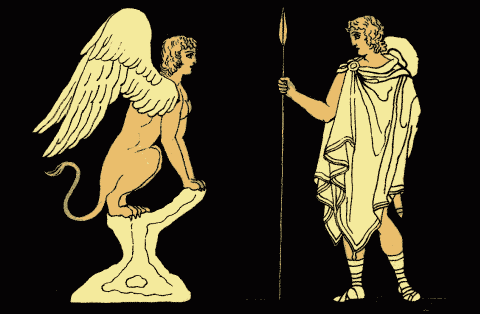
Oedipus and the Sphinx.

  • Play title: Oedipus Rex or Oedipus the King.  
  • Author: Sophocles 
  • Written/first performed: around 430 BC.  
  • Page count: 95 

Summary. 

Oedipus Rex tells the ancient tale of King Oedipus of Thebes. At the beginning of the play, the city is ravaged by a strange plague. A group of citizens ask the help of their King who previously saved the city from the horrors of the Sphinx. King Oedipus, hoping to end his people’s misery, seeks the advice of the oracle in Delphi. The oracle reveals that the unsolved murder of the former king, Laius, is the true cause of the plague. The murderer must be cast out and only then will the city be returned to health. By tirelessly seeking out the original murderer, Oedipus unknowingly reveals that he is at the heart of his city’s troubles. The intricately detailed plot of the play reveals how Oedipus’ childhood in Corinth with his parents, King Polybus and Queen Merope, is connected to his new life in Thebes with Queen Jocasta, widow of the former king, Laius. The primary themes of the play are personal identity, prophecy and fate.    

Ways to access the text: reading. 

The text of the play is freely available online but please note that there are many different translations from the original ancient Greek. For example, on Project Gutenberg, one can find a translation in rhyming verse by Gilbert Murray under the title, “Oedipus King of Thebes.” Project Gutenberg also has a translation in blank verse by F. Storr under the title, “Oedipus the King.” 

I chose an online PDF file of “Oedipus the King” translated by Robert Fagles, which is available by searching “yale.imodules.com Oedipus Rex.” This is a scanned copy of a printed text and is easy to read from the screen. None of the sources listed above have footnotes and they are not essential for reading.  

Why read Oedipus Rex? 

The Oedipus complex

By using the myth of Oedipus as an example, Dr Sigmund Freud revealed a dark truth within all of us. In 1899, Sigmund Freud’s book The Interpretation of Dreams was published, and the world was introduced to the Oedipus complex. The section of the book where Freud refers to Oedipus is entitled “Dreams of the Death of Beloved Persons.” First, Freud explains that such a dream, when accompanied by distressing feelings, actually reveals our hidden wish for the person’s death! However, the wish is not necessarily a present wish and may date from the past. When such dreams concern our parents, we are most likely to dream of the death of a parent of the same sex, for example, a son dreams of his father’s death. The explanation provided by Freud links directly to the fact that a child’s sexuality begins to develop relatively early. In general, children are spoiled or indulged by the parent of the opposite sex (mommy’s little soldier), and thus the parent of the same sex becomes what Freud calls an “obnoxious rival” (316) for such affections. The parent of the same sex is the disciplinarian more often than not. In this example, the boy would wish for his father’s death. As children do not understand death, they readily wish it on those who deprive them of their desires. Whether one accepts this theory or scoffs at it, Freud asserts that it is a perfectly normal phase of childhood development.   

Freud explains the continuing potency of the myth of Oedipus by this link to infantile psychology: basically, it is something that affects us all. He also compares Oedipus’ tortuous road to the truth as analogous to the process of psychoanalysis (Freud 321). In short, Oedipus enacts as an adult a wish that most of us secretly harbour as children, and therein lies the true terror of this play. This summary is relevant to the reader, despite any opinions about Freud’s theories, primarily because it enhances one’s understanding of the play. Freud’s theory will surely echo in the reader’s thoughts when Queen Jocasta says to Oedipus, “Many a man before you, in his dreams, has shared his mother’s bed.”  

The domino effect.  

The events that are of main concern to King Oedipus are predominantly in the past and therefore irreversible. Oedipus is like an investigator who slowly uncovers details about his own origins, and these discoveries shed quite a different light on the circumstances in which he currently lives. When one considers how each individual event seems to determine the subsequent event then the final pattern revealed is best described as the result of a domino effect. However, this makes the plot of Sophocles’ play seem simple, which it certainly is not. What is of interest to the reader is the explanation that applies to the apparent domino effect: is it fate or chance? When past events are lined up neatly and therefore have the appearance of a pattern, does this mean that a pattern truly exists? And what of Oedipus’ personal character? Surely the kind of man he is determines what he does because otherwise, he is just a puppet of the Greek gods. As Henry James once said, “What is character but the determination of incident? What is incident but the illustration of character?” (Abrams 224). What appears to be a domino effect of horrible choices and actions is the glue that holds a reader’s attention and makes the play such an absorbing read.   

Post-reading discussion/interpretation. 

Does Oedipus deserve such punishment?  

What crimes does Oedipus knowingly commit that warrant his total destruction at the play’s end? He openly admits that “the blackest things a man can do, I have done them all.” He is referring to being his “father’s murderer” and his “mother’s husband.” Yet, he committed these outrages against his parents without any knowledge that they were in fact his parents. Additionally, while murder is obviously a crime regardless of the biological relationship of the parties involved, the killing of King Laius is complicated because it begins as a roadside scuffle that tragically escalates.    

To understand the situation clearly, it is best to begin by scrutinizingthe four separate prophecies listed in the play. These prophecies outline the taboo acts, indeed criminal acts, that Oedipus carries out. First, Creon is sent to the oracle to discover the cause of the Theban plague, and Apollo’s response is that old King Laius’ killer has not yet been brought to justice. Secondly, Tiresias (the seer) is asked to assist, and he astonishes Oedipus by saying, “You are the murderer you hunt.” Thirdly, Queen Jocasta reveals to Oedipus what the oracle once prophesied for King Laius: “doom would strike him down at the hands of a son.” Finally, there is the prediction that the oracle revealed to the youthful Oedipus that caused him to flee his home in Corinth: “You are fated to couple with your mother [and] kill your father.” However, if one considers these events from Oedipus’ perspective then the following points are all true: King Laius had been killed long before Oedipus ever came to Thebes; Tiresias’ visions seem like nothing more than naked treachery to Oedipus; Jocasta’s example of the prophecy about Laius is given as evidence that such prophecies are actually unreliable; and lastly, Oedipus intentionally fled his homeland because he wished to spare his parents, King Polybus and Queen Merope. Of course, this is the saga from Oedipus’ unique perspective and not that of an audience who knows the truth. Nonetheless, it is important to emphasise that all of Oedipus’ actions were carried out in ignorance of the true facts.    

How is one to legitimately allocate blame? Apart from Oedipus’ own retrospective feelings of shame, what separate, objective criteria may one use to accuse him? There are certain actions taken by Oedipus during his life that may explain how he has displeased the gods and earned their punishments. The Greek gods were notoriously capricious, fickle and unjust. However, condemning a man to realize his faults only in the aftermath rests uneasily with any reader. One must search a little deeper for answers. Oedipus’ most apparent transgression is his hubris, which presents a direct challenge to the authority of the gods. When the distressed Theban citizens seek salvation from the plague, Oedipus confidently says, “You pray to the gods? Let me grant your prayers.” This statement creates a binary split between Oedipus’ power and the separate power of the gods and implies they are equal. Oedipus’ reign as king is preceded by that of King Laius and followed by the reign of King Creon; these other kings pay respect to the oracle and heed the advice of the gods. Laius and Creon work in tandem with the otherworldly powers, not in opposition to them. In stark contrast, Oedipus seeks to openly discredit the oracle’s messages, which are guidance directly from Apollo. Then there is the separate issue of Oedipus’ rage. When he met King Laius and the royal entourage on the road, one man tried to shoulder Oedipus aside with the result that Oedipus “killed them all – every mother’s son!” Oedipus’ volcanic temper is exposed on two further occasions. First, Oedipus condemns Creon to death based on the belief that he is a traitor, despite having no evidence to support the accusation. Second, Oedipus bursts into Queen Jocasta’s bed chamber while wielding a sword, presumably intent on murdering her, after finding out the truth of their biological tie. Regicide evidently offends the gods since the plague is the result of Laius’ unsolved murder, yet Oedipus continues to show utter disregard for the royal family including Creon, a former (and future) king, and Queen Jocasta. On the other hand, the precise reason the gods punish Oedipus is never stated. Regarding Oedipus’ fate, Tiresias says that “Apollo … will take some pains to work this out.” In the end, Oedipus echoes this prophecy when he says that Apollo – “ordained my agonies.”   

Many commentators have asserted that Oedipus’ downfall is sealed by the murder of King Laius at the crossroads, a location symbolic of making a conscious choice. From this perspective, Oedipus’ actions have unavoidable and justified consequences. This interpretation neatly explains the plague sent by the gods and certainly offers one of the most logical standpoints. There is also a frequently made argument that by sending Creon to the oracle, Oedipus begins to unravel his own past, which leads to his eventual downfall. At the story’s core, it is Oedipus’ knowledge of what he has done, most especially due to his blood ties to Laius and Jocasta, that destroys his life: a life that would otherwise be deemed noble. When the final revelation comes, Oedipus says “Oh god, all come true, all burst to light.” Despite the appealing neatness of this interpretation, there is still another tantalizing explanation as to why Oedipus must suffer, and it is an explanation that covers several generations of the family and not just Oedipus. That explanation is a curse. 

If one accepts a curse as an explanation, then the most salient question is who is cursed? Surely, King Laius is cursed as he is to be murdered at the hands of his own son, and Oedipus is then merely the implement rather than the true victim. The first of the four prophecies in real-time, as opposed to the order of revelation within the plot, is when the oracle told King Laius that his own son would murder him. The most probable explanation for Laius being cursed comes from Greek mythology but is absent from the text of Oedipus Rex. The myth is that King Laius kidnapped and raped a young man named Chrysippus, son of the King of Pisa (Gantz 488-492). Then Chrysippus, out of shame for what had happened to him, committed suicide. As a consequence of his defilement of a youth, Laius may have broughta curse from the gods upon his own house. Oedipus is the 2nd generation cursed; he is destined to commit the notorious murder of his own father. Oedipus also unwittingly curses himself when promising to catch Laius’ killer, saying, “My curse on the murderer … let that man drag out his life in agony.” Tiresias instinctively identifies Oedipus as a harbinger of evil, saying, “You are the curse, the corruption of the land!” It is interesting that when Oedipus begins to suspect that he is the much-sought-after killer of Laius, he says, “I think I’ve just called down a dreadful curse upon myself.” This statement reveals that the curse has different effects upon the various people involved. Laius’s cursed destiny was to be murdered, but for Oedipus, the curse is to have taboo information revealed, which leads to his self-annihilation. One could also reasonably argue that the gods keep the curse alive by linking the city’s new plague to Laius’ murder because this reopens the investigation of an old crime. The 3rd and final generation to be burdened with this curse is Oedipus’ two daughters, Antigone and Ismene. Oedipus predicts that the girls are doomed to remain unmarried and childless since no one will dare “shoulder the curse” that weighs upon their family. By focusing on the curse, one becomes more sympathetic to Oedipus. One sees him as a victim of something far greater than he is. The curse is a cruel punishment from the gods that takes three generations to run its full course.          

In conclusion, it seems impossible to say that Oedipus deserves the punishment he experiences. This is doubtless part of Sophocles’ plan so that the audience will invariably have a strong emotional response to the events depicted. Luckily, the play can support many re-readings and variously nuanced interpretations.         

Captain of the ship.  

Sophocles introduces the image of a ship in the opening scene of the play. This occurs when one of the priests, who is pleading for Oedipus’ guidance, describes the condition of their city as follows, “our ship pitches wildly, cannot lift her head / from the depths, the red waves of death … / Thebes is dying.” While it is certainly a striking metaphor, the city compared to a ship in a storm, it also seems a strange mismatch because Thebes is an inland city, not a seaport, and therefore these are not seafaring people. Yes, the “red waves of death” are apt for describing a deadly plague, but what if one further interrogates the metaphor? Is it a good and fitting comparison to describe Oedipus as the captain of a ship? The short answer is no for two distinct reasons. First, Oedipus is renowned for his intellect as displayed in his defeat of the Sphinx when he solved the riddle. His leadership is not linked to sea conquests, which would be a learned skill rather than an intellectual gift. Secondly, when Oedipus debates with Tiresias, the blind seer, it is Oedipus himself who is said to be truly blind, “blind to the corruption of [his] life,” and a leader described as blind is evidently not a suitable ship’s captain. Nonetheless, this description of Oedipus captaining his ship to a safe harbour recurs in the play and for good reason. The image is rich in connotations: from strangers in strange lands to homecomings and safety. It reminds one that Oedipus was far away and has finally returned home, but the irony is that he does not know it. In ancient Greece, a cursed person was considered to carry a form of contagion. The safe harbour of home has become polluted precisely because the ship’s captain does not know he is home. The city is ill due to the pollution brought about by the arrival of the cursed individual, Oedipus. When Oedipus urges his citizens to expose the former king’s killer, he also uses a nautical metaphor, “drive the corruption from the land, don’t harbor it any longer.” Therefore, the use of the ship metaphor turns out to be appropriate because it links the plague to the returning traveller. 

Indeed, there are many facets to the metaphor used by Sophocles. A comparison that initially appears a mismatch is ultimately very appropriate to describe Oedipus’ dilemma. One key aspect of the story that the metaphor encapsulates is the ambiguous identity of Oedipus who is both stranger and native son simultaneously. It is this dichotomy that leads to the eventual re-interpretation of Oedipus’ sexual relations with Queen Jocasta. When Tiresias is denouncing Oedipus, he says Oedipus’ marriage was indeed, “the lusty voyage home to the fatal harbor!” This reminds one of Dr Freud because the welcoming arms of a loving mother for her child are transformed into something quite perverse – the sexually charged embrace between a mother and her adult son. Whether the ship returns to a fatal or safe harbour relies on our understanding of Oedipus’ double identity, son or stranger. He is neither one thing nor the other but has an unnatural, in-between identity. The Chorus make the point about sexual impropriety even more explicitly, singing, “the same wide harbor served you, son and father both, son and father came to rest in the same bridal chamber.” When Queen Jocasta realizes the true identity of Oedipus, she also uses a nautical reference in her coded warning to him, “You’re doomed – may you never fathom who you are!” Just as in Dr Freud’s process of psychoanalysis, a patient must plumb the depths to fathom who they truly are. Oedipus’ voyage of discovery is widely accepted to be a discovery of his own identity.    

Yet, the metaphor is still not fully exhausted by the previously noted references to contagion and Oedipus’ double identity of native and stranger.  When Oedipus has been ruined by the fate ordained on him by the gods and by his own resulting self-disfigurement, Sophocles uses the image of the ship once again to give expression to the psychological state of the play’s tragic hero. Blind now, Oedipus feels like his ship is sinking.

“Dark, horror of darkness  

my darkness, drowning, swirling around me  

crashing wave on wave – unspeakable, irresistible  

headwind, fatal harbor.”

(Sophocles 1450-1453)

He fears re-meeting his biological mother and father in the Underworld – “How could I look my father in the eyes / when I go down to death.” The image of a sinking ship captures the psychological hell that Oedipus is currently experiencing. The final destination of Hell is home to the two figures he fears above all others: his biological parents.     

Sophocles’ opening image of the ship is eloquently sustained right through the work. The playwright has managed to wring from a single metaphor a host of meanings that help to explain, elaborately and poetically, the plight of King Oedipus’ city, his dual identity as a stranger and native son, his incestuous relationship with his mother, and his final psychological state. The image of a lone hero captaining his ship home has rarely held such a rich cargo of meanings. 

Works Cited

Abrams, M. H. A Glossary of Literary Terms. Earl McPeek, 1999.

Freud, Sigmund. The Interpretation of Dreams. Translated by James Strachey, Basic Books, 2010.

Gantz, Timothy. Early Greek Myth: A Guide to Literary and Artistic Sources. The Johns Hopkins University Press, 1993.

Sophocles. The Three Theban Plays: Antigone, Oedipus the King, Oedipus at Colonus. Translated by Robert Fagles, Penguin Classics, 1984.

Salomé

Sketch for cover design of Salomé by Aubrey Beardsley. 1894.

  • Play Title: Salomé    
  • Author: Oscar Wilde 
  • Written (in French): 1891 
  • First published in English: 1894 
  • Page count: 65 

Summary 

Salomé is a one-act play by Oscar Wilde that is based on the biblical story of John the Baptist’s death. Wilde uses considerable poetic license in his version of what was originally a story from the gospels of Saints Matthew (14:1-12) and Mark (6:14-29). The play’s setting is the palace of Herod, and the occasion is a banquet to entertain the ambassadors of Caesar. John the Baptist is a prisoner of Herod. In brief, Salomé, who is the stepdaughter of Herod, asks for the head of John the Baptist because he has shunned her romantic advances. This tale of beheading is well known, as is the dance of the seven veils that Salomé performs. What makes Wilde’s play quite distinctive is the emphasis on symbols, most notably the moon. It is also a decadent piece of literature that focuses on the transgression of moral and sexual boundaries. Indeed, the play was originally banned in England as it ostensibly dramatized a biblical tale, but more likely due to the risqué content of the play. The artist Aubrey Beardsley supplied sixteen, now-famous illustrations to accompany the text.  

Ways to access the text: Reading/listening 

The full text of the play is available on Project Gutenberg and includes the illustrations by Beardsley. There are multiple uploads of the text on Gutenberg, but a search for “Salomé: A Tragedy in One Act by Oscar Wilde” will return one of the English language versions.  

If you would prefer to listen to the play as an audiobook, then I would highly recommend a version available on YouTube entitled, “Salomé by Oscar Wilde – Lester Fletcher.” The running time of this audiobook is 49 minutes so please note that this is an abridged version. However, it is also a professional production and preferable to the many amateur recordings online.  

Why read/listen to Salomé?  

A femme fatale  

Most people are at least vaguely familiar with the story of Saint John the Baptist, and the notorious woman who asked for his head on a silver platter. In fact, this biblical story was extremely popular in the 19th century, especially amongst French writers, so Wilde was not alone in rewriting the tale. However, Wilde depicts Salomé as an especially powerful, narcissistic, dangerous woman who oversteps so many lines that she finally shocks the reader. It is important to note how different Wilde’s Salomé is from the woman in the original biblical story. In the original, Salomé is merely Queen Herodias’ daughter and is not even named in the text; moreover, she only requests the head of John the Baptist because it is her mother’s wish. In Wilde’s play, Salomé is transformed into a far more assertive figure who is aware that her royal status and sexual allure may be used as tools to impose her will upon others. A femme fatale who originates in a bible story is certainly unusual, but the label is appropriate because Wilde depicts a woman whose actions cost the lives of two men and the ruination of a third. Few people want to read a story where the ending is already known. Therefore, it is important to point out that the moment of true depravity in Wilde’s play, the ghastly crescendo moment, is not the execution of the Saint! 

Wilde’s command of language  

Reading or listening to Salomé is a distinctive experience due to how Wilde has crafted the language of the play. This work is quite dissimilar to his more popular, comedic plays, for example, The Importance of Being Earnest. One should certainly not approach Salomé expecting light comedy or wit. It is best to emphasize that this play is symbolist in nature, and the key symbol of the moon could even be said to have its own role. Wilde also focuses on a few particularly symbolic colours in the work. Additionally, his style includes the superfluous use of similes. These observations are not made to dissuade the potential reader but to underline that Wilde creates a heady, artificial environment where the language seems laboriously ornate at times, packed with symbols, and purposely repetitive in nature. However, once one begins to appreciate the effect that the author is striving to achieve then one does not resist the language merely for being slightly unfamiliar. What the author undoubtedly achieves in the play is the steady ramping up of tension. This work is tragic, and the author creates an atmosphere of impending doom in language that perfectly reflects his own aesthetic style. Due to the unfamiliar style of language and the often elaborate and detailed descriptions of things, the reader may indeed begin to feel mesmerized. This wondrous effect is purely a consequence of Wilde’s astonishing command of language. 

Post-reading discussion/interpretation 

The Moon’s Significance

The moon is a prominent symbol in Wilde’s play. In ancient times, the Greeks worshipped the moon goddess Selene while the Romans had an equivalent goddess named Luna. The moon has long been a symbol of womanhood, and special rites accompanied the arrival of the new moon and full moon. In the opening lines of Salomé, the descriptions used by the young Syrian and the Page of Herodias serve to conflate the princess Salomé with the pale moon in the night sky. Wilde uses this literary device to highlight the importance of the moon as a primary symbol and to immediately link it to Salomé. However, the central question is what the moon signifies in the play. In this regard, Wilde’s main symbol appears strangely unstable because each character sees something quite different in the moon. The Page of Herodias ominously sees a “dead woman” who is “looking for dead things,” whereas his young friend, the Syrian, sees “a little princess who wears a yellow veil.” Herodias remarks nonchalantly that “No; the moon is like the moon, that is all,” but she warns that those who look too long upon it may go mad. It is significant that Salomé self-identifies with the moon. She tellingly describes it as “cold and chaste” and says, “I am sure she is a virgin.” It is easiest to interpret this alliance between Salomé and the moon as being indicative of her influential power over others. Salomé wields power whereas the other characters, who find highly subjective meanings in the moon, are by contrast quite vulnerable to influence. According to the key tenets of the symbolist literary movement, symbols were richly suggestive rather than explicitly restricted to one meaning. When Wilde employs the moon as a symbol, he makes it aesthetically beautiful but without any true depth. The moon has a mirror surface that will not reveal its true meaning. Similarly, Salomé hides her true character while others tend to project qualities onto her, which are just projections of their own fears and desires. The use of the moon as a symbol communicates that Salomé is a perpetually mercurial figure, an enigma. It is necessary to delve deeper into the play to comprehend this strange figure.  

Another aspect of the moon symbol is the significance of colours, specifically white, red and black. Wilde makes numerous references to these colours, so it is best to reduce an interpretation to the most essential points. For instance, Iokanaan (John the Baptist) declares a key prophecy, saying, “In that day, the sun shall become black like sackcloth of hair, and the moon shall become like blood.” The day he prophesizes is the day when the “daughter of Babylon” (Salomé) shall die, crushed beneath the shields of soldiers. Herod later recalls this prophecy, just before Salomé dances, when he notices how “the moon has become as blood.” To aid one’s overall understanding, one must note that the colours white, red, and black each symbolize specific things in the play. White is associated in the play with doves, flowers, butterflies, and snow; it is a symbol of purity and chastity. Red is associated with wine, blood, fruit, and lips; it is symbolic of sexuality. Finally, black is associated with the cistern/hole where Iokanaan is imprisoned, with the executioner, Naaman, who is described as a “huge negro,” and with the “huge black bird.” Black is, therefore, symbolic of death. Many critics divide the play into sections that correspond with particular phases of the moon, which in turn correspond with the predominance of each of the aforementioned colours. The changing colours highlight the ever-changing perceptions of Salomé. As such, the play opens with a pale, chaste, young princess. Then, after Narraboth’s blood is spilt, we enter the red phase; the moon changes colour and Salomé performs the sexual, erotic dance of the seven veils. Finally, we enter the black phase when Herod orders that all lights be extinguished, and the princess dies.  

The moon’s significance is ultimately determined by the power that each character attributes to it. Only Queen Herodias, Salomé’s mother, is immune to the influence of the moon. Herod, however, is sensitive to omens of any kind – most notably the changing colour of the moon, He is also the only character who receives the same premonitions as Iokanaan. The most significant premonition is the coming of death which is first signalled to Iokanaan when he hears “the beating of the wings of the angel of death.” Herod also hears the same “beating of vast wings.” The key question is whom Death has come to retrieve for the netherworld? Since Herod is quite fearful of the prophet Iokanaan, he first concedes that his marriage to Herodias is incestuous. Herod is now willing to appease the wrath of the prophet’s God. It may seem odd that Herod, who views Caesar as the “Saviour of the World,” rather than Jesus, is the one to carry out Iokanaan’s cruel sentence on Salomé (crushed beneath soldiers’ shields). Yet, this is how prophecy, fear, and the moon’s symbolism are brought into alignment in the story.  

Wilde constructs an intricate plot. For instance, Herod twice removes the veil from a precious symbol. Symbols have already been shown to be unstable so tampering with symbols also carries a definite risk. In the first instance, Herod steals the sacred veil from the Jewish temple and thereby potentially removes all mystery from a sacred object. The second occasion is when he requests that his stepdaughter perform a dance: a dance where she removes seven veils and transforms her identity from a chaste, virginal daughter to a potential future wife. Herod reveals his lurid fantasies about Salomé, but they are expressed obliquely through his comments on the moon’s appearance. He says ‘she’ (the moon) is a naked, drunken woman “looking for lovers.” In the last moments of the play, the moon reflects her light upon Salomé and reveals the girl’s true identity, namely a depraved necrophiliac. This shatters Herod’s plans to take his stepdaughter as his future wife. Herod is confronted with an obscenity and immediately fears reprisals from the prophet’s God, so Herod must sacrifice Salomé. It is fitting that Herod had previously cautioned, “It is not wise to find symbols in everything that one sees. It makes life too full of terrors.” It is Salomé’s downfall that King Herod interprets the moon as a symbol of what Salomé can become: his new wife. When the king’s initial interpretation is proven wrong, and the moon is blood red, and the prophet’s words of warning ring in the king’s ears, then Salomé must die.  

The moon orbits in the heavenly realm, tugging upon the tides of vast oceans and men’s hearts too. The metallic shine on her brow protects her from man’s ire, regardless of his atrocious fate. Salomé believed that she would also reign with such untouchable aloofness, but she found that she was just a mortal girl. True to the symbolist literary movement, Wilde shows how unstable and ultimately dangerous symbols can be. King Herod looks upon the moon and what is reflected back is the dark sin within his soul.  

Looking is Dangerous 

Wilde depicts the ‘male gaze’ in all its sleazy splendour through the character of Herod. Yet many characters become obsessed with others’ appearances in the play. Herod and the young Syrian stare unashamedly at Salomé, and, in turn, Salomé stares wantonly upon Iokanaan. It also seems that the Page of Herodias stares too intensely at Narraboth (the young Syrian) while warning him, “You look at her [Salomé] too much … something terrible may happen.” In modern language, the situation becomes quite meta. Wilde depicts lascivious men looking at a girl, a lascivious girl looking upon a grown man, and a sexually jealous young man looking at his male friend. Therefore, the act of staring is not hindered by issues of gender or even sexuality. Each character projects their own personal longings upon what becomes a mere object of desire. The various persons being stared at are translated into mere surface and thereby instantly robbed of their full personalities. Most notably, Iokanaan the prophet is shamelessly reduced to superlative descriptions of his body, hair, and lips by Salomé. The prophet’s core message including his religious chastisements falls on dumb ears. Salomé simply says, “I am amorous of thy body.”  

Staring induces fear because it reveals a disregard for hierarchy (Narraboth, a slave, desires a princess), or it reveals a transgression of the law of Moses (Herod’s sexual desire for his stepdaughter). It is noteworthy that those who chastise the ‘starers,’ namely Herodias and her Page, each have something to lose. Herodias may lose her crown and half a kingdom to her own daughter while the Page may lose the special friend whom he has showered with romantically charged gifts (perfume and rings). Moreover, the stare isolates characters from one another because what is visually appealing or tantalizing has the consequence of muting all warnings:  leaving language impotent. All things become surface alone, and as the play reveals, such looks can be highly deceptive. 

We comprehend that a stare reduces the looked-upon-person to a mere object. What makes staring unusually dangerous in Wilde’s play is just how far characters will transgress societal norms to attain an object of desire. In this regard, Salomé herself is unmasked as truly monstrous. In comparison, Herod’s sexually motivated gaze may be called traditional as it is camouflaged with enticements to Salomé to yield to his will. His initial order to dance soon becomes a sugared plea with promises of jewels and half a kingdom. In bleak contrast, Salomé’s will to fulfil her desires is steely, and she offers Iokanaan nothing in exchange for his cooperation. The prophet forcibly rejects her lurid advances, saying, “I will not have her look at me,” and he prefers to return to his prison cell rather than endure her obscenities. Iokanaan’s belief that a mere look is wounding echoes the mythology of Medusa. Salomé destroys this man of God just so she may experience the kiss she hungrily desires. If one heeds Herod’s wise words, then looking reveals an inner truth. In the final scene, the girl that Herod most desires is revealed to be a monster, and he says, “I will not suffer things to look at me.” Wilde daringly reveals the power of a sexualized stare, especially when it is ironically reversed and suddenly shocks.  

Works Cited

The Bible. Authorized King James Version, Oxford UP, 1998.

Wilde, Oscar. Salomé, A Tragedy in One Act. Translated by Alfred, Lord Douglas, Project Gutenberg, 2013.

An Ordinary Woman

  • Play Title: An Ordinary Woman (monologue) 
  • Author: Alan Bennett 
  • First performed:  2020 
  • Page count: 15 

Summary

In 1988, Alan Bennett wrote the first series of Talking Heads for BBC Television, which consisted of six monologues. A second series of Talking Heads was released in 1998. Ten of the monologues were re-recorded by the BBC in 2020 with new actors, and Bennett wrote two new monologues: An Ordinary Woman is one of the new additions.

Gwen Fedder is a married, middle-aged woman. She lives with her husband and has two children: Michael aged fifteen and his younger sister Maureen. Her husband is generally inattentive, her daughter is wearisome, but she dotes on her son. She teaches him to drive, washes his favourite clothes on demand, and appreciates his company. One day Michael comes to his mother for advice about an intimate problem. After this event, Gwen develops obsessive thoughts that she is unable to process in a healthy fashion.

Bennett tackles the theme of familial boundaries in this taboo monologue. The playwright considers the ordinariness from which unexpected problems arise, showing that being normal is no real protection.

Ways to access the text: watching /reading

The text of the monologue may be read on the website of The London Review of Books. The title of the piece is “An Ordinary Woman A Monologue by Alan Bennett.”

Alternatively, you may watch the piece being performed by English actress Sarah Lancashire. This is available on the Dailymotion website, entitled “Alan Bennett’s Talking Heads – Se1 -Ep02 – An Ordinary Woman HD Watch.” The running time is 35 mins

If you like Bennett’s style of writing, then 6 other monologues from Talking Heads can be viewed on the Internet Archive website. Search under the title – “Talking Heads (2020 versions) by Alan Bennett.”

Why read/watch An Ordinary Woman?

Part of the strange fascination of Talking Heads is that Bennett presented these monologues to a nationwide audience (UK) via the BBC television series. Therefore, An Ordinary Woman was beamed into the living rooms of a cross-section of society, although it deals with a quite sensitive topic. Incidentally, these broadcasts occurred during the Covid-19 pandemic.

It is difficult to recommend this piece all the same, except for its core achievement of upsetting what we think of as ‘normal.’ In a similar fashion to one of Bennett’s older monologues entitled Playing Sandwiches, he presents a seemingly innocuous character at first. In the cases of both monologues, the revelations quickly shatter the facade but are these characters really such exceptions, or do ordinary people struggle all too often with these strange obsessions? If art is about getting people to reconceive something familiar, then Bennett succeeds. Gwen’s monologue will get deep under your skin.

Post-reading discussion/interpretation

Not Quite Respectable – just Normal

After initially reading and then watching An Ordinary Woman, I became quite dubious as to whether the monologue should be taken literally. Surely Bennett is using the story as a metaphor to critique modern society. For example, one’s attention is drawn to a distinct lack of boundaries – boundaries to which Gwen has long been familiar, but they have now disappeared. The female vicar wears no distinctive collar, the therapist (psychiatrist) at the hospital doesn’t even wear a white coat – oh, and Gwen doesn’t recognise normal boundaries anymore either, especially at home. The highly structured, hierarchical society in which Gwen was born and raised is now gone, discarded as old hat. Modern parents are favourably described as their child’s best friends, a far cry from the old 1980s mantra of send them out to play when parents were busy, aloof, and unyielding authority figures. Isn’t the monologue highlighting the mess that has emerged amid wokeism and Generation Z in Britain; an era of precocious teenagers and Botoxed mothers whose lineless faces watch over their kids’ every move (helicopter parenting). This could be expected of a playwright who himself belongs to a bygone era and views modern life with an often cynical eye. However, my own knee-jerk reaction of looking for a metaphorical meaning is probably just a sign of discomfort with the subject material. Like Michael, who vomits on the back doorstep of the house upon hearing his mother’s confession, we too are unsettled by the topic. The escape route of finding a metaphorical meaning is simultaneously an attempt to find a less confronting message so that the slight churn of one’s stomach doesn’t become too upsetting.

A literal interpretation is actually essential. Bennett makes excellent use of the BBC forum to unsettle his audience like an aged provocateur extraordinaire. One needs to accept it at face value rather than as a metaphor, allegory, or tall tale. The monologue is, nonetheless, a ruse. Gwen doesn’t fit the profile of an incestuous mother. First, this specific type of crime is exceptionally rare. As late as 2005, Mark T. Erickson wrote “There are no studies that specifically examine the prevalence of mother-son incest in a general population” (166). Even in the case of convicted sex offenders – only “4 percent of a population of convicted sex offenders in a metropolitan treatment program were mothers who had sexually abused offspring” (166). Women who did engage in incest had experienced childhoods where “Physical and/or sexual abuse were extremely common (95 percent)” (167-168). Thus, abused girls turned into abusers in adulthood. Furthermore, the case of Gwen and 15-year-old Michael is unrepresentative since “In a study of mother-child incest, the mean age of victims at assessment was 6.4 years” (168). In summation, the child’s age is too old, Gwen’s background is all wrong, and it’s just not plausible. But that also misses the point because we are presented with Gwen’s thoughts, not actions. Her assorted irrational thoughts threaten to lead up to something. It’s the uncharted grey area of a family crisis in the making.

One crucial point about Bennett’s scenario lies in the fact that “Incestuous families often present a facade of respectability and may be overtly conventional to a fault. With closer inspection, however, their apparent well-being is illusory” (Erickson 166). The Fedder family look conventional from the outside, but they harbour a fatal flaw. Erickson quotes a study where it was shown that in normal, non-incest families “there were clear boundaries between individuals, allowing for appropriate intimacy; these boundaries were far less distinct in incest families” (166: emphasis added). Yes, boundaries are the crux of the problem but not the societal ones that have evaporated over the past decades; it’s about personal and familial boundaries. Bennett depicts the breaching of several boundary lines before one gets to the core issue. First, when Gwen presents her monologue, she breaks the conventional boundary of the fourth wall by addressing the public directly in a rare moment of confessional intimacy. The topic that Bennett has chosen to address, namely incest, functions as an explosive device to shatter one’s idea of comfortable, middle-class normality by revealing the sordid goings-on of family life. Family secrecy is what normally blocks one from seeing beyond the conventional facade. A protective, external boundary falls away to expose the lack of internal family boundaries. The monologue was beamed into millions of British homes and its core message is that normality is a myth, quite literally.

The title of the monologue is salient too. To be ordinary is to be unexceptional, possibly even boring. The word is a consoling refuge for Gwen, and she repeats the phrase “I’m just an ordinary woman” to conceal her obscene difference. Yet, to be ordinary is clearly an insult too, and one that she must feel. Gwen finds herself in an extraordinary situation, and she savours this despite her protestations of normality.

“I don’t feel … I don’t feel I’m even entitled to this … well … passion. It’s lofty. Shakespearean. A man came to talk to us at the library once and he said love transformed, so that even the most ordinary people could become … epic, I think it was.”

(Bennett)

Her special love for her son, the fact that she’s in love with her son, lifts her above the humdrum of boring suburban life. Louisa, Gwen’s friend, expresses similar feelings about her own son Ricky – “I can’t look at him sometimes, I fancy him that much” (Bennett). Louisa is joking, but the topic is also risqué because Louisa recalls seeing her teenage son naked in the bath. For Gwen, such a discussion makes the whole idea seem quite “dirty.” To understand Gwen, one needs to consider why she considers it more appropriate to reference literature like Shakespeare’s and epic poems too. Shakespeare tackled the topic of incestuous thoughts and relationships in at least two of his plays: Pericles and Hamlet. Indeed, literature is full of tales of incest by renowned authors like Ovid, Sophocles, Walpole, Defoe, and Nabokov, to name but a few. They tell stories of this forbidden love. Peter L. Thorslev writes of how “The gods of ancient Greece … committed incest frequently or even regularly, but the fact is not always noticed that their license was never extended to the common man” (41). The fact that a “Zeus could commit incest with impunity was a virtual sign of his divinity … a sign that he was beyond mere mortal good and evil” (41). For Gwen to see herself in this light means that she is sublimating her base, libidinal urges into a fantasy romance of epic dimensions. For Thorslev, the symbolic implications of parent-child incest are that the past is a parasite upon the future; elderly parents are unwilling to let go of their youth; and these parents try to renew their youth by devouring their young or reproducing with them (47). Despite Gwen’s lofty aspirations couched in literary allusions, she is exposed as yet another vampiric figure.

This monologue about incest manages to fascinate and disgust us in equal measure. At the heart of the story is a flaw of nature. The monologue deals with one crucial boundary line and that is the normally foolproof instinct that debars parents from becoming sexually attracted to their children. What happens when this fails and why does it ever fail in the first place? When Gwen talks about the smell of Michael’s clothes, she is referencing the well-documented sensory bond that parents make with newborns through smell; but now, Gwen is using the smell of her son’s clothes to become sexually aroused. She almost gets caught by her daughter Maureen who asks, “Why are you all undone at the front?” (Bennett). Gwen crosses a line that was established soon after her son’s birth – “The evolutionary purpose of attachment is to elicit caretaking” (Wolf 20). Maternal caretaking threatens to transform into sexual predation. Gwen expresses her own subsequent confusion – “I thought there was something, genes or something, that gave you immunity” (Bennett). The vicar explains the problem to Gwen as follows:

“Living in close proximity together bestows a kind of protective coating on members of the family, so that in normal circumstances they don’t fall for each other, and somehow your protective coating has gone missing”

(Bennett)

The concept of a kind of sex-Teflon is not fiction. Erickson writes that “Incest avoidance is not hardwired, or present at birth, but rather depends on close association between kin from early life” (161). As far back as 1890, Edward Westermarck “argued that the deleterious consequences of inbreeding have selected for an innate tendency to develop an aversion to sexual relations with childhood associates” (Wolf 4). One could jokingly rephrase this as ‘familiarity breeds contempt in most families.’ On the other hand, Sigmund Freud “argued that humans are, by nature, incestuous. He proposed that repression of incestuous impulses created a universal neurosis, unique to our species [called the Oedipus complex]” (Erickson 162). If Westermarck was right, then parents should have nothing to fear, but if Freud was correct, then they have everything to fear. One way of resolving this issue is to refer to the incest taboo and the associated legal prohibitions. Sir James Frazier outlined the situation as follows:

“The law only forbids men to do what their instincts incline them to do; what nature itself prohibits and punishes, it would be superfluous for the law to prohibit and punish.”  

(Wolf 5)

The unsavoury truth is that incest had to be made a taboo subject so that a normal inclination could be sufficiently stigmatised to keep occurrences rare. Gwen, like many, believed that something like this could never happen. Bennett cleverly exposes to his audience a succession of evaporating boundary lines and the ensuing anguish.

Gwen’s monologue opens up the dark, ugly secrets of an otherwise ordinary family. This dramatic piece allows us to peek behind a front door in suburbia. The actress Sarah Lancashire who plays the ageing, unemployed, frustrated housewife is excellent at communicating the madness of an illicit passion. There are moments when the camera zooms in on her face and you see the intense glint in her eyes as she speaks of her secret love. This unnoteworthy character who talks plainly in a regional, English accent is suddenly transformed. What she craves is quite normal when one uses simple labels like attention, lost youth, and re-ignited passion. It’s who she seeks them from that disturbs. The denouement of the monologue occurs soon after Gwen’s confession to Michael. She is first put on medication to normalise her thoughts. Marny, the therapist, advises that the drugs “start to put back your [Gwen’s] insulation, make you indifferent to one another the way families normally are” (Bennett). Nonetheless, it is ironic that a pharmaceutical solution is administered to this mother to return her to her natural state. Erickson notes that “clinicians are well aware that early association alone is not sufficient to establish incest avoidance. To the contrary, most incest occurs despite association” (163). The drugs should re-activate Gwen’s indifference towards her children – which is reminiscent of Victorian-era parenting. The psychologist also advises her to verbalise her thoughts and find closure. In fact, Gwen’s incestuous thoughts are primarily seen as a symptom of poor familial communication, especially between her and her husband. The taboo of incest is so emotive that diversionary tactics are used, even in a clinical setting.

The play reveals the ugliness of the id: the dark currents of desire, which are often followed by unrelenting shame. The sight of a teenage boy’s newly tumescent male member sends his mother into a paroxysm of strange desire. She breaks a hairdryer while pounding on her son’s bedroom door – driven insane by the sounds of his sexual exploits. Bennett utilises the shock appeal and sensationalism of the topic, but he ultimately makes a key point. Gwen is never presented as a gorgon; she’s only ever a normal woman. She describes herself as a “dirty mother” (Bennett),and her husband fears she may even commit suicide. Her abhorrent thoughts never go away, even when she’s highly medicated. Once the boundary has been erased, it is apparently unfixable. She is not equipped to handle it. Gwen remains a sympathetic figure, but maybe that’s because Bennett’s oeuvre is the voiced anguish of quite ordinary women. The lesson is that boundaries are like invisible safety nets that we instinctively rely upon to protect us. Gwen’s healthy love for her son changes in an instant into something obscene, and she has no power to reverse the error. This ordinary woman takes on a new hue and drugs won’t fix her. For an audience, ‘ordinary’ is less solid ground than the word formerly denoted. The monologue is not a critique of modern life per se, the playwright simply shows that ordinary is an illusion, and it often crumbles once the first boundary wall fails.

Works Cited

Bennett, Alan. “An Ordinary Woman: A Monologue by Alan Bennett.” London Review of Books, http://www.lrb.co.uk/the-paper/v42/n14/alan-bennett/an-ordinary-woman.

Erickson, Mark T. “Evolutionary Thought and the Current Clinical Understanding of Incest.” Inbreeding, Incest, and the Incest Taboo, edited by Arthur P. Wolf and William H. Durham, Stanford University Press, 2005, pp.161-189. 

Thorslev, Peter L. “Incest as Romantic Symbol.” Comparative Literature Studies, vol. 2, no. 1, 1965, pp. 41–58. JSTOR, http://www.jstor.org/stable/40245694.

Wolf, Arthur P. “Introduction.” Inbreeding, Incest, and the Incest Taboo, edited by Arthur P. Wolf and William H. Durham, Stanford University Press, 2005, pp.1-23.  

I Am My Own Wife

Charlotte von Mahlsdorf at home in the Gründerzeitmuseum.

  • Play Title: I Am My Own Wife
  • Author: Doug Wright
  • First performed:  2003
  • Page count: 83

Summary

I Am My Own Wife (2004) is Doug Wright’s account of Charlotte von Mahlsdorf’s extraordinary life. Wright first met and interviewed von Mahlsdorf in 1993 and was fascinated by this transvestite from the former East Germany (DDR). Born in 1928 and named Lothar Berfelde, Charlotte was her assumed name. She had an eventful life, which included cross-dressing, patricide, establishing a museum in her house, working as an informer for the Stasi, and releasing her own book in 1992 entitled “Ich bin meine eigene Frau” (I Am My Own Woman). Von Mahlsdorf died in 2002, prior to the release of Wright’s play. She was already a famous figure in Germany.

Wright gave the following subtitle to his work – “Studies for a Play About the Life of Charlotte von Mahlsdorf.” Indeed, the script is a perfectly assembled hodgepodge of Charlotte’s reminiscences, various letters, accounts of TV interviews, and media coverage; the play’s author even appears as a character. The completed play is a testament to the difficult but ultimately successful construction of a story. Wright believed he had found “a bone fide gay hero” (Wright 89), but Charlotte was a real person and not merely a good story. The central themes of the work include identity, truth, and narratology.

Ways to access the text: reading

I used the Everand digital library to get access to this playscript. Members pay a subscription, but it is possible to use the 30-day trial period to read the text. There is no audiobook or filmed version of the play, to my knowledge.

If you are interested in Charlotte von Mahlsdorf’s story, then various other works give good insights. For example, the movie entitled ‘Ich bin meine eigene Frau’ is available on the website Rarefilmm.com. This film has a running time of 1hr. and 31 mins., and there are English subtitles.

Mahlsdorf’s autobiography, which is entitled I Am My Own Woman, is available to read online via the Open Library.

Why read I Am My Own Wife?

Wright’s play gives an account of a genderqueer individual’s life. Lothar was born biologically male but later assumed the name Charlotte to reflect her feminine side.

“In my soul, I feel like a woman. That does not mean, however, that I am self-conscious about my male sexual organs. I am not a transsexual.”

(Mahlsdorf 47)

Instead, Wright presents a somewhat unreachable central character, and his own attempts to understand and write about her become the core subject matter of the play. I would highly recommend this play to anyone interested in how real-life stories can utterly change when told by different people. Charlotte remains an engrossing central figure, but the play is not the simple retelling of her life story, as one might expect.

Post-reading discussion/interpretation

An Unnecessarily Problematic Metanarrative

Based on certain interests and expectations, one goes to a theatre performance or reads a playscript. I Am My Own Wife is the story of a real-life figure named Charlotte von Mahlsdorf aka Lothar Berfelde. Therefore, one likely expects an LGBTQIA+ (friendly) story. However, Wright immediately upsets one’s comfortable expectations with the work’s odd subtitle – “Studies for a play about ….” Is this a niche, academic book about dramaturgy or an entertaining, theatrical retelling of a distinctive life story? The answer is the latter, luckily, but the author has already implanted a crucial doubt in a reader’s mind regarding the complexity of the central subject. The subtitle exudes the idea of something laboured and intellectual. Back in 1992, von Mahlsdorf released her own book in German, and the English translation was released in 1995. The subtitle of that autobiography is “The Outlaw Life of Charlotte von Mahlsdorf, Berlin’s Most Distinguished Transvestite.” Although far more informative, this subtitle is also problematic since the word transvestite is now considered outdated and is even listed as a derogatory term in most modern dictionaries. The book’s main title is I Am My Own Woman (Ich bin meine eigene Frau). Jean Hollander, the book’s translator, points out that the original German title may validly be translated as I Am My Own Woman or I Am My Own Wife (Translator’s Note). These almost overlapping titles quickly begin to confuse. This brings one to the crux of the matter on just the cover page; has Wright simply retold Charlotte’s story under a practically identical title, or has he made it his own? If he has made it his own, then what is the trade-off, if any? Is the play a straightforward hagiography, a balanced account, or what may colloquially be called a hatchet job? This essay aims to explore why, and how, Wright takes control of Charlotte’s story (which he does) and the unexpected repercussions of this decision.

The title of von Mahlsdorf’s book versus Wright’s play title is a quietly significant point. In 1992, von Mahlsdorf’s book was quickly followed by the movie version entitled Ich bin meine eigene Frau, which was directed by Rosa von Praunheim. The book and film carry identical titles in German and English, indicating the film’s loyalty to the autobiographical story. Furthermore, Charlotte stars in the movie as herself, as a kind of omniscient narrator. For a male transvestite who feels they are really a woman, the title (My Own Woman) encapsulates the idea of both genders being comfortably accommodated in one physical body. In contrast, Wright’s chosen translation, though also technically correct, emphasises the fact that Charlotte never married – I Am My Own Wife. Indeed, these are the words that the then-40-year-old Charlotte used to explain to her mother why she would never need to get married (Mahlsdorf 175). Wright’s title subtly draws attention to the fact that Mahlsdorf is attracted to men and will never marry. To be one’s own wife communicates that women do not have a role in Charlotte/Lothar’s life that he cannot fill himself – this has obvious sexual implications too. Charlotte speaks of her natural passivity on two occasions when referring to sex and BDSM (Mahlsdorf 105,115). For Wright, Charlotte is primarily a gay icon, a gay man, whereas her own story’s title lends itself far more to a fruitfully troublesome contemplation of gender. Wright diverges from Charlotte’s viewpoint for various reasons, which probably include artistic licence, an independent perspective, and the importance of novelty in an already well-known story. However, it is mainly because Wright has doubts about the reliability of Charlotte’s story. The play title is not just about whimsical differences in translations, it’s the first hairline crack that appears in the relationship between writer and subject.

The playwright presents an on-stage scenario where he becomes gradually more distanced from Charlotte due to his own slowly emerging doubts regarding her credibility. Nevertheless, a German-language autobiography of Charlotte and a movie of her life with English subtitles were available from 1992 (before Wright first met Charlotte). Referencing her book, one certainly finds some incredible stories. For instance, Charlotte states that her mother and Aunt Luise readily accepted her non-conforming gender identity, and her uncle once bought her an item of women’s clothing, a coat (Mahlsdorf 16,44,46). Apart from a Nazi father, she presents an exceptionally enlightened, tolerant family. There are also stories of a housemaid who beat Lothar/Charlotte because he did not want to wear a boy’s First Communion outfit, he wanted a dress, and a shop assistant who was irritated by his attraction to girls’ fashions. Although first presented as old-fashioned, both women subsequently agreed that Lothar looked far better in female garb (46). Such stories soon begin to stretch the credulity of her readership to the limit, even abuse it. Furthermore, Charlotte says she regularly cross-dressed in public from 1945 onwards, but the people of her neighbourhood took little if any notice (102). Apart from Charlotte’s Pollyanna attitude, which is perfectly acceptable, she appears to have pinkwashed her entire personal history. When checked against the historical realities of Germany in the 1930s and 40s, including the anti-gay law known as Paragraph 175, Charlotte’s accounts of events provided in the autobiography are just too incredible, aka not believable. All this information was in the public realm before Wright commenced interviewing Charlotte in 1993. The timeline becomes more relevant as one further scrutinizes the play.

The unreliability of Charlotte’s story was not to be Wright’s only dilemma. Michael R Schiavi makes a fundamental point about Wright’s extensive interactions with Charlotte – “Charlotte’s patricide and her betrayal of friend Alfred Kirschner to the Stasi remain mysterious even to Wright himself during his lengthy interviews of Charlotte” (196). As Charlotte’s newest biographer, Wright is strangely unable to elicit any fresh information about the key events of his subject’s life. Charlotte’s story remains honed, polished, and impermeable, even after the shocking revelations of the Stasi files. Wright is left with the option of presenting Charlotte’s story (as is) to the theatre world – a nice addition to the autobiography and film – or he can somehow remove himself from the role of loyal biographer. Schiavi explains that as a consequence of Wright’s predicament and subsequent artistic decisions: “the principal subject of Wife is less the murky life of its protagonist than the construction and reception of biodramatic truth” (196). This may explain why issues like Charlotte’s sexuality and gender identity, issues at the core of her personality, become oddly overshadowed. Interestingly, Schiavi questions if Wright’s choice of subject matter is inherently problematical from the outset – “Is it hopelessly naive to seek verisimilitude in the staging of a real historic figure, particularly one possessing multiple identity categories (transvestite, homosexual, murderer), under ceaseless social siege during her life?” (196). Charlotte is a practised storyteller and she competently, even if slightly conspicuously, defends her own version of events in her book and as the on-screen advisor in von Praunheim’s movie (198, 201). It is Schiavi’s view that Charlotte’s insistence on denying or ignoring her stories’ inconsistencies is actually a bonus for the play.

“The play’s exceedingly dubious protagonist keeps audiences engaged precisely because she forces them to reexamine the trust typically accorded biodrama, a theatrical form predicated on the dubious revelation of truth.”

(Schiavi 197)

Schiavi’s astute insights prompt an obvious question; at what point did Wright comprehend the unreliability of Charlotte’s story? I contend that the playwright most likely knew this before commencing his project, whereas the play presents Wright’s qualms about the project as occurring much later. One hypothesis is that Wright found an amazing, gay-positive story and only when Charlotte’s otherwise harmless, fantasist leanings morphed into a cover-up of Stasi collaboration did the playwright distance himself from his subject by using quite technical, dramaturgical techniques. In other words, the perfect gay story went bad and necessitated a quite different approach. This reading of the situation is based on Charlotte’s book and other information that Wright had access to in advance of agreeing to write her story. The author also had the assistance of German-speaking John Wright who had recommended the story in the first place. Presenting a timeline on stage is complex, and a play need not stick to real-life sequential developments. However, in a biographical play where a timeline and credibility dovetail, that’s an issue. The point here is not to catch Wright out, but rather to spotlight the fact that authors take ownership of stories, they are not just curators of them. When a story fails to deliver upon the initial expectations of a writer, then it is often reshaped to meet new ends.

To use a literary term, Wright chose to present Charlotte as an unreliable narrator in I Am My Own Wife. This is an unusual choice for a biographical story. M. H. Abrams explains the implications of having an unreliable narrator in a text, as follows.

“We ordinarily accept what a narrator tells us as authoritative. The fallible or unreliable narrator, on the other hand, is one whose perception, interpretation, and evaluation of the matters he or she narrates do not coincide with the opinions and norms implied by the author, which the author expects the alert reader to share.”

(Abrams 235)

The unspoken alliance between biographer and real-life biographical subject abruptly ends in such a situation. Wright effectively pushes a theatrical version of Charlotte before an audience and invites critiques. Greta Olson further explains the term unreliable narrator with the aid of Wayne Booth’s well-known writings on this topic.

“Booth understands narrator unreliability to be a function of irony. Irony provides the formal means by which distance is created between the views, actions, and voice of the unreliable narrator and those of the implied author.”

(Olson 94; emphasis added)

The playwright uses subtle techniques to create this distance between himself and Charlotte. Despite these deft touches, it is helpful to keep Olson’s quote in mind and appreciate that Charlotte is being treated ironically. For instance, why is it important for an audience to know that the reputable journalist John Marks thinks that Charlotte’s story is probably unsuitable for his mainstream media organisation since it is “too extreme” (Wright 9)? Why does Doug, as a character in the play, tell Charlotte “It seems to me you’re an impossibility. You shouldn’t even exist” (15)? This comment refers to the fact that Charlotte has somehow survived, practically unscathed, through Nazism and Communism. Other comments are crueller since they undermine Charlotte’s stated identity. For instance, during one of their initial meetings, Doug gives an aside to the audience, saying, “Doesn’t look like a drag queen at all. No makeup … her hands are big, and thick. The hands of a woodworker. A craftsman. Definitely a man’s hands” (20). This comment in particular invites an audience to view Charlotte as a fake since her stated gender is dissonant with her appearance. Later in the play, Charlotte’s credibility is ridiculed regarding her explanation of her interaction with the Stasi and the subsequent effect on Alfred Kirschner. John Marks exclaims that Charlotte’s account of these events is “one helluva story” (60). In other scenes, such as ‘Editorials: A Phantasmagoria’ and ‘Diagnosis,’ the audience witnesses both the international media’s rough treatment of Charlotte, followed by a psychiatrist’s damning diagnosis. The inclusion of such details is a form of death by a thousand cuts for the central character. Olson explains that “unreliable narrators are consistently unreliable” (95), so one’s trust cannot be restored in them. Charlotte cannot redeem herself within the matrix of the play.

However, the unreliable narrator is just one half of the equation – what about the implied author that Olson references? Brian Richardson explains the implied author as follows – “This figure is not the biographical individual who composed a given work, but an idealized persona who seems to stand between the author and the text” (206). One cannot communicate with that real author via the text since our allowed impression is only of an implied author. Furthermore, the Doug who appears as a character in the play is a construct designed by the real author. Having first outlined the degrees of separation, it is possible to assume that the Doug character representing the author is closely, if not perfectly, aligned with the views of the implied author. The Doug character is a sympathetic and engaging figure. Much like Charlotte, his story may be true, or not. For example, Doug initially presents himself as an eager, enthusiastic theatrical biographer of Charlotte. He is a gay kid from the American Bible Belt (Wright 15) who begins to see Charlotte not as a museum curator but as an actual gay museum piece herself (32). He believes that Charlotte’s fantastic life merits a play (89), and, on a personal level, he credits her with teaching him gay history he never knew (23), such as Magnus Hirschfeld’s writings. The Doug we meet is reverently shy around Charlotte at first (20) and is crushed by Charlotte’s later confirmation of Stasi collaboration (41). This figure, who is an amalgam of Doug as character and implied author, is somewhat of a mirage too.

The Doug character narrates and thereby directs much of Charlotte’s story. Albeit an unconventional approach, Richardson argues that a narratorial point of view is as applicable to drama as it is to fiction, and that “narration is a basic element of the playwright’s technique” (194). He goes on to explain that the narrator is “the speaker or consciousness that frames, relates, or engenders the actions of the characters of a play” (194). As such, the on-stage Doug has the authority to put a particular spin on the entire story. For instance, Charlotte is presented as eccentric and flaky, whereas Doug is earnest and naïve. In the scene named ‘Abdication,’ Doug confesses to John that despite the play’s numerous problems, he “need[s] to believe in her [Charlotte’s] stories as much as she does! (Wright 76). This reminds one of the entrancing authority Charlotte exuded when Doug and John first went to the museum in 1992. Doug described how they and the other visitors were “huddled together like schoolchildren” (12) while listening to their transvestite guide. One may contrast that scene with an alternative impression one gets of Doug Wright in a 2005 interview with Saviana Stanescu. Wright describes Charlotte and the play as follows.

“I’d call my play a “portrait of an enigma.” I was tantalized by the prospect of trying to craft a character study of someone so slippery, someone who, to a great degree, invented herself. How do you dramatize contradiction in a way that adds up to some singular, ineffable truth? That, I think, was my task.”

(Stanescu 102; emphasis added) 

This is the real-life, cerebral playwright, not the awe-struck biographer whom one sees on stage (the Doug character). Wright explains to Stanescu that he “become[s] their [the audience’s] tour guide through Charlotte’s foreign and occasionally exotic world” (Stanescu 101). This is a disputable point. Wright does indeed provide the facts of Charlotte’s life; but, as already explored, they are presented in a noticeably biased fashion. The various techniques that Wright employs to outline his characters will ultimately guide our reception of them.

If I Am My Own Wife is a purely biographical play, then how are all these theatrical sleights of hand even possible? Drama is conventionally viewed as a mimetic genre, namely a genre where reality is imitated in art. How, then, does Charlotte’s life story get turned upside down? One may helpfully introduce the term autofiction to illuminate this point.

“When Serge Doubrovsky coined the term “autofiction” in relation to his 1977 novel Fils, he defined it, rather paradoxically, as “Fiction, of strictly real events and facts.”’

(Hansen 47)

Per Krogh Hansen references the work of Gérard Genette when explaining that “all cases in which an author of fiction includes his own person (or a character with the same name as the author) in his fictional story should be considered autofiction” (49). Wright’s play qualifies as autofiction because Doug is both the external author and an internal play character. However, can one categorize Charlotte’s story as a work of fiction? The answer is yes when one considers Doubrovsky’s definition again (fiction of real events) plus Wright’s ongoing suspicions about Charlotte’s story in its entirety. By initially presenting Charlotte as an unreliable narrator, Wright has already secretly stamped the work with the cautionary label of fiction. Classifying Wright’s play as autofiction solves one riddle because “What autofiction does is quite radical in the sense that instead of demarcating fiction from reality it blurs the border” (Hansen 49). Thus, neither Charlotte nor Doug, as presented in the play, may accurately correspond to their real-life counterparts. This all seems unnecessarily confusing until one takes the concept of personal truth into account – “autobiographical theory has repeatedly shown that “subjective truth is far more important to memoir than literal truth […] because it is crucial to the autobiographer’s ability to give shape and meaning to experience” (Hansen 54). As Wright explained to Stanescu during their interview, “the journey of the play might actually be the journey I took with her [Charlotte]” (Stanescu 106). Consequently, one is witnessing a protracted battle between two personal truths – Doug’s journey through the events of Charlotte’s life. Doug, the idealized version of Wright the author, guides us through Charlotte’s life with the equivalent of an occasional raised eyebrow or sigh of exasperation. The truth becomes blurry indeed.

Terms like unreliable narrator and autofiction are essential to a solid understanding of Wright’s play, yet they open up an assortment of problems too. In the afterword to the play entitled ‘Portrait of an Enigma,’ Wright states, “While I hope the text does justice to the fundamental truths of Charlotte’s singular life, it is not intended as definitive biography” (101). These fundamental truths do not include Charlotte’s patricide nor the definitive reason for Alfred Kirschner’s imprisonment, so these truths are scarce. To make matters worse, David Stromberg explains that “The language of unreliability introduces value judgment … The term “unreliable narrator” was used mainly to relate either to the cognitive abilities or to the moral attitudes of a narrator” (62,61). Since we do not doubt Charlotte’s cognitive abilities (intellect or memory), there must be a moral question at hand. Stromberg writes that the tension that arises when there is an unreliable narrator and an implied author is not a situation that calls for judgment (from an academic standpoint). Yet, Charlotte’s story is purportedly a true story, or at least her truth, so to place a question mark behind that story is an invitation to judge, to denigrate the character on moral grounds. Wright has employed a structural element in his play that fundamentally undermines our belief in Charlotte. This is the one major flaw of the work, but it is a flaw only in the context of a biographical play. Wright expertly glosses over this thorny point in the afterword by deploying doublespeak.

“Dramatic heroines require dimension, the requisite character flaw that renders them human. I urgently needed to include Charlotte’s duplicity; it was the price she paid for living the unequivocal, unapologetic life of a transvestite. To suggest she accomplished something so bold without compromise was to minimize the achievement itself. True iconoclasm always comes at a price.”

(Wright 98)

By blurring the line between fact and fiction in the play, the playwright disenfranchises Charlotte: she loses her authority as the narrator of her own story. Instead, one is left with a figure that could just as easily have been a fictional character; thus, the value of her experience is wholly lost. A vital difference exists between Charlotte’s autobiography and Wright’s play, and that is the presence of an intermediary interpreter (Doug as character/implied author). In factual narratives, the author and narrator are often the same (Hansen 56)..

“This, however, does not rule out the possibility of unreliability. The storyworld is simply not governed by an implied author in these cases, but rather by sensus communis to the extent that readers have a stake in it.”

(Hansen 57)

If one reads Charlotte’s autobiography, then the onus is on the reader alone to accept, question, or disbelieve aspects of the story. It is a kind of perceptive facility that Hansen refers to using the Latin term sensus communis. Since Charlotte is an on-screen advisor in von Praunheim’s film, the same rule applies. A connection like this between the narrator and the audience is quite strong and impactful. Stromberg explains that, in contrast, the implied author “carries the reader with him in judging the narrator” (61). In the play’s afterword, Wright gives an extensive defence of why he included himself as a character, as follows.

“The whole piece [play] could be a rumination on the preservation of history: Who records it and why? What drives its documentation? Is it objective truth, or the personal motive of the historian? When past events are ambiguous, should the historian strive to posit definitive answers or leave uncertainty intact? The only way to pose these questions was through my own inclusion as a character.”

(Wright 93)

Consequently, the play becomes too much the story of its own creation and the man behind that creation. Schiavi writes that “Doug’s centrality to the plot of Wife, which is at least as focused on his study of Charlotte as it is on Charlotte herself, illustrates David Roman’s designation of “queer solo work” as “usually pedagogical’” (204). Charlotte is spotlighted as a sort of oddity, and this is an unfortunate teaching lesson. Interestingly, as a same-sex-attracted cross-dresser in Germany, Charlotte was already a minority within a minority during periods of immense social and political upheaval. Wright’s expertly executed dramaturgical techniques further alienate, or other, a person whose life experiences are already virtually unparalleled. Also, as Stromberg cautions, “doubt about the narrator may spill over into doubt about the narrative” (66). Thus, our faith in the entire story is tragically undermined. Wright told Stanescu that Charlotte’s death in 2000 “was a profound personal loss, but a writer’s liberation. I finally felt like I could tell the whole story, unvarnished” (102). Given the personal bond between the author and the subject, it is difficult to ignore the subtle elements of betrayal in the final depiction of Charlotte in the stage production..

Charlotte von Mahlsdorf (centre) with friends in the Mulackritze.

The fundamental truth of Charlotte’s life is that she identified as having a female soul encased in a male body (Mahlsdorf 47). The subtitle of her own book describes her as a transvestite, so she must have been comfortable with the description; “The term “transvestism” (Transvestitismus) was coined in 1910 by pioneering German sex researcher and political activist Magnus Hirschfeld” (Sutton 336). Charlotte references Hirschfeld’s book on two occasions in her autobiography. First, when her Aunt Luise introduces her to it and later when she uses Hirschfeld’s writings on transvestitism to explain her gender to her mother (Mahlsdorf 44,16). The text became her Bible. Charlotte was already cross-dressing from about age seven and was consequently beaten by her father whenever caught (Mahlsdorf 23-24). She presented as a quite effeminate, little boy, and she explains the lonely feeling of separation that subsequently developed between her and others – “the invisible wall separating me from most people” (25). Hirschfeld’s book was instrumental in allowing Lothar to begin to comprehend her identity and eventually take the name of Charlotte. Katie Sutton explains that as a consequence of Hirschfeld’s writings, “1920s Germany represents a crucial, but often forgotten moment in the history of transgender political organization” (336). Charlotte saw herself as belonging to a group of ‘sexual intermediaries,’ which is a term used by Hirschfeld to describe “men with womanly characteristics and women with manly ones” (463). The term is also referenced in Wright’s play as describing “an utterly natural phenomenon” (Wright 20). Hirschfeld outlines four categories of sexual intermediaries, and the fourth group aligns with transvestitism (479). In essence, Hirschfeld was Charlotte’s first biographer since the sexologist explained her condition in a scientific publication as an objective truth

Thanks to Hirschfeld’s writings and activism, Germany introduced many progressive laws. One judge who was tasked with prosecuting a cross-dresser complained that there was nothing he could do “if German police were so progressive as to issue “transvestite certificates” (Transvestitenscheine) to select individuals to protect them from arrest while cross-dressing in public spaces” (Sutton 335). However, even within the realm of Hirschfeld’s progressive thinking, people like Charlotte were still classified as exceptions. Transvestite certificates were normally issued to heterosexual males, whereas “Male homosexual transvestites were … largely excluded from the terms of 1920s transvestite citizenship” (344). A few specific groups were “perceived as endangering the fragile edifice of respectability,” namely “individuals whose “transvestite” desires went beyond external appearances to encompass a longing for permanent physical transformation” (345). Hirschfeld described this latter category “as “total” or “extreme” transvestites, for the term “transsexual,” although coined in 1923, was not yet in common use” (345). Andrea Rottmann cites an interesting historical fact – “For postwar East Berlin … authorities continued to issue transvestite passes into at least the second half of the 1950s” (116). Charlotte, aged almost 30 by then, mentions no such pass; she lived on the edge of society within what would always be considered an extreme cohort. Her rejection of the term transsexual is also interesting. Charlotte evidently felt it didn’t describe her situation, but it was also yet another extreme label, and it had associated practical problems too – “Not until 1976 in the GDR and 1981 in the FRG were laws passed allowing individuals to undergo “sex change” surgeries and apply for a change of name and gender status on their birth certificates” (Sutton 349). Without the possibility of hormone treatment or surgery, transsexuality was an unrealisable truth in the sense that a physical transformation was not an option

The more one reads about Charlotte, the more she emerges as an exception within an exception. She could never pass as anything but herself. “Cross-dressers and trans people could hence run into problems if they became conspicuous in public: that is, if they failed to pass” (Rottmann 116). Trouble would ensue if one’s “gender did not read as conventionally masculine or feminine” (116). An account in Charlotte’s book explains that – “It has always been dangerous to go around the streets dressed as a transvestite” (Mahlsdorf 169). Charlotte wore no cosmetics and did not have access to hormone treatment, so her appearance was always readable as male (ref. photos). In contrast, her friend named Christine who cross-dressed in the more stereotypical style, thus passing for a woman, had the misfortune of meeting five Russian soldiers who raped her (Mahlsdorf Ch. 13). The discovery of Christine’s biological sex made no difference in the context of a sexual attack. The world of cross-dressing was a place of very few protections, despite the work of men like Hirschfeld

Charlotte never really disguised anything, and this is a point that is lost in Wright’s play. She said of herself – “‘A strong sense of justice lives deep inside of me, and even more importantly, I feel a kinship with those who live at the edge of society” (Mahlsdorf 34). It is for this reason, along with a love of period furniture, that Charlotte saved the Mulackritze bar and recreated it in the basement of her residence (the Gründerzeitmuseum). In its original location in Berlin, this bar had been frequented by gay men, prostitutes, and cross-dressers. Starting in 1974, Charlotte reopened this space in her house as a meeting point for the queer community of East Berlin. Such stories fade into the background because of Wright’s insistence on placing himself between the character of Charlotte and the audience (as Doug/implied author). This was a misguided decision. The resulting play structure places a perceived moral onus on the author to distance himself from anything unconfirmable or apparently immoral in Charlotte’s story. An audience does not require such an intermediary figure to guide them.

“What may have begun as the playwright’s sincere intention to place before latter-day audiences realistic Holocaust-era re-creation invariably devolves into an impenetrable postmodern melange of tongues and texts – the very melange from which Wright draws Wife’s dramaturgy.”

(Schiavi 207)

Wright won the 2004 Pulitzer Prize in drama for I Am My Own Wife. Despite the issues raised in this essay, the play is exceptionally well crafted and enjoyable as a reading text. For anyone studying trans issues, Charlotte’s story is a testimony to the profound complexity of lived experience as a non-binary person. The fundamental flaw of Wright’s play is the creation of doubt because verisimilitude is essential to such a story. Furthermore, the play positions someone already on the edge of society as even more remote, whereas the core aim should have been the exact opposite.

Works Cited

Abrams, M. H. A Glossary of Literary Terms. 7th Edition, Heinle & Heinle, 1999.

Hansen, Per Krogh. “Autofiction and Authorial Unreliable Narration.” Emerging Vectors of Narratology, edited by Per Krogh Hansen, John Pier, Philippe Roussin and Wolf Schmid, De Gruyter, 2017, pp. 47-60.  

Hirschfeld, Magnus. The Transvestites. Translated by Michael Lombardi-Nash, Urania Manuscripts, 1992.

Olson, Greta. “Reconsidering Unreliability: Fallible and Untrustworthy Narrators.” Narrative, vol. 11, no. 1, 2003, pp. 93–109. JSTOR, http://www.jstor.org/stable/20107302.

Richardson, Brian. “Point of View in Drama: Diegetic Monologue, Unreliable Narrators, and the Author’s Voice on Stage.” Comparative Drama, vol. 22, no. 3, 1988, pp. 193–214. JSTOR, http://www.jstor.org/stable/41153358.

ROTTMANN, ANDREA. “Passing Through, Trespassing, Passing in Public Spaces.” Queer Lives across the Wall: Desire and Danger in Divided Berlin, 1945–1970, University of Toronto Press, 2023, pp. 104–33. JSTOR, http://www.jstor.org/stable/10.3138/jj.2960283.9.

Saviana Stanescu. “Doug Wright: ‘We Love to See Power Subverted.’” TDR (1988-), vol. 50, no. 3, 2006, pp. 100–07. JSTOR, http://www.jstor.org/stable/4492698.

Schiavi, Michael R. “The Tease of Truth: Seduction, Verisimilitude (?), And Spectatorship in ‘I Am My Own Wife.’” Theatre Journal, vol. 58, no. 2, 2006, pp. 195–220. JSTOR, http://www.jstor.org/stable/25069820.

Stromberg, David. “Beyond Unreliability: Resisting Naturalization of Normative Horizons.” Emerging Vectors of Narratology, edited by Per Krogh Hansen, John Pier, Philippe Roussin and Wolf Schmid, De Gruyter, 2017, pp. 61-76. 

Sutton, Katie. “‘We Too Deserve a Place in the Sun’: The Politics of Transvestite Identity in Weimar Germany.” German Studies Review, vol. 35, no. 2, 2012, pp. 335–54. JSTOR, http://www.jstor.org/stable/23269669.

Wright, Doug. I Am My Own Wife: Studies For A Play About The Life Of Charlotte von Mahlsdorf. Farrar, Straus and Giroux, 2004.

Not I

  • Play Title: Not I
  • Author: Samuel Beckett
  • First performed:  1972
  • Page count: 8

Summary

On stage, there is a mouth with a spotlight shining on it. No face is visible, nor body. All else is dark, although a mysterious, lean figure looks on from the corner. The mouth begins to mumble at first, then it spews forth words at a frenetic pace. Saliva slithers across the glistening teeth as the lips contort to produce each distinct syllable in a rapid-fire delivery of an extended monologue. This is what a performance of Samuel Beckett’s Not I looks like.

The story itself is inconclusive, disjointed, and impressionistic. A narrator (mouth) delivers an amalgamation of the experiences of ‘she.’ First, there is a brief biography of an unwanted baby girl. She is now aged 70. One April day in a field, she loses her senses and becomes almost fully insentient due to … maybe an epiphany, mental breakdown, or possibly a medical reason. However, consciousness persists and suddenly, involuntarily, she begins to speak – reams and reams of words. She has been a devout, lifelong mute who now experiences a purge of jabber. Memories pop up, like crying in Croker’s acre that one time; shopping with her old, black shopping bag; trying to talk and feeling shame at others’ reactions; and being in court – “Guilty or not guilty” (Beckett 381). She remains face down in the field, wondering if it is God’s work, glad that it does not hurt, but not really knowing at all.

The theme of Not I is not readily apparent, but it appears that Beckett captures a woman’s crisis, a fracture from her old self, a sudden unexpected break!

Ways to access the text: watching /reading

This is foremost a performance piece, so I would recommend watching the BBC recording of Billie Whitelaw’s version. This is free to view on YouTube, entitled “[1973] “Not I” (Samuel Beckett).” There are various other versions available online, but Whitelaw was one of Beckett’s favourite actresses, so her rendition conforms to his exacting standards.

The text of the play may be found in Samuel Beckett: The Complete Dramatic Works. The Internet Archive currently carries a copy of this text.

Why watch/read Not I?

Watching Whitelaw’s [mouth’s] performance of Not I is quite riveting. The energy is palpable, and it fizzes through the words in an almost manic, neurotic style. Her diction is precise, yet she wrangles, at times, with the demands of enunciation at meteoric speed. The performance becomes (almost) equally demanding for an audience who must grasp enough of the assorted words being flung forth so that a comprehensive story may be assembled. The set design, the focus on just a mouth centre stage, and the odd, silent figure all make for an intriguing theatrical experience. Beckett’s play is over fifty years old, but it is still innovative and demanding. Not I is a consummate aural assault, which jolts the modern listener out of their Netflix-induced mental lethargy!

Post-reading discussion/interpretation

Enlightenment – The Unexpected Counterweight

When Billie Whitelaw first read the script of Not I, she felt it was about the ‘inner scream’ (YouTube). According to her, Beckett had not only described a state of mind but had managed to put it on stage too. The entity on stage is named “She,” and the voice comes from Mouth (hers presumably, but that is not stated, or certain). The spectacle on show is a woman in a sudden crisis, however, no specific precipitating event is named. What is revealed in her backstory is a long and mostly uneventful life, which has been utterly loveless in nature. Her reported habit of silence could be a case of (s)elective mutism, especially given her up-until-now preference never to speak. At last, a clue! What existed before the spectacle of the rampaging mouth? Self-enforced silence, which is most commonly seen in children but rarely in adults, is typically characteristic of people with high levels of social anxiety, trauma (PTSD), depression, or some toxic mix of the aforementioned comorbidities. The backstory is undoubtedly one of pain. What is and has been absent is not just an authoritative I, but also the essential, foundational love of a parent (either), grandparent, lover, or friend. She has never materialised into a whole person since no one ever saw her as special, lovable, or unique. She chiefly existed, never lived. Beyond the circumstantial handicap of being abandoned as an infant, one may speculate if she has an intellectual or physical disability. Her voice is odd, even to her – why? Is she partially hearing, which causes her voice to sound strange? A mental handicap could explain her frequent open-mouthed pose. She could be on the autistic spectrum. One such ‘flaw’ may also account for her abandoned status – beginning with her parents. In her disadvantaged life/body/disposition, she has accumulated a vast store of rejections, humiliations, and deep hurts. Stoically, silently, she has lived on. Although partially speculative, this is a guiding outline of the figure on stage.

Beckett sets this figure before us, and we are mesmerised by her outcry. However, it is a conundrum because her 70 years of self-enforced silence are suddenly counterweighted by an extraordinary outburst. The moment is unique and gloriously relevant – maybe even mystical. This brief essay aims to untangle, or possibly further tangle the story into comprehensibility.

Like in the case of a dammed river, the pressure mounts and the barrier is tortuously strained. The burst of language that constitutes the performance in Not I is a long overdue release. The words are crucially involuntary and unfiltered – an electric, eclectic feed from brain to lips. The verbal purge is disjointed and sometimes utterly confusing due to the lack of regular syntax. “She” is uncharacteristically energised. When actress Jessica Tandy asked Beckett for pointers before first performing Not I in New York, he said “I’m not unduly concerned with intelligibility. I want the piece to work on the nerves of the audience” (Gillette 288). The piece needs to affect an audience in the moment, to grab them blithely unawares. Brenda O’Connell states that “the image of Mouth, who is – or who is speaking for – a seventy-year-old ‘hag already’, closely resembles a vagina, a profoundly abject and vulnerable symbol of the feminine” (96). In contrast, “James Knowlson and John Pilling suggest that Mouth’s outpourings are excremental” (O’Connell, 106). If ‘she’ has derived no pleasure from sex, as stated, then maybe she is indeed performing a type of mental defecation. The ills of her mind, the unkind memories, need to be purged violently and without any prior thought.

Beckett’s choice of pronoun is thought-provoking too. One understands it as a first-person narrative but it’s Not I, apparently, and not You either, but She. Why is there such a chasm between the speaker and her own intensely personal story? The space between I and She is instrumental because She is quickly visualised by an audience as the limp-bodied 70-year-old woman lying face down in a field on an April morning, whereas I is the still-active, hidden speaker – the mind. This stark depiction of Cartesian dualism, this conspicuous split, facilitates a more rapid interpretation. I is the mind, while She is just the material body – and You is the silent auditor in the corner of the stage (judging?). Enoch Brater has analysed the play’s use of pronouns and gives the following perspective.

“The staging of the play suggests both a religious confessional – Auditor’s attentive cowled figure, the mouth pouring out words while the rest of the face remains hidden in the darkness– and also a literally dislocated personality: an old woman listening to herself, yet unable to accept that what she hears, what she says, refers to her.”

(Brater 193)

The woman’s body falls away, figuratively. This identity crisis may be explained by her old age, the absence of a sense of self, or a catastrophic lack of self-esteem. The rarefied conditions made possible by the stage production exhibit an extraordinary detachment, which is perfectly reflective of the woman’s emotional state.

The play’s monologue strives for immediate effect, not coherence. The monologue may be the ephemeral materialisation of a revenge rant. This splurge of words is her only means of balancing out the ancient wrongs done to her – a counterweight of sorts. She gets her say via an anonymous mouth, and, therefore, it is uncensored and unapologetic. Mouth insists upon deliberate one-way communication; She has no receptive ears for an anticipated response, no eyes to take in the disagreeable or confused looks, and no hands to gesture in appeasement or understanding. She is armoured against all our potential responses. For those suffering from selective mutism, as she likely does, “the expectation to talk to certain people triggers a freeze response with feelings of anxiety and panic, and talking is impossible” (NHS). This barrier is now removed. There is only unrelenting sound – to which the audience is subjected. The subjugated suddenly morphs into the subjugator. Nonetheless, this is the occasion of a breaking point, hers. Her unfolding story is conspicuously barren, with not a whit of joy or satisfaction. The moment of now is seemingly the moment of her judgment or death, and her life is summed up like one who fears to pay the price yet is impelled to tell her story.

In contrast to viewing the scene as one of an unseemly mental breakdown, maybe she is having an epiphany. There are her repeated references to God’s love, punishment, and forgiveness along with the strange, dim light, which is not seen with the eyes. Two reference points immediately come to mind. First, the philosophy of Quietism: “a doctrine of Christian spirituality that, in general, holds that perfection consists in passivity (quiet) of the soul, in the suppression of human effort so that divine action may have full play” (Britannica). Beckett was quite familiar with this philosophy (Wimbush 204). Additionally, “quietism encourages human beings to recognise their worthlessness, impotence, and ignorance, and to submit humbly before God” (Wimbush 204); this matches her marked passivity and total silence throughout a long life. The second reference point is St. John of the Cross’s poem entitled  “The Dark Night of the Soul.” The phrase is shorthand for a crisis of religious faith but also refers to the secular idea of a person’s lowest point. In the poem, this Christian mystic refers to a metaphorical guiding light that leads him to God, and he tells of how all his senses were suspended at that moment. The similarity of her experience in the field, as she thinks of God, is too closely aligned with accounts of Christian mystics to be entirely coincidental.

However, her search for an answer never finds a conclusion – “what she was trying … what to try … no matter … keep on” (Beckett 383). The voice, which an audience must hear to make the performance viable in a theatre setting, could represent a silent scream inside her own skull – a wordy barrage that runs rampant through her brain in an ecstasy of hoped-for revelation. If her silence has always had value because it connects her with her Maker, then this moment of panic could indeed be religious ecstasy leading to enlightenment. Alfred Barratt Brown wrote about the dark night of the soul, explaining that, “The “mystic death”-the crucifixion and burial of the old self – is followed by the attainment of a “resurrection” personality” (487). An alternative and quite sobering, literal view is that an unloved, 70-year-old mute lies face down in a field. Beckett’s play ends with the search for her life’s meaning still ongoing, but tantalizingly close to revealing all. As an audience, we have had our mechanism of thought engaged, and challenged, and we try to extrapolate a meaning that explains her struggle, and maybe ours too.

Works Cited

Beckett, Samuel. “Not I.” Samuel Beckett: The Complete Dramatic Works, Faber and Faber Limited, 1990, pp. 373-384.  

Brater, Enoch. “The ‘I’ in Beckett’s Not I.” Twentieth Century Literature, vol. 20, no. 3, 1974, pp. 189–200. JSTOR, https://doi.org/10.2307/440518.

Brown, A. Barratt. “The Dark Night of the Soul.” The Journal of Religion, vol. 3, no. 5, 1923, pp. 476–88. JSTOR, http://www.jstor.org/stable/1195685.

Gillette, Kyle. “Zen and the Art of Self-Negation in Samuel Beckett’s ‘Not I.’” Comparative Drama, vol. 46, no. 3, 2012, pp. 283–302. JSTOR, http://www.jstor.org/stable/23526350.

O’Connell, Brenda. “Samuel Beckett’s ‘Hysterical Old Hags’: The Sexual Politics of Female Ageing in All That Fall and Not I.” Nordic Irish Studies, vol. 17, no. 1, 2018, pp. 95–112. JSTOR, https://www.jstor.org/stable/26657500.

“Quietism.” Britannica, http://www.britannica.com/topic/Quietism.  

“Selective mutism.” NHS, http://www.nhs.uk/mental-health/conditions/selective-mutism. 

St. John of the Cross. “The Dark Night of the Soul.” Poetry Foundation, http://www.poetryfoundation.org/poems/157984/the-dark-night-of-the-soul

WIMBUSH, ANDY. “Humility, Self-Awareness, and Religious Ambivalence: Another Look at Beckett’s ‘Humanistic Quietism.’” Journal of Beckett Studies, vol. 23, no. 2, 2014, pp. 202–21. JSTOR, https://www.jstor.org/stable/26471156.

Hamlet

Millais, John Everett. Ophelia. 1851-2, Tate Britain, London.

  • Play title: Hamlet (Ophelia’s flowers) 
  • Author: William Shakespeare 
  • Published:  1604/1605 (The Second Quarto) 
  • Page count: 146 

Summary 

Hamlet is the Prince of Denmark and son to Queen Gertrude and Old King Hamlet (deceased). Claudius, Hamlet’s uncle, has recently married Gertrude and is the new King of Denmark. The ghost of Old Hamlet appears to his son and demands that his death, now revealed as murder, be avenged. Up until now, Hamlet has been a carefree youth, occupied mainly with his studies and his romance with Ophelia. She is the daughter of a senior court advisor named Polonius. Hamlet must now endeavour to expose Claudius’s crime, and for this, he chooses to stage a play named The Murder of Gonzago (aka The Mousetrap). By recreating the scene of his father’s death, Hamlet hopes to reveal the new King’s guilt. Hamlet is helped with this task by his best friend and confidante named Horatio. In this period, Hamlet takes on an “antic disposition” (Hamlet 1.4.192), which means that he acts in a manner resembling madness. Claudius quickly senses danger and has Hamlet shipped off to England, escorted by Rosencrantz and Guildenstern. Hamlet manages to escape and returns to Denmark only to find that Ophelia went insane and died, possibly by suicide. King Claudius hatches a new plan with Laertes (Ophelia’s brother) to kill Hamlet in a rigged fencing match. All goes awry, and Gertrude, Laertes, Hamlet, and Claudius all meet their deaths. The main theme of Hamlet is indecisiveness; the prince becomes ever more entangled in his thoughts and is unable to act upon his dead father’s repeated calls for revenge. 

Ophelia is a minor yet memorable character in the play. She is a dutiful daughter and a loyal sister. Hamlet falls in love with her but promptly rejects her as soon as his father’s ghost sets him a task of national importance. Ophelia soon becomes a victim of underhand court stratagems. King Claudius and Polonius employ her as bait to extract vital information from Hamlet. After her father’s death and her breakup with Hamlet, Ophelia begins to act strangely, and her behaviour is quickly interpreted as madness – “poor Ophelia / Divided from herself and her fair judgment” (Ham. 4.5.91-92). Her key scenes in the play include the occasion when she hands out assorted flowers to members of the court and Gertrude’s affecting account of her death in a nearby river.

Ways to access the text: reading/listening/watching 

It is extremely easy to find the full text of Hamlet online. I would recommend The Folger Shakespeare but other sources such as Project Gutenberg or the JSTOR website are also good. JSTOR provides an introductory essay to Hamlet by Harold Bloom.

Regarding audio versions of the play, there are multiple free options on the Internet Archive – “BBC Radio presents Hamlet: BDD audio”, which stars Kenneth Branagh, or “Shakespeare Hamlet John Gielgud 1948.” Both recordings are approximately 3.5 hours long. 

If you are interested in analyses of specific scenes, then The Hamlet Podcast is an invaluable resource. The scene where Ophelia hands out flowers is discussed in “Episode 126 – Alas, sweet lady, what imports this song?” Gertrude’s account of Ophelia’s death is covered in “Episode 146 – The Envious Sliver Broke.” These episodes have a running time of approximately 10 minutes each.  

Film adaptations of Hamlet are too numerous and varied to be listed here. Please go to the IMDB website and read an article entitled “Unfinished: Every Version of Hamlet, Ranked Worst to Best” because this provides an excellent overview from which to make your choice.

Why read Hamlet

Hamlet is Shakespeare’s longest play and the bane of many students’ lives! However, it is also a fascinating work. Hamlet lives in the shadow of his late father’s reputation, and his inability to avenge his father’s murder adds to his own mounting feelings of inadequacy. As an added complication, the young prince soon becomes obsessed with his mother’s sex life, and he berates her like a teenager who has just discovered that his parent is fallible. Timid Ophelia bears the brunt of Hamlet’s misogynistic anger when he coldly rejects her and acts as if all women are untrustworthy. Rosencrantz and Guildenstern make the rookie mistake of betraying their old friend Hamlet, and they consequently lose their lives. Is Hamlet a cold-blooded psychopath who manages to kill friends and foes alike (all except Claudius), or is he an overly sensitive intellectual who is grappling with an Oedipus complex? Shakespeare presents his audience with an intriguing character who is utterly impotent, suicidal, and perpetually weighed down by his thoughts; but Hamlet is also cunning, deceitful, cold, and sometimes monstrous – like when he jokes about the location of Polonius’s corpse. If the play Hamlet teaches any life lesson, then it is surely that – “one may smile and smile and be a villain” (Ham. 1.5.115). There is more villainy in the play than just Claudius’ evil deeds.  

The essay that follows will deal mainly with the character of Ophelia. By approaching an individual theme or character in Hamlet, one breaks down the intimidating barriers of the work’s scope and magnitude.  

Post-reading discussion/interpretation 

Ophelia’s Fleurs du Mal 

Introduction 

Ophelia is a celebrated character from Shakespeare’s repertoire of female players. However, her instant recognisability is based on somewhat dubious foundations. She sticks in one’s mind for reasons that may be completely accidental rather than rightfully earned. After all, Hamlet is obligatory reading for most school students, so she is unavoidable in many respects. In her defence, Ophelia delivers one of Shakespeare’s many zingers when she tells Hamlet – “Rich gifts wax poor when givers prove unkind” (Ham. 3.1.111). She is also the only sympathetic female character in the play. For one reason or another, Ophelia perennially catches the imagination of the public in such a way that she has become an instant reference point for spurned love and tragic death. This essay looks at a few aspects of Ophelia’s depiction in the play Hamlet and touches upon the afterlife she has had in paintings. My chief aim is to scour existing criticism and artworks for something surprising about Ophelia, though not necessarily new, which supports her ongoing relevance.  

It is challenging to see Ophelia as anything more than an appendage to Prince Hamlet’s story. The only scenes of the play where she holds centre stage, literally or figuratively, are her mad scene and the description by Queen Gertrude of her death. Linda Welshimer Wagner succinctly explains the main problem when one attempts to focus on Ophelia 

“Shakespeare artfully controls our thinking of Ophelia and her plight by having no mention made of her aside from “her” scenes themselves. This is, after all, Hamlet’s play; its issues are other than those concerning Ophelia.”

(Wagner 91) 

The problem becomes even more apparent if one looks at Ophelia’s death scene. J. M. Nosworthy explains that “It has often been remarked that there is a link between this speech [Gertrude’s] and the death of a Tiddington spinster, Katherine Hamlett, who was accidentally drowned in the Avon on I7th December 1579” (345). Did Shakespeare craft a description of Ophelia’s death scene based on the death of a Ms Hamlett who died in Tiddington, Stratford-Upon-Avon? This was Shakespeare’s local area, and he was a teenager at the time, so it is possible that the memory of Ms Hamlett’s death would have inspired him when writing Hamlet circa 1599. In other words, is everything really about Hamlet, or does it just seem that way? Many commentators have indeed written extensively about Ophelia, but the commentaries usually fall under one of a small selection of predictable headings. C. R. Resetarits summarises the general attitudes to Ophelia as follows.  

“The attitude has too often been one of romantic, and sexist, condescension, and most studies have quickly turned to Ophelia’s flowers, madness, death, or nymphomaniac tendencies rather than trying to understand her unique character and how it might function in the play.”

(Resetarits 215)

Resetarits makes a valid point; nevertheless, one should not feel obliged to take up this challenge and discover some new facade for Ophelia. After all, what more can one extract from a character who has been so expertly hemmed in by her author? If one isolates Ophelia from the other characters, then her depiction is certainly slight and her impact limited. Resetarits writes that “Even in the more detailed studies of Ophelia, she has been consistently viewed as the least complex of the principal characters of Hamlet, the least useful” (215). Furthermore, “her actions have not been related to any forward movement of the plot, except, perhaps, inasmuch as they further incite Laertes” (215). I will explore this issue presently. Wagner proposes that “Ophelia has two primary purposes in her ingenuous role – that of providing a convenient hinge for several of Hamlet’s analytical scenes, and of providing the … emotional impact for the audience” (94). Wagner goes on to write that “Shakespeare’s chief dramatic use of Ophelia is in the evocation of pathos” (96). Martha C. Ronk views Ophelia slightly differently – “Ophelia seems to move towards the abstract or emblematic throughout as she is represented as dutiful daughter, beauty, mad woman, drown innocent” (21). If one moves away from the written text for a moment, then one finds that Ophelia has had a surprising second life in the world of art. Kaara Peterson has written about these artworks and comes to the conclusion that – “On the basis of such a large number of these paintings, one might think that she [Ophelia] does nothing else in the play but fall into a brook and drown” (8). This amusing observation underlines the fact that Ophelia is not a fully formed character in the play. Therefore, no commentator can make Ophelia more significant. In truth, it is not necessary to do so. She is defined by her relationship to Hamlet and her tragic death. However, her impact is real and with a brief analysis of a few scenes from the play, plus the role of the artworks, one finds a compelling character who deserves attention.  

Ophelia’s Role 

As observed by Resetarits, Ophelia is generally not seen as a contributor to the plot of Hamlet. By showing her actual relevance to the structure of the story, one begins to dismantle the idea that Ophelia is little more than a pretty adornment. This is somewhat of a technical point, so it is worth quoting M. H. Abrams’ definition of a plot to begin. 

“The plot (which Aristotle termed the mythos) in a dramatic or narrative work is constituted by its events and actions, as these are rendered and ordered toward achieving particular artistic and emotional effects.”

(Abrams 224)

One does not readily think of Ophelia as a woman of action, and one presumes that an act of some kind is required to move the plot forward. Yet she begins to refuse Hamlet’s visits and letters, under the direction of her father. This action appears to precipitate a change in Hamlet for which Ophelia may blame herself. Carroll Camden summarises that “She fears that Hamlet is mad for love, and if so, he is mad for the love that she has been forbidden to give him – she is the cause of Hamlet’s madness” (248). This is the same conclusion avidly promoted by Polonius, Ophelia’s father. These events alone make Ophelia crucial to the plot since Hamlet’s spurned love is a logical and convenient explanation for his odd behaviour, which helps to hide his secret plot to kill Claudius. Furthermore, by spurning Hamlet’s love, Ophelia may have planted the seed of her own tragic downfall because he later rejects her outright, to her utter dismay. After Ophelia’s death and the grotesque squabble between Hamlet and Laertes at her funeral, Laertes is far more amenable to Claudius’s plan to kill Hamlet. Thus, Ophelia’s initial rejection of Hamlet sets the plot on a specific and quite tragic course.  

Another angle to consider is that Hamlet’s madness is a strategic affectation, whereas Ophelia’s eventual madness is quite real. Therefore, she takes on the role of Hamlet’s foil in the play: “A character in a work who, by sharp contrast, serves to stress and highlight the distinctive temperament of the protagonist is termed a foil” (Abrams 225). According to Camden, “Throughout the play, indeed, the appearance of Hamlet’s pretended madness is contrasted with the reality of Ophelia’s madness” (249). Hamlet openly considers suicide in his “To be or not to be” (Ham. 3.1.55) monologue but after some agonizing moments of deep thought, he says “conscience doth make cowards” (3.1.85), which indicates that suicide is but a fleeting consideration. Hamlet lucidly contemplates the gravity of a sin like suicide plus the unknown horrors that death may hold. In contrast, Ophelia descends helplessly into madness as exhibited through her odd behaviour. She eventually drowns in unusual circumstances leading to strong suspicions that she committed suicide. The church authorities even refuse her the full rights of a Christian burial service. As the foil of the play, a key aspect of any plot, Ophelia underlines that Hamlet is a steely, determined character who does not crack under pressure.  

Ophelia’s other major contribution to the plot is what Abrams calls the ‘emotional effects.’ Wagner explains that “Ophelia is created as an extremely sympathetic portrait from the first scene – a dutiful daughter sweetly counselled by Laertes, the child-like “Rose of May” symbolized by flowers throughout” (96). The character of Ophelia is crafted by Shakespeare in such a way that she induces one’s sympathetic feelings, aka pathos.  

“Pathos in Greek meant the passions, or suffering, or deep feeling generally, as distinguished from ethos, a person’s overall disposition or character. In modern criticism, however, pathos is applied in a much more limited way to a scene or passage that is designed to evoke the feelings of tenderness, pity, or sympathetic sorrow from the audience.”

(Abrams 204)

Ophelia is indeed a pathetic figure and one whose vulnerability and subsequent mistreatment are expertly communicated in the text. She is ill-equipped to deal with the pressures of court and is destroyed by a series of actions taken by her father, lover, and king. It is not surprising that she is often seen as flower-like since flowers are traditionally associated with beauty, fragility, and femininity.  

The Precursors to Ophelia’s Madness 

Upon reading Hamlet, one is struck by the assorted characters’ obsession with finding out the cause of the young prince’s madness. Is it grief over his father’s death, disgust about his mother’s swift remarriage, or his rejection by the fair Ophelia? In contrast, Ophelia’s madness is hardly deliberated upon, and Claudius confidently professes that “this is the poison of deep grief. It springs / All from her father’s death” (Ham. 4.5.80-81). Alternatively, it could be the result of how Hamlet has treated her, which she must have interpreted as the end of their relationship. A third option is to peruse the text for something that may surprise a reader about Ophelia, which links to the many references to flowers. This last approach reveals a link between Ophelia’s sexuality and her death. 

Ophelia is seen by her brother and father as a gormless maiden: a girl who will be easily tricked by Hamlet’s hollow words of love. Laertes cautions his sister Ophelia against making her “chaste treasure open /To his [Hamlet’s] unmastered importunity” (Ham.1.3.35-36). Hamlet is characterised here as an oversexed youth who will eventually beguile the young Ophelia into having sex with him. Polonius has a similar view, and he is afraid that his daughter has been paying Hamlet too much attention. When Ophelia says that Hamlet has professed his affection for her, Polonius chastises her, saying “You speak like a green girl / Unsifted in such perilous circumstance” (1.3.110-11). His advice to Ophelia is “Tender yourself more dearly / Or … you’ll tender me a fool” (1.3.116-18). This means that she should value/protect herself, or she will end up making a fool of her father by becoming pregnant. It is a caustic remark from a father to his daughter, but it brings to light a risk that was quite real given the young lovers’ numerous private meetings. Ophelia is obedient to her father’s wishes and distances herself from Hamlet from that point onwards. Subsequently, she is the one who first reports Hamlet’s ‘madness’ to her father (2.1.85-94), and she even supplies him with one of the love letters that Hamlet gave her (2.2.114-16). Polonius, always eager to please the king and queen, uses Ophelia as bait to discover Hamlet’s true affliction – “I’ll loose my daughter to him” (2.2.176). The exact nature of the young lovers’ relationship prior to these changes remains shrouded. By this point in the play, Hamlet has already been visited by the ghost of his late father and he is a transformed man. His attitude to Ophelia also transforms..  

Ophelia is subjected to Hamlet’s anger, but this only happens after she attempts to return his tokens of love. He claims he gave her nothing, lied about loving her, and tells her “Get thee ⟨to⟩ a nunnery. Why wouldst thou be / a breeder of sinners? (Ham. 3.1.131-32). This last insult could mean either that Ophelia should take a vow of chastity or work in a brothel since nunnery was also slang for a brothel in Elizabethan England. Hamlet possibly knows that others are eavesdropping on this conversation (Polonius and Claudius), so he is performing for a secret audience, or he is attempting to shame Ophelia since they have likely already had sexual relations. Ophelia, a court advisor’s daughter, has rejected the Prince of Denmark, so, in any case, Hamlet is hurt, defensive and spiteful here. What better way to wound Ophelia emotionally than to refer obliquely to their most intimate moments. Hamlet insults Ophelia again when they are watching The Murder of Gonzago:  

HAMLET.  Lady, shall I lie in your lap? 

OPHELIA. No, my lord. 

HAMLET. I mean, my head upon your lap? 

OPHELIA.  Ay, my lord. 

HAMLET.  Do you think I meant country matters? 

OPHELIA.  I think nothing, my lord.

(Ham 3.2.119-24) 

When Hamlet refers to ‘country matters,’ he is punning on the c-word in classic Elizabethan style. It is interesting to note that Hamlet’s misogynistic taunts happen just in advance of his meeting with his mother whom he berates for lying “In the rank sweat of an enseamèd bed” (Ham. 3.4.104). Hamlet’s hatred towards Ophelia and Gertrude is expressed in overtly sexualized language, and he manages to conflate their faults (in his opinion) with female sexuality. Women’s sexual appetites are put on trial here, and Hamlet evokes shame and embarrassment in his lover and mother, respectively. Hamlet views sex as something sordid, and his views serve the tarnish Ophelia’s pristine image. After these scenes, there is a prolonged timespan before we see Ophelia again, and she is lost in madness.  

The Path to the Willow Tree

When Prince Hamlet is hastily dispatched to England, Ophelia’s world begins to collapse. Her lover has bluntly rejected her, even disowned his past love for her, and he has furthermore grossly insulted her before departing Denmark. Additionally, Ophelia’s father Polonius has just died and receives a rushed, low-key funeral, which is unsuited to his station in life. Ophelia is left to grieve alone since Laertes is still in France. There is abundant conjecture over the root of Hamlet’s madness, but Ophelia’s disordered mind is seen as a symptom of mourning. However, it could be the result of a combination of factors. Wagner writes that “Shakespeare evokes much response for Ophelia and her misery after the death of her father and the loss of her lover” (94). But what if one conjectures that she is pregnant too? For someone to experience a psychotic break, as Ophelia does, normally requires an extreme degree of stress. The question arises – is the loss of a manipulative, meddlesome father, and the departure of an obnoxious lover sufficient stress? The risk of Ophelia becoming pregnant has already been flagged in the text so any resistance to this conjecture comes from an audience’s fixed idea of Ophelia, namely that she is good and rule-abiding. 

As previously noted, Ophelia’s madness is crucial to the plot as it is Laertes’ added motivation to make Hamlet suffer for killing Polonius. Upon seeing Ophelia lost in madness, Laertes says “By heaven, thy madness shall be paid with weight / Till our scale turn the beam!” (Ham. 4.5.180-184). If one accepts the plausible reason for Ophelia’s madness, namely stress over an unwanted pregnancy, then the story is altered, and she appears more like an independent character. One significant hint that Ophelia has been used by Hamlet comes when she sings odd, uncouth songs before the queen. One ditty is about St. Valentine’s Day and a young maid who is tricked into giving up her virginity in the belief the man will marry her – but he does not.  

Then up he rose and donned his clothes 

And dupped the chamber door 

Let in the maid, that out a maid 

Never departed more

(Ham. 4.5.57-60)

Though distressed in her madness, Ophelia’s ditty about a woman wronged may be her own story too. If Ophelia has fallen pregnant then she is alone because she is also a motherless girl in addition to having lost her father and having an absent brother. This is the kind of overwhelmingly stressful situation that could indeed bring about a mental breakdown. The second significant clue about the cause of Ophelia’s demise is contained in Queen Gertrude’s affecting speech.  

There is a willow grows askant the brook

That shows his ⟨hoar⟩ leaves in the glassy stream.
 Therewith fantastic garlands did she make
 Of crowflowers, nettles, daisies, and long purples,
 That liberal shepherds give a grosser name,
But our cold maids do “dead men’s fingers” call
 them.
 There on the pendant boughs her coronet weeds
 Clamb’ring to hang, an envious sliver broke,
 When down her weedy trophies and herself
 Fell in the weeping brook. Her clothes spread wide,
 And mermaid-like awhile they bore her up,
 Which time she chanted snatches of old lauds,
 As one incapable of her own distress
 Or like a creature native and endued
 Unto that element. But long it could not be
 Till that her garments, heavy with their drink,
 Pulled the poor wretch from her melodious lay
 To muddy death.

(Ham. 4-7-190-208; emphasis added) 

This highly visual description of the young woman’s death has been painted by many leading artists over the last two centuries. The typical image is one of a youthful dame surrounded by an array of brightly coloured, beautiful flowers. The reality is quite different. For instance, Karl P. Wentersdorf highlights the connection between the flowers and Ophelia’s madness – “Crow-flowers, nettles, daisies, and arums are indeed an unlikely combination of flowers for a maiden’s coronet, and this is precisely what Gertrude implies when she describes the garlands as “fantastic”’ (416). The illness in Ophelia’s mind is imprinted on the scene and the assorted flowers, even the type of tree she falls from, all have important meanings.  

Ophelia falls to her death from a willow tree, which is significant since the so-called weeping willow is associated with spurned lovers and unrequited love. Martha C. Ronk explains the symbolism of the individual flowers: “The nettles are associated with pain, poison or betrayal; the daisies with forsaken love. The crow-flowers perhaps symbolize dejection; the phallic purples signal the causal association between sexuality and death” (26). This is far from being a pretty garland; it is rather a key to uncovering Ophelia’s distress. Many writers have focused on what Gertrude calls ‘long purples,’ which she mentions have a cruder name too. Wentersdorf has done extensive research to identify these flowers and he has narrowed it down to two likely options: “Orchis mascula” or “Arum maculatum” (414). For the first one, “Its English name, Fool’s Stones, could be the “grosser name”’ (414). Regarding Arum maculatum, “the most striking feature of the flower is the long purple spadix, and this feature has widely been regarded as phallic in appearance” (415). The below pictures exhibit the phallic and testicular shapes of both flowers, thus explaining their sexual suggestiveness  

Orchis mascula Arum maculatu

If one now looks at Gertrude’s description with fresh eyes, then one sees an unhinged young woman who falls to her death from a weeping willow and who does not even resist death since she is too melancholy. Surrounding her are the tangle of odd weeds and phallic-looking flowers that she had been binding together into a crown for her head. The puzzle is apparently completed with information from Lucile F. Newman’s essay on the flowers that Ophelia hands out at court just prior to her death. Newman explains that Ophelia’s flowers were “Previously perceived as bearers of complex meanings, [but] her references to these herbs and flowers may be better read as a shocking enumeration of well-known abortifacients and emmenagogues” (227). Dwyer supports this reading by explaining that “modern readers may not realise that most of the plants mentioned by Ophelia were widely known and used in Elizabethan England to induce abortions and control fertility” (6). Ronk writes that “the emblematic flowers which she [Ophelia] gives away and which surround her at death signal her participation in deflowering; her snatches of song suggest fragmentation of character” (24). Thus, one has a wholly different reading of Ophelia’s circumstances; she is a young woman who has missed her period, maybe several, and now walks about holding flowers known to bring on an abortion. Most likely pregnant, or at least fearing it, she takes herself to the river and ends her life. 

Newman’s article entitled “Ophelia’s Herbal” was published in 1979, so this is far from a new reading of Ophelia’s circumstances. Nonetheless, it is not the mainstream reading, so it helps to broaden Ophelia into a more substantial character in the play. By interrogating the significance of the specific types of flowers, as done by Newman, one shatters the relentless objectification of Ophelia that occurs in the play. She is no longer Laertes’s naive sister (Rose of May), but a grown woman with overwhelming problems.  

The extra information does not make her any less a source of pathos in the play. Thus, the alternative reading of Ophelia does not disrupt the interpretative guard rails that Shakespeare has laid around this character. Resetarits sums up Ophelia’s role quite well as follows: 

“Ophelia stood out to me, stood out singularly and solidly, as an empath – a person highly receptive to the emotions of others, who actually functions as a receptacle of those emotions. In Hamlet she functions in this capacity not only for playwright and audience but also within the play for the other characters”

(Resetarits 215)

Ophelia allows herself to be misdirected by her father because she is obedient and loyal to him. As a direct result, Hamlet shuns her and demeans her with various insults before disappearing to England. Laertes condescends to his sister by hypocritically lecturing her on vices, which he indulges with abandon himself. She makes no retorts and instead endeavours to understand each man’s advice, even the insults. This is the classic view of Ophelia as a submissive and apathetic girl who absorbs the wrongs of others. On the other hand, she could be a well-disguised risk-taker who is sexually active and vibrant – a person of action. Her death is no less tragic in either scenario. Ophelia’s true story is hidden behind what others project onto her, and that makes her an eternally problematic character.  

Hughes, Arthur. Ophelia. 1852, Manchester Art Gallery, Manchester.

Ophelia in the Art World 

The art world has provided Ophelia with a second life. However, the image with which one is presented is unfalteringly consistent. Kaara Peterson has made the observation that Ophelia’s “portrait has been painted with such consistency that she has become something of a visual cliché” (2). She also points out that “Ophelia is always elusive despite the fact that she is so “present” in artworks” (2). This is largely because Queen Gertrude’s verbal account of the girl’s death, rather than an actual death scene, is the basis for all the paintings. One easily forgets that Ophelia’s death is a recounted story instead of an event in the play. Ophelia is a character of great plasticity: she becomes what an artist/audience wants her to be. Similarly, in the play, Gertrude presents an account of Ophelia’s death in one way, namely a tragic accident, whereas the gravediggers speak openly of suicide. The young woman’s story is malleable enough to accommodate a few distinct interpretations. Like Resetarits observed, Ophelia is shaped by our emotional response to her, and this is part of what creates her.  

Conclusion  

After more than four hundred years of literary existence, it is unlikely that we will find a truly groundbreaking reinterpretation of Ophelia. What surprises one is that some twentieth-century interpretations, like Newman’s, are already there to helpfully disrupt one’s fixed ideas. As outlined in this essay, Ophelia is far more important to the plot than most commentators are willing to concede. Additionally, she may have a story of her own that is quite relevant for a modern audience – namely, that she is pregnant. This is particularly salient in the 21st century where abortion rights, which were once believed to be sacrosanct, are being reversed. Students find little of interest in perfect characters since they are utterly unrelatable figures. An advantage to viewing Ophelia as a rule breaker is that she is no longer confined to a centuries-old, now almost petrified idea of her as a dutiful, virginal, passive maiden. The flowers with which Ophelia has so long been associated; they also have conflicting messages. In countless academic essays and paintings too, the flowers have been seen as/used as prettifying props that cover over the unsettling ugliness of madness and suicide. However, maybe Ophelia was actively using her fleurs du mal to abort a baby Hamlet. The picture is no longer comfortably pretty and serene.

Works Cited

Abrams, M. H. A Glossary of Literary Terms. 7th Edition, Heinle & Heinle, 1999.

Camden, Carroll. “On Ophelia’s Madness.” Shakespeare Quarterly, vol. 15, no. 2, 1964, pp. 247–55. JSTOR, https://doi.org/10.2307/2867895.

Dwyer, John. “Garden Plants and Wildflowers in Hamlet.” Australian Garden History, vol. 24, no. 2, 2012, pp. 5–34. JSTOR, https://www.jstor.org/stable/24918848.

Newman, Lucile F. “Ophelia’s Herbal.” Economic Botany, vol. 33, no. 2, 1979, pp. 227–32. JSTOR, http://www.jstor.org/stable/4254050.

Nosworthy, J. M. “The Death of Ophelia.” Shakespeare Quarterly, vol. 15, no. 4, 1964, pp. 345–48. JSTOR, https://doi.org/10.2307/2868091.

PETERSON, KAARA. “Framing Ophelia: Representation and the Pictorial Tradition.” Mosaic: An Interdisciplinary Critical Journal, vol. 31, no. 3, 1998, pp. 1–24. JSTOR, http://www.jstor.org/stable/44029808.  

Resetarits, C. R. “Ophelia’s Empathic Function.” Mississippi Review, vol. 29, no. 3, 2001, pp. 215–17. JSTOR, http://www.jstor.org/stable/20132191.

RONK, MARTHA C. “Representations of ‘Ophelia.’” Criticism, vol. 36, no. 1, 1994, pp. 21–43. JSTOR, http://www.jstor.org/stable/23116623.

Shakespeare, William. Hamlet from The Folger Shakespeare. Ed. by Dr. Barbara A. Mowat and Paul Werstine. Folger Shakespeare Library. https://folger.edu/explore/shakespeares-works/hamlet 

Wagner, Linda Welshimer. “Ophelia: Shakespeare’s Pathetic Plot Device.” Shakespeare Quarterly, vol. 14, no. 1, 1963, pp. 94–97. JSTOR, https://doi.org/10.2307/2868164.  

Wentersdorf, Karl P. “Hamlet: Ophelia’s Long Purples.” Shakespeare Quarterly, vol. 29, no. 3, 1978, pp. 413–17. JSTOR, https://doi.org/10.2307/2869150.

Gas Light

A still image from the 1944 movie Gaslight

  • Play title: Gas Light (Angel Street)
  • Author: Patrick Hamilton
  • Written: 1938
  • Page count: 108

Summary

The year is 1880, and the setting is a house on Angel Street, Pimlico, London. Mr and Mrs Manningham have lived in the area for six months now. He’s a quite handsome, middle-aged man, while she is pretty and in her mid-thirties, but she looks quite nervous and pallid of late. They are a middle-class couple with two housemaids named Elizabeth and Nancy. A rumour has already spread in the locality that Mrs Manningham (Bella) is losing her mind. She fears for her sanity too. No one is quite sure what happens behind the closed doors of the house on Angel Street – until Detective Rough arrives on Mrs Manningham’s doorstep one felicitous evening. Revelations about an old murder case, the eternally locked 4th floor of the house, and mysteriously dimming gas lights all lead to a strange discovery. The strangest thing is that Bella somehow knew all along.

Hamilton’s play is aptly subtitled “A Victorian Thriller.” The crux of the story, as one may guess from the well-known title of Gas Light, is that “Under the guise of kindliness, handsome Mr. Manningham is torturing his wife into insanity” (Hamilton 8). The play was the inspiration for director George Cukor’s 1944 movie Gaslight, which starred Ingrid Bergman. The main theme of the original play is relentless emotional manipulation and torture, which one now readily terms ‘gaslighting’ thanks to Hamilton’s work.

Ways to access the text: reading/listening/watching

The text of Gas Light is easy to find online. For instance, the Internet Archive holds a copy. It is also available to current members of Scribd. Please note that the play’s original title was Angel Street, and some sources still list it as such.

There is also a free audiobook of Gas Light on the Internet Archive under the title “Patrick Hamilton: BBC Radio Drama Collection.” This is an anthology, but the running time of the radio dramatization of Gas Light is 1hr and 56mins. English actress Emilia Fox plays the part of Bella.

The 1944 movie adaptation of the play is quite famous and highly rated. However, the movie departs from the play on one crucial point, which leads to a slightly different overall interpretation. Ardent fans may choose to read the playscript first and then watch the movie.

Why read Gas Light?

The most compelling reason to read Hamilton’s Gas Light is that the play subsequently prompted the branding of a specific type of interpersonal manipulation as ‘gaslighting.’ The play is not a finessed work of art but rather a classic whodunnit tale, which is told in sometimes melodramatic fashion. Nonetheless, it is a highly engaging play due to the subject matter. Bella Manningham doubts herself so much that it makes her defenceless: paralysed into utter submission. Hamilton provides captivating depictions of Victorian-era patriarchy, misogyny, mansplaining, and narcissism. The tactics used by Jack Manningham on his wife read like a checklist of gaslighting red flags. It is fascinating to read the text that pre-empted one of the major psychological buzzwords of the 21st century. Few plays can claim to have had the social repercussions of Hamilton’s Gas Light in raising awareness of a specific type of psychological abuse.

Post-reading discussion/interpretation

Introduction

Paul Cezanne once wrote, “A work of art which did not begin in emotion is not art.”

Gas Light is a startling play for several reasons but chiefly due to Hamilton’s extraordinary insights into the plight of his teary-eyed heroine. He depicts a woman who is highly strung, and who stands right on the edge of sanity. The playwright then gradually reveals a sordid backstory of tricks, lies, and emotional mind games that her husband has orchestrated to bring her to this precarious point. The horror of the play is not the murder of Alice Barlow but rather the more innocuous yet cumulatively unsettling things like footstep sounds, an ultimatum over a grocer’s bill, and a missing brooch. Hamilton describes a Machiavellian plot deliberately built upon the most mundane, everyday transgressions because this makes the game even harder to detect and expose. Unsurprisingly, Bella ends up emotionally frayed, edgy, and dysregulated. The tone of the work is highly emotional, categorizable as melodramatic, but this is a strength rather than a flaw. Amid the sensational, psychological action of the play, Hamilton indirectly divulges why Bella has become so impossibly entrapped in her vile marriage. Gas Light is a classic whodunnit, but Hamilton is also artistically exposing a common horror of everyday life. The play is not only an excellent exposition of gaslighting, but also an exploration of how a woman (or man) may get locked into a horrific situation. The prodding questions of Detective Rough reveal that Bella had repressed key deductions about her domestic situation, but they remain subconscious until someone else validates her opinion. No doubt, Hamilton himself was a victim/perpetrator/observer of gaslighting, otherwise, he could never have delineated the game so perfectly.

Gas Light is part thriller, part horror, and part melodrama. Commercial theatrical works pitched in such a high emotional key may invite scorn more readily than thoughtful criticism – especially when populated by stock characters like the dogged Detective Rough and the stereotypical, cockney housemaid Nancy. However, Bella is pitch perfect as a woman who may be either genuinely unstable or simply frazzled by the secret war of psychological destruction being waged against her. A depiction of an overwrought female heroine can activate repressed, gendered prejudices within an audience, but this works to the play’s advantage. Each aspect of Hamilton’s play – such as the historical setting, the type of abuse, Bella’s family history, and the authoritarian character of her rescuer – is an informed choice. Each element is perfectly complementary to a depiction of a woman about to walk off the edge into an abyss of madness. At first, one is inclined to doubt Bella because she is incapable of composing herself. Her nerve endings tingle painfully at the exact point where she meets the world. Hamilton concocts a dramatic scenario within which one ultimately finds the truth of her magnified emotions. The various building blocks of the play, like the historical setting, reveal various aspects of Bella’s predicament. Hamilton achieves a delicate layering of meaning until his audience finally reaches the realisation that this foray into a whirl of emotion has been an opportunity to adopt, even if reluctantly, the validity of the victim’s lens on the world.

Victoriana of the criminal and literary kind

Hamilton wrote Gas Light in 1938 but set his play in the year 1880 so that he could capture the unsettling mood of an era. His characterization of Jack Manningham is enhanced by implicit references to the crimes and literature of the late Victorian period. Gas Light tells the tale of the brutal murder of Alice Barlow: an elderly lady whose throat was cut in her own home. Such crimes instil widespread fear just as the real-life killers of the late nineteenth century shocked society. Hamilton initially presents an unsolved murder case that is already fifteen years old. An unknown killer walks with impunity through the bustling streets of London; it is an eerie thought. Of course, the most famous unsolved murders of the Victorian era are those of the five women killed in the Whitechapel area of London in late 1888. All of them had their throats cut along with other, almost unspeakable bodily mutilations. However, Jack the Ripper, as he became known, was just one among many killers who never faced justice. For instance, there was the Great Corman Street murder of 1872 where Harriet Buswell “was found in her blood-soaked bed with her throat cut from ear to ear” (Bondeson). Jan Bondeson also writes of a notorious series of killings; “In the 1880s and 1890s, a number of young girls disappeared in West Ham and its environs, some without trace, others being found murdered and raped. In all, there were seven victims from 1882 until 1899.” The most brutal crimes frequently involved female victims like the Thames Torso Murders (Davidson). Between the years of 1884 and 1889, body parts of four separate women were found in various locations in London including Whitechapel, the Thames, and Tottenham Court Road. Hamilton cleverly utilises the pall of fear that hung over London in the 1880s to enhance the atmosphere of his play.

The playwright is also covertly referencing the literature of the time, especially the Gothic novels of the 1880s and ’90s. Jack Manningham is a man with two distinct personalities: a killer but also a seemingly loving husband. In 1886, Robert Louis Stevenson’s novella entitled Strange Case of Dr Jekyll and Mr Hyde was released. Greg Buzwell writes that the “implication that the criminal could lurk behind an acceptable public persona, and that appearances might provide no real indication of the personality within, rendered Jekyll and Hyde a particularly disturbing work during the late 1880s.” Oscar Wilde offered his own variation on this theme with The Picture of Dorian Gray (1891). Dorian is also a secret killer whose identity is perfectly concealed by his good looks and sophisticated manner until a grotesque corpse (of the real Dorian) is found in his attic room. Bram Stoker’s Dracula is yet another example of a mysterious man of dubious background who nonetheless effortlessly accesses London’s elite society while managing to hide his insatiable blood thirst. Like these esteemed literary creations, Jack Manningham is also a creation, but his creator is the cold-blooded killer named Sydney Power. The protective veneer of respectability, a complete fabrication, is almost impenetrable.

Playing a role

Jack Manningham’s double life is ironically revealed in his musings about acting. He shares with Bella that he had a childhood ambition of becoming an actor. During their discussion about the prospect of going to see Mr McNaughton, the celebrated London actor, Jack contemplates anew the “superb sensation. To take a part and lose yourself entirely in the character of someone else” (Hamilton 14). The role of ‘gaslighter’ is analogous to that of a stage actor role, just deadlier. In the ensuing discussion between Jack and Bella about a potential trip to the theatre, Hamilton presents a masterclass of interpersonal manipulation. Bella, who according to her husband, has “been very good lately” (10) is to be treated to a night out. Jack asks Bella if she wishes to see Mr McNaughton in a comedy or a tragedy, and he elaborates that Bella needs to choose whether she wants to laugh or cry (10). It is an ingenious set-up line in the context of this scene because it suggests her active choice to experience an emotional high or low. At the surface level, the question relates to what response will be conjured up in an audience member who becomes engrossed in a powerful stage performance. At another level of signification, the line relates to Jack’s performances in his own home and how he expertly sets the mood and tone of Bella’s days. She has chosen this actor (Jack), so at some level, she has also bought into this ongoing domestic performance (or has she?). For example, Bella is ecstatic upon hearing that Jack will bring her to the theatre but within mere minutes he assumes faux outrage over an apparently missing picture on the living room wall. By the time the argument is over, she has been shamed and humiliated and is feeling faint (23). Bella traverses a whole gamut of emotions – but quite involuntarily. Jack baits her with his charm and an offer of a special treat before demeaning and berating her. Bella’s responses are wholly visceral; she first feels the glow of appreciation and renewed love for her husband and then she becomes confused, unsettled, and upset over the strange accusations that quickly follow. The scene exposes the merciless toying of one individual with another’s emotions in a cruel power game.

The spectre of the madhouse

Gaslighting is “psychological control where the perpetrator will use specific behaviour and tactics over time to gain power by causing the victim to lose their sanity, memory and self-worth” (Guy-Evans). In a 1969 issue of The Lancet (an English medical journal), Barton and Whitehead submitted an article entitled “The Gas-Light Phenomenon.” They directly referenced Hamilton’s play, and their research concerned the question of whether this phenomenon was documented in real-life medical cases. The main conclusion of the article is that “The medical literature does not appear to have many accounts of plots of this type” (Barton and Whitehead, 1258). However, they provide information on a few cases that do concur with Hamilton’s theatrical scenario. One case was of a 48-year-old man who had been married to his wife for ten years and had three children. He was signed into a psychiatric hospital by his general practitioner based on information provided by his wife. She claimed he was mentally ill and had become physically violent too. In contrast, the man “said he had felt tense and depressed for about six months and related this to this wife’s changing attitude towards him” (1259). He explained that his wife had become “cold” toward him and he “described symptoms of anxiety and depression which fluctuated according to his wife’s behaviour” (1259; emphasis added). Indeed, Guy-Evans explains that “Gaslighting can strain mental health and could cause feelings of anxiety, depression, or other mental health concerns.” The man was soon found to have no mental illness, and after twelve days of rest and recuperation, he was deemed well. Like this patient, Bella intuitively responds to her marital environment. She does not set the domestic mood but rather is carried upon it. For instance, she credits her temporarily improved health to the fact that her husband has been “so much kinder lately” (Hamilton 11). Bella specifically recounts a recent night when Jack stayed home and played cards with her like old times, and she “went to bed feeling a normal, happy, healthy, human being” (11). Jack does not accept this theory. Cunning as ever, he speculates whether her medicine has simply begun to work. Each antagonistic comment serves to chip away at his wife’s sense of sanity. The exemplar provided by Barton and Whitehead underlines just how effectively a healthy individual’s mental health can be undermined by a determined gaslighter.

One of the key symptoms of being gaslit is that a person “start[s] worrying that there is something wrong with them or they have a mental illness” (Guy-Evans). This fear is compounded in Bella’s case due to a presumed genetic susceptibility to insanity. She confides in Detective Rough, – “My mother died insane, when she was quite young. When she was my age” (Hamilton 34). Such fears were well founded. In an article entitled “Victorian Women and Insanity,” Elaine Showalter explains, as follows, the medical theory of that era relating to a history of madness in families.

‘A “predisposition to derangement” meant an inherited mental structure, a tyranny of nerve organization which was almost inescapable. Such predisposition was more readily recognised in women than in men.’

(Showalter 170)

Showalter also provides historical accounts of the atrocious conditions in England’s mental institutions in the 18th and 19th centuries. For instance, “In the eighteenth century, visitors to Bedlam paid their pennies to see howling maniacs, naked and chained, alien creatures in whom irrationality and filth had reached the extremes of the recognisably human.” (Showalter 158). When Bella says, “I may be going mad, like my poor mother” (Hamilton 21), she is also unavoidably contemplating the prospect of being involuntarily institutionalized. If one follows Hamilton’s fictional timeline, then Bella was born in 1846, yet “As late as 1844, the Commissioners in Lunacy found lunatics confined in dark and reeking cells, strapped down to their beds or to chairs” (Showalter 158). If Bella ever visited her mother in hospital, then such sights would be ingrained in her memory. By depicting Bella as a woman with a family history of madness, Hamilton accentuates her vulnerability to gaslighting since her fears arise from two distinct sources: subjective experience and seemingly inescapable heredity. The only person that she can rely upon is her husband. This is the same man who cautions her – “If this progresses you will not be much longer under my protection” (Hamilton 21). If Bella is not allowed to live at home on Angel Street, then the only alternative is the madhouse.

Jack Manningham exhibits the power to drive his wife insane; he also has the power to have her locked away in a madhouse, which is his plan. Showalter explains that in Victorian times, “It was easy for fathers, brothers, and husbands to find doctors willing to certify that sexually rebellious women were lunatics” (173-174). There is no indication that Bella has been sexually rebellious; however, “An independent will could be regarded as a form of female deviance dangerously close to mental illness and nearly as subversive as adultery” (174). Female writers of the late 19th century “drew attention to the abuses of the system, and especially to the power that could be exerted by vengeful husbands over erring wives” (174). Jack Manningham’s underhand tactics are aided by a medical system that will easily allow him to disempower his wife and have her locked away. Bella struggles with the combined fears of a horrid genetic inheritance and a subconscious inkling that her husband is deceitful and treacherous. The threat of institutionalization will suddenly be heightened when an uncharacteristically rebellious Bella begins to question her husband.

Gaslighter

Jack Manningham’s motivation to mentally torture his wife may be found in his personality type. Men who engage in gaslighting techniques are typically narcissistic, sociopathic, or even psychopathic. The psychological manipulation named gaslighting is about three key issues: control, lack of empathy, and the desire for a specific goal. Olivia Guy-Evans explains that “Gaslighting is a form of psychological abuse whereby a person or group manipulates one or more people into questioning their sanity and perception of reality.” However, the tactic and the ultimate goal are often difficult to piece together. The goal may be a tangible, material object such as in Hamilton’s depiction, but it may equally be an abstract, sadistic mission to destroy another person. In Gas Light, the audience is soon presented with Jack’s goal, which reveals how disposable his wife has become to him.

Detective Rough asks Bella what precisely has changed in the last six months to make her question her sanity (Hamilton 34). She explains that soon after moving into the new house she began to hear strange noises at night through her bedroom ceiling. Then she noticed how the gas lights faded or flared for no apparent reason. Soon, Bella began to question the workings of her mind and the reliability of her memory since she kept losing objects given to her for safekeeping. Her husband’s rings and cuff links would mysteriously end up in her workbox (sewing kit). Matters escalated when Mr Manningham accused his wife of injuring their little dog’s paw, which was an incident she could neither recall nor fully deny despite her distress over the accusation. Bella is ashamed that she may indeed have hurt her dog, and shame is a key tool of gaslighters. Mr Manningham regularly stirs his wife into emotional scenes through his deployment of false accusations, and then he summons the staff on some whim so that they will witness Bella’s flustered, erratic states. She is embarrassed in such situations. Mia Steiber writes that “gaslighting is often coupled with other tactics such as shaming and any other way to make the victim doubt their own judgment.” Bella becomes progressively less sure of herself. The beginning of Bella’s problems coincides with the purchase of their house. Jack convinced his wife to use her savings to buy the property (Hamilton 31). Mr Manningham evidently begins to gaslight his wife because he has already tricked her out of her inheritance and no longer has any use for her, so he wishes to rid himself of her. The acquisition of the house on Angel Street will allow Jack endless opportunities to find “the Barlow rubies” (74). Bella is demoted to a secondary concern: dead weight to be disposed of efficiently and quickly.

In this horrible scenario, a contributing factor to Bella’s predicament is her social isolation. Mia Steiber writes of how “The perpetrator [gaslighter] will often blatantly lie to the victim, making them feel insecure and alienating them from their friends and family.” In Bella’s case, her husband withheld a conciliatory letter from her family who had previously shunned her due to her marriage (Hamilton 69). Bella wrote to them twice, but her husband hid their response, which included an invite to their home in Devonshire. Separated from her family, Bella’s daily interactions are solely with her husband and household staff. Her vulnerability is enhanced once Mr Manningham begins to undermine her reputation – “The gaslighter may also spread rumors or lies about the victim, subtly telling others that they are emotionally unstable so that people may even side with the abuser without knowing the full story” (Guy-Evans). Mr Manningham first targets the housemaid Elizabeth by telling her “I’m at my wit’s end” (Hamilton 64), before telling her of how Bella’s mother died in a mad-house, and the urgent need to get a doctor to assess his wife. This supports Manningham’s goal, which is that Elizabeth will betray her mistress – “You can testify to what goes on, can’t you?” (65). The request is couched in mock sincerity, but it means certain institutionalisation for Bella. Manningham also hints that Elizabeth will receive a significant financial benefit for her testimony (66). The master’s tactics with Nancy are quite different but no less strategic. He flatters the young girl’s beauty and leads her to believe that he is sexually attracted to her. Nancy is confident, even haughty, and foolishly believes that Manningham is now under her spell – “You’re mine now—ain’t you—’cos you want me” (85). Instead, Manningham simply needs her short-term cooperation to play tricks on his wife. Nancy had been attracted to Manningham from the start, and her gossiping nature had already led to Bella’s public reputation as “the lady who’s going off her head” (29). Detective Rough humorously refers to Nancy as the “leakage in this household” (32), which means rumour-monger. Socially isolated and without allies, Bella will become the defenceless prey to her husband’s evil plan. Hamilton helps an audience to quickly understand gaslighting because he depicts it as a tactic in the Machiavellian arsenal of an avaricious thug like Manningham.

Aiding one’s torturer

In Gas Light, Hamilton brings a somewhat controversial aspect of gaslighting to the fore. In his depiction of the married couple, one begins to wonder why Bella is blind to her husband’s machinations. Paige L Sweet sheds light on this issue by quoting Robin Stern, author of The Gaslight Effect (2007) – ‘gaslighting is a phenomenon of “mutual participation” between “gaslighter” (perpetrator) and “gaslightee” (victim)’ (853). The phrase mutual participation can easily be read as denoting full consent by the victim, which is problematic. However, Hamilton displays with some finesse how this particular and unusual type of consent is provided, namely through the victim’s utter self-doubt and inaction. One also needs to concede that a bond exists between Bella and Jack because they have been married for five years, of which four and a half years have apparently been happy. She still clearly loves her husband and prefers to associate her problems solely with the strange house (Hamilton 34) rather than his behaviour. Psychologist Noosha Anzab explains that “gaslighting can happen in relationships (whether personal or professional). This is because of power dynamics where the victim trusts the gaslighter and is confused by the perpetrator’s behaviour” (Steiber). Not only is Jack the trusted husband of Bella, but his personality type plays a significant role too. Hamilton describes this character as “suave and authoritative, with a touch of mystery and bitterness” (Hamilton 3). Jack never falters, even when telling his wife blatant lies – “The perpetrator will often assert something with such intensity that the victim believes them and questions their own sense of reality” (Steiber). It is more difficult for an insecure woman to question a charismatic, confident man, especially in Victorian times. Moreover, to question him is to risk revealing his false façade and thereby further risk her own well-being.

Despite Bella’s initial reluctance to doubt her husband, their matrimonial situation deteriorates to a point where she must do so. After Manningham has extensively gaslit his wife about the missing wall painting, he pushes it too far when he mentions the grocer’s bill. The manipulative game-playing reaches its climax and Bella, made even more unsure of herself than normal, suddenly retorts in raw anger – “This is a plot! This is a filthy plot! You’re all against me! It’s a plot!” (Hamilton 25). Since Bella has retracted her ‘consent’ by inadvertently revealing the truth, Manningham must raise the stakes. He threatens to hit her, lock her in her room, and adds a future promise to have her seen by a doctor/s. The last threat is directed toward Bella’s biggest insecurity, namely that she has inherited her mother’s mental illness. Soon after this incident, when Detective Rough asks Bella if she suspected that the frightening noises from the fourth floor were her husband, she responds – “Yes—that is what I thought—but I thought I must be mad” (35). Bella’s own investigation about the changing brightness of the gas lamps plus the associated comings and goings of her husband had already led her to a solid, logical conclusion – but one that she could not readily admit to herself. Even though she challenges her husband, it is done when she is at a breaking point, and he responds by doubling down on his threats to her. In simple terms, Bella knew the truth for some time. However, as shown by Hamilton, the situation is so intense that the concept of consent is wholly unsuited to Bella’s predicament.

The little clues

The gas lights, Alice Barlow’s brooch, and the grocer’s bill all hold specific significance in Hamilton’s play. The signals from the gas lights alert Bella to her husband’s duplicitousness, which she greatly fears due to her current, vulnerable state of mind. She somehow knows yet doesn’t want to accept that her husband is betraying her. She is also unclear as to the full nature of the betrayal. Bella’s brooch was a gift from Jack, and the brooch has a secret compartment – “It is a sort of trick … It opens out like a star” (Hamilton 73). Much like the lights, Bella discovers the secret but fails to comprehend that the “beads” (73) hidden within the brooch are actually rubies! Since the brooch was stolen from the corpse of Alice Barlow, it is the only evidence linking Mr Manningham aka Sydney Power to the old lady’s murder. Lastly, the grocer’s bill, a mundane reminder of everyday household expenses, is what threatens to precipitate Bella’s confinement to a mental institution. Bella rediscovers this ‘missing’ bill just as she is about to free her husband from the arms of the law. Up to this extremely late point, Bella still consents to her subjugation due to her denial of her husband’s true character. But the bill proves too much since her husband had used it to threaten her with eternal banishment to a madhouse. She now realises that he deliberately hid the bill, so she finally rebels in the most meaningful way by breaking free of him. Hamilton’s nuanced depiction of the way Bella acquiesces to her predicament reveals that gaslighting is never actually a question of straightforward consent. The little clues show that one can almost fully comprehend the significance of something and yet be missing a final moment of cold realisation and acceptance. Bella only leaves her husband when she understands that his trickery doubles as a confirmation that he never genuinely loved her.

Conclusion

Every aspect of Hamilton’s play is quite precisely crafted. For instance, at the opening of the work, the author introduces us to the scene as follows – “The Curtain rises upon the rather terrifying darkness of the late afternoon—the zero hour, as it were, before the feeble dawn of gas light and tea” (Hamilton 3). ‘Zero hour’ is a military term used to describe the commencement of an operation and it is quite apt to describe Mr Manningham’s assault on his wife’s sanity. The story brings one to Victorian London and introduces Manningham as a sort of Jekyll and Hyde character with a hint of Jack the Ripper too. This ‘gaslighter’ is playing a role; he is an actor who commands the attention of his personal audience of one in a theatre of horrors on Angel Street. Bella, the wife, is an emotionally frail, unknowing participant in a game of wits. Her heredity of madness makes her husband’s taunts all the crueller since she fears the mad house where her mother ended up. For Bella, the truth is always liminal because she only half understands the significance of things due to her heightened emotional state and her husband is constantly undermining her tenuous grasp on reality. In short, Hamilton pits the cool-headed, authoritative, charismatic villain against a highly strung, flustered, eternally uncertain woman. It is a match between rationality and emotion but with an unexpected result.

Inspector Rough is the perfect foil to Jack Manningham but only because he seeks justice. In all other respects, they are the same character: overly confident, high-handed, condescending, and sexist. When Rough methodically lays out his theory to Bella, she responds by saying – “You are so cold. You are as heartless and cold as he is” (Hamilton 50). Bella will ultimately betray her husband on Inspector Rough’s instigation, which underlines her vulnerability to this type of character. Inspector Rough’s motivation is to solve an old murder case and Bella Manningham’s cooperation is essential for this task (53). She is of no particular interest to him beyond the acquisition of his chief goal, which is to arrest the villain named Sydney Power. In a single evening, Inspector Rough warps Bella’s reality in ways that even gaslighting would struggle to achieve; her husband Jack is a murderer, he cheats on her with actresses, the name Manningham is an invention, their marriage is not even legal, and he’s been lying to her so that he can eventually have her committed to an asylum. Once Rough has found the brooch, which proves a link to the murderer, he dismisses Bella by telling her to go upstairs to her bedroom (74). The inspector even slaps Bella across the face in the final scene when she becomes too emotional for his taste. In this light, Hamilton’s play is a stereotypically sexist work, but it isn’t really.

Gas Light is an exploration of the truth contained in what sometimes looks like the irrational, emotional rantings of an unstable woman. It is a call to go against the grain and give credence to a testimony even when it is confused, flustered, and unpolished. As explored in this essay, a myriad of interlocking factors bring a victim of gaslighting to a crisis point. Paige L Sweet has looked at the social characteristics that give gaslighting its power and has determined that “gaslighting is effective when it is rooted in social inequalities, especially gender and sexuality, and executed in power-laden intimate relationships” (852). This perfectly fits Hamilton’s depiction of a vulnerable, married woman in the highly patriarchal society of 19th-century England where a husband’s testimony could easily have her committed to an asylum. In particular, the gender issue is constantly being emphasised in the play. Sweet explains that “The ability to leverage an accusation of ‘crazy’ is gendered. The idea that women are overly emotional, irrational, and not in control of their emotions has a long history” (855).

On the other hand, it is supremely counterproductive to expect that a ‘gaslightee’ will not become emotional after being subjected to prolonged periods of a falsified reality, so to speak. Unsurprisingly, gaslighting usually achieves its essential aim – “Emotional confusion appears to be the base of a gaslighter’s agenda, so this may work well on someone who already does not trust their own judgment” (Guy-Evans). Mr Manningham chooses his wife based on her family history because he expects she will be easier to undermine, and this proves to be correct. Even experts seem to muddle this topic because Sweet writes that – “In gaslighting dynamics, the idea that women are saturated with emotion and incapable of reason is mobilized into a pattern of insults that chip away at women’s realities” (861). This could be read as a plea for the victims of gaslighting to present a cool, confident, coherent account of their experiences. This is nearly impossible since “Those experiencing gaslighting may often feel confused about their version of reality, experience anxiety, or be unable to trust themselves” (Guy-Evans). Hamilton understands this crucial point because he presents a woman who endures a crazy-making experience and, unsurprisingly, ends up “hysterical and with homicidal rage in her eyes” (Hamilton 107). Bella is nonetheless the victor since she holds the power in the end; she literally holds a razor blade beneath her husband’s face and has the choice of freeing him or killing him. She chooses neither. Instead, Bella enacts her revenge by playing mad for her husband: a bitter lesson for the ‘gaslighter’ who had toiled so long to make it happen but now desperately needs her help.

Gas Light is an enduringly popular play on account of its surprisingly insightful depiction of a specific kind of abuse. The heroine is locked in an impossible situation until an authoritative outsider corroborates her account – “It’s true, then! It’s true. I knew it. I knew it!” (Hamilton 35). However, Hamilton is not writing about victimhood, but rather about the truth that often lies hidden in erratic, confused accounts of domestic madness. The cool, composed voice of a male authoritative figure is sometimes just another confidence trick and one that plays expertly on one’s inherent, gendered prejudices.

Works Cited

Barton R., Whitehead J.A. “The Gas-Light Phenomenon.” Lancet, vol. 293, no. 7608, 1969, pp. 1258-1260.

Bondeson, Jan. “Unsolved murders of women in Victorian London.” The History Press, http://www.thehistorypress.co.uk/articles/unsolved-murders-of-women-in-victorian-london.

Buzwell, Greg. “‘Man is not truly one, but truly two’: duality in Robert Louis Stevenson’s Strange Case of Dr Jekyll and Mr Hyde.”  The British Library, http://www.britishlibrary.cn/en/articles/man-is-not-truly-one-but-truly-two-duality-in-robert-louis-stevensons-strange-case-of-dr-jekyll-and-mr-hyde.

Davidson, Lucy. “The Most Notorious Murders in Victorian England.” HistoryHit, 29 November 2021, http://www.historyhit.com/the-most-notorious-murders-in-victorian-england.

Guy-Evans, Olivia. “What Is Gaslighting? Examples, Types, Causes, & How To Respond.” SimplyPsychology, 11 October 2023, http://www.simplypsychology.org/what-is-gaslighting.html.

Hamilton, Patrick. Angel Street. Samuel French, 1942.

“Paul Cezanne Quotes on Art” Art Quotes.net, 23 February 2022, http://www.artquotes.net/paul-cezanne-quotes-on-art.

Showalter, Elaine. “Victorian Women and Insanity.” Victorian Studies, vol. 23, no. 2, 1980, pp. 157–81. JSTOR, http://www.jstor.org/stable/3827084.

Steiber, Mia. “What is gaslighting? A psychologist explains.” Russh, 3 May 2021, http://www.russh.com/what-is-gaslighting.  

Sweet, Paige L. “The Sociology of Gaslighting.” American Sociological Review, vol. 84, no. 5, 2019, pp. 851–75. JSTOR, https://www.jstor.org/stable/48602118.